I knew of John Sinclair from John Lennon’s song about him on Some Time in New York City and had a vague idea that he was known for being busted for pot. In fact, I still associate my earliest awareness of the term political prisoner with John Sinclair. I didn’t really know what it meant back then, but I knew it wasn’t supposed to happen here.
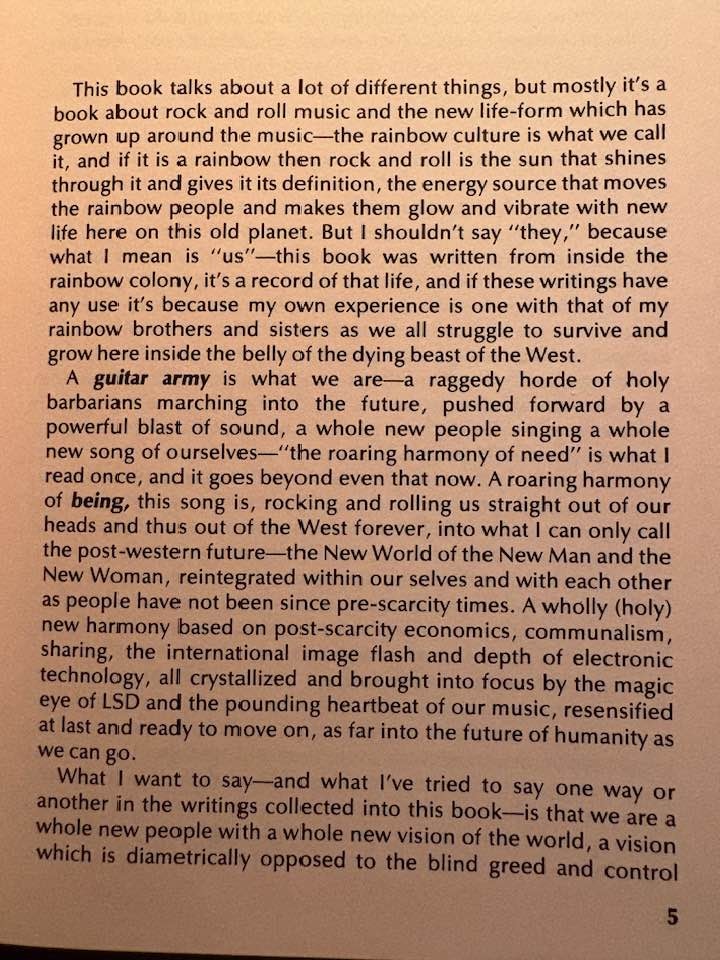
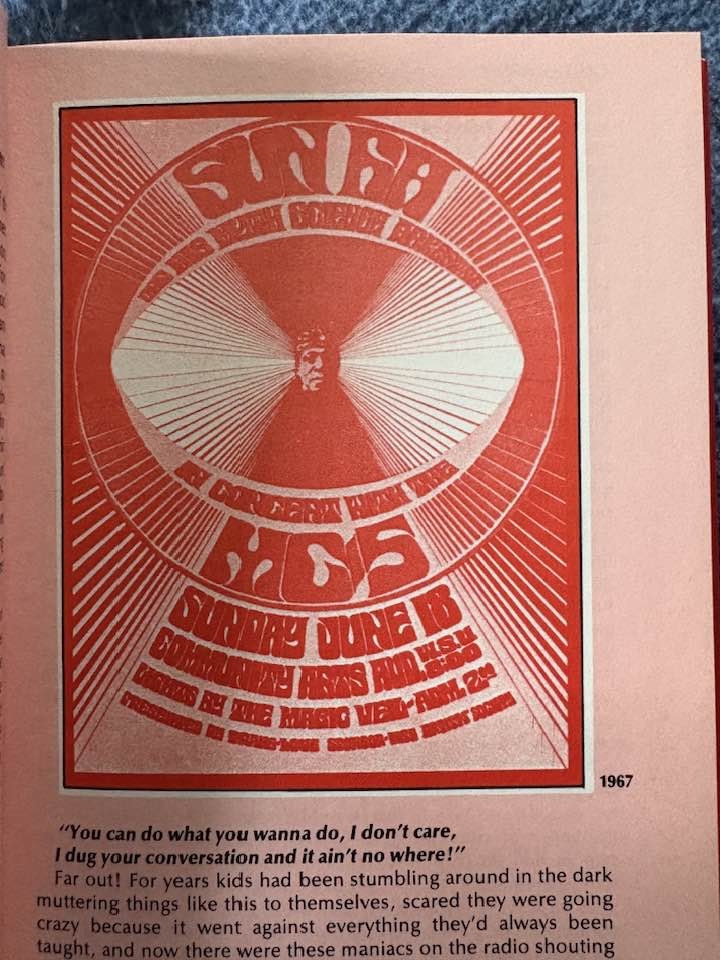
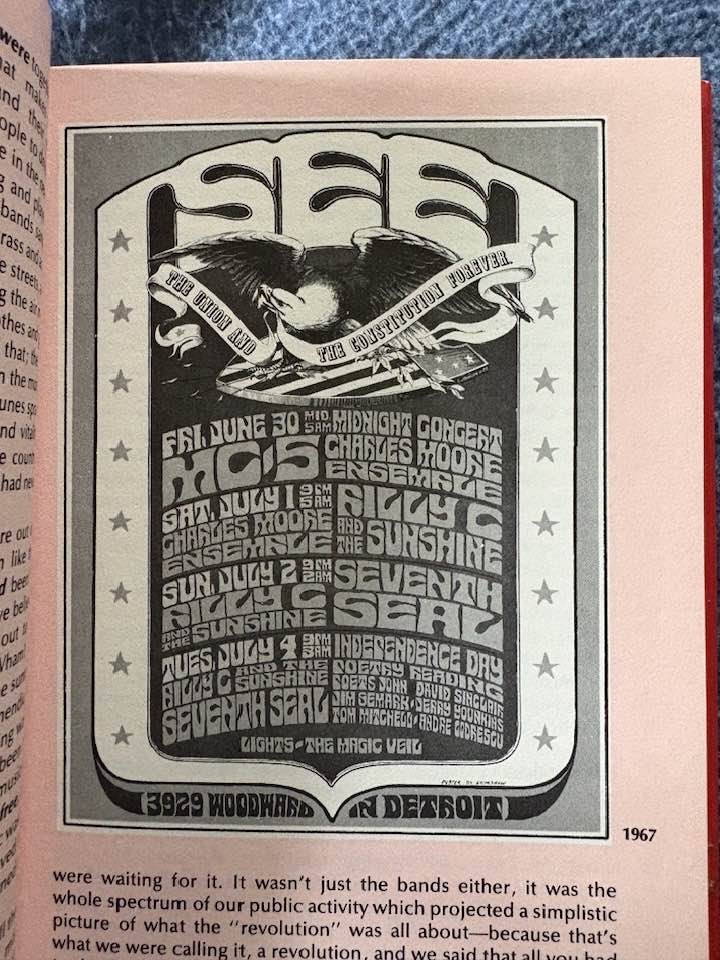
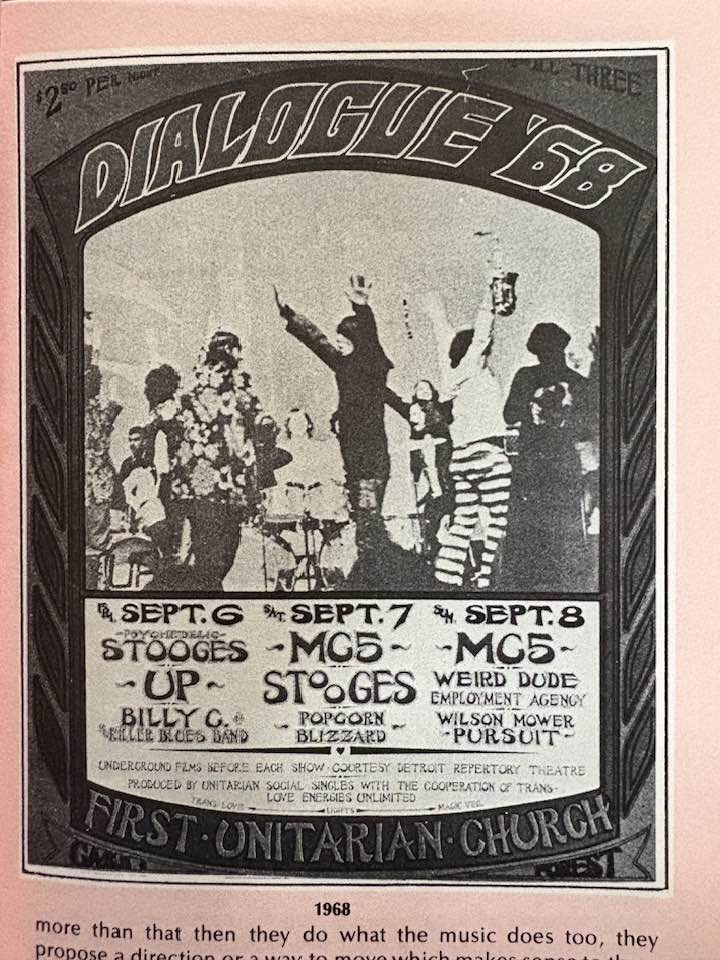
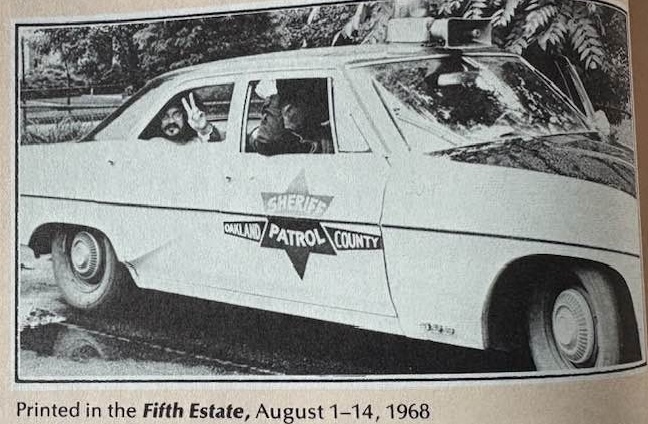
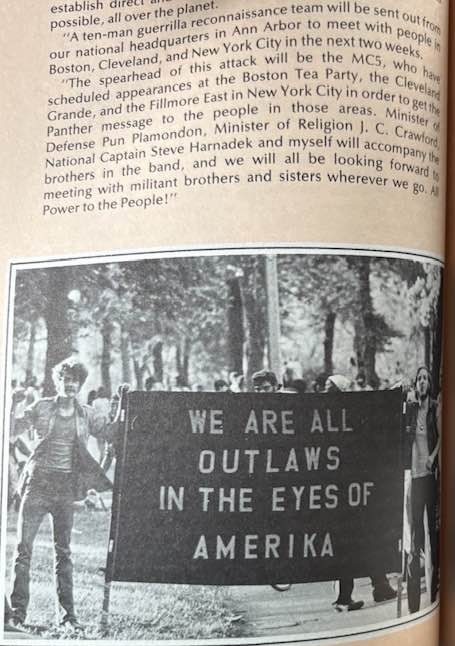
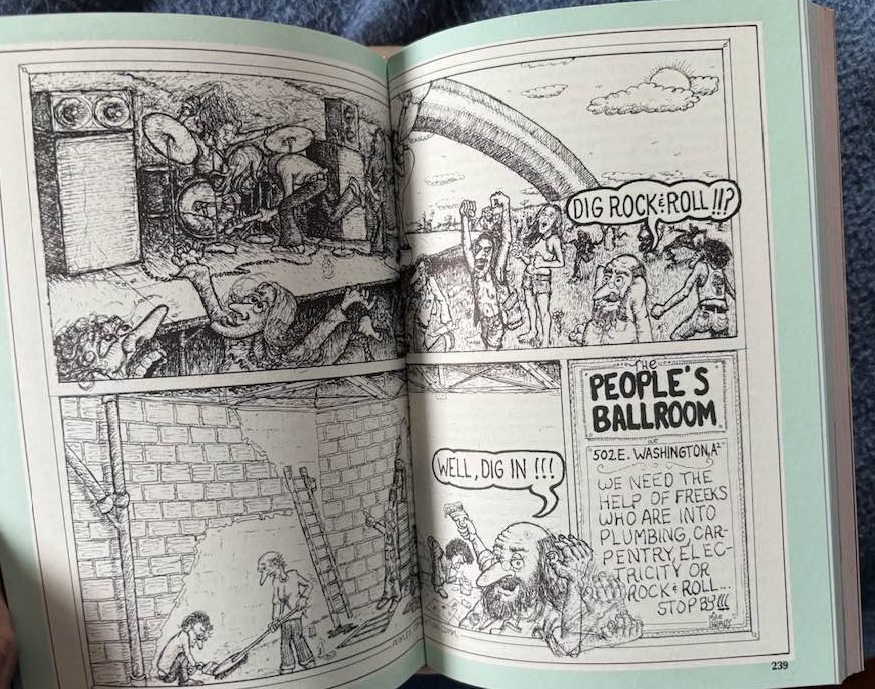
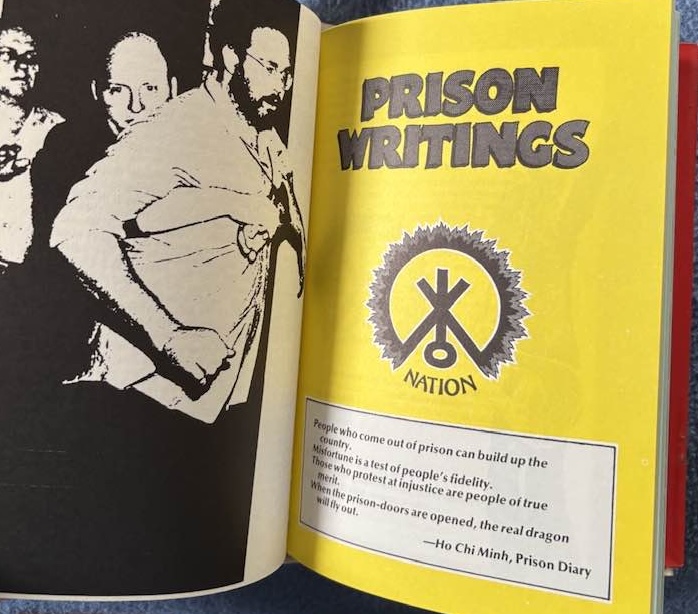
Then I saw this book at a local head shop. It was the 70s in a college town, teenagers hanging out in head shops was normal. The book was revelatory for me. It not only contained Sinclair’s writings, which I admit I didn’t read thoroughly at first, but it is also full of radical illustrations, pictures of MC5 concerts and posters, protests, etc.
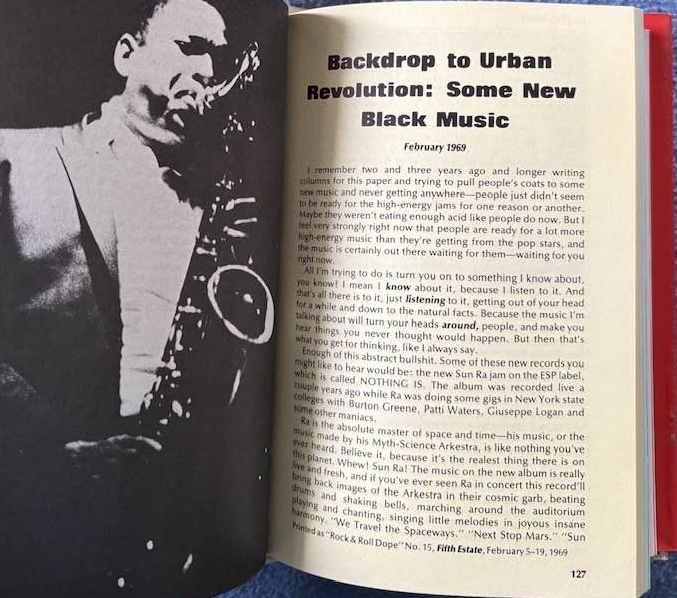
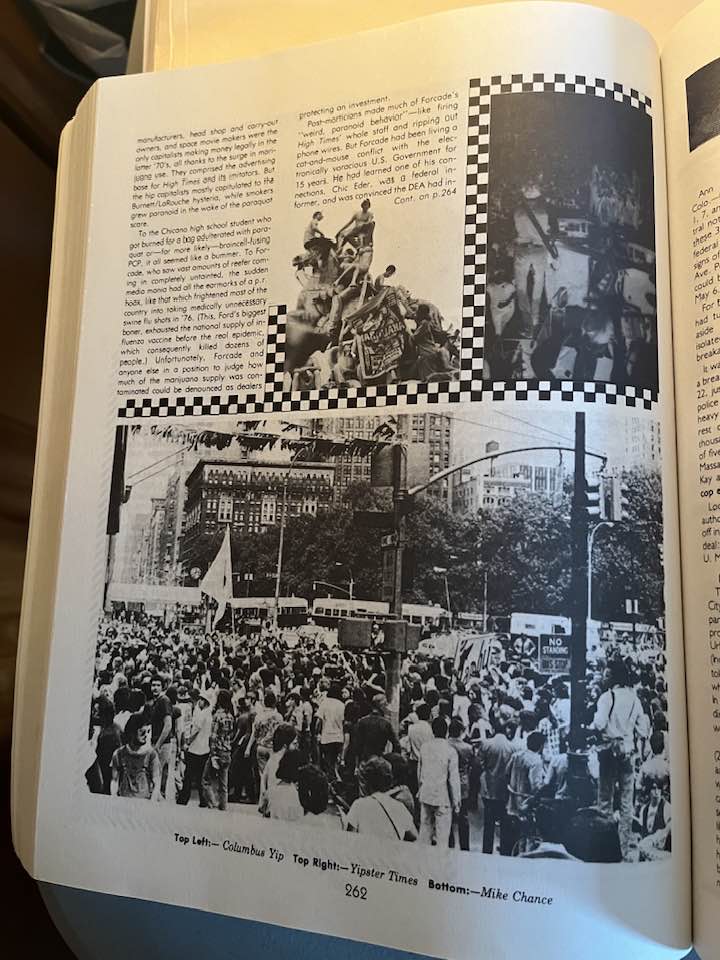
I pulled it off the shelf today and leafed through it for the first time in decades. The first page (text pictured) pretty much encapsulates perfectly the scene that I would aspire to, for better or worse, for much of my young life, propelling me across thousands of miles to hundreds of concerts and protests and smoke-ins and gatherings and friendships. Definitely for the better.
When I’m in the Journalism Building at Ohio State University I am often reminded that I am roaming the same hallways that Phil Ochs did back in the year that I was born (although the building was renovated in 1973, so they aren’t exactly the same hallways). Phil Ochs will always be my Ohio State hero.
Ochs studied journalism in college and formed a keen interest in politics, signing on with the student newspaper, the Lantern, as a student reporter (1959-1962). While there he contributed some interesting editorials on the Cold War events of the day. But when the student paper refused to publish some of his more radical articles, and then passed him over for the editor-in-chief job, he dropped out in his last quarter and moved to New York City in 1962.
While at OSU he developed a liking for the folk music of Woody Guthrie, Pete Seeger, the Weavers and the mythical IWW union leader Joe Hill, among others. Inspired by this music, he learned the guitar and formed a duo called the Sundowners. His first gig was at the legendary campus bar named Larry’s, right next door to where I tended bar for a few years in my college days. I spent many nights that I don’t remember at Larry’s, as I am sure Phil probably did too.
In Greenwich Village he emerged as one of the most influential folk singers of the sixties. He had a good friendship, and also an artistic rivalry, with Bob Dylan. Suze Rotolo, Dylan’s girlfriend at the time (seen on the cover of The Freewheelin’ Bob Dylan), attended his wedding. He performed at the 1963 and 1964 Newport Folk Festivals to thunderous applause and great reviews. He appeared at Carnegie Hall and became a mainstay at many of the most famous civil rights rallies and anti-war demonstrations of the time. He was involved in the creation of the Youth International Party, known as the Yippies, along with Jerry Rubin and Abbie Hoffman.
But, like many of his contemporaries, the moment of change came with Dylan’s famous electric performance at Newport in 1965, one of the most important dates in 20th century American music. Ochs was unable, or unwilling, to make the leap to the new sound and his star began to slowly fade. These days he is hardly remembered. Sadly, even OSU remains ambivalent/silent about his legacy.
Here he is in 1965, young, vibrant and rebellious, on Let’s Sing Out, just a few months after the first ground troops landed in Vietnam. Note: if you watch to the end you’ll see a filler clip of him playing on the Oval at OSU in front of Orton Hall, the oldest building on campus and one that I help manage.
Michael Ochs, Phil’s younger brother, is an American photographic archivist best known for his extensive collection of pictures related to rock music dating back to the 1950s and 1960s. The Michael Ochs Archives contained 3 million vintage prints, proof sheets and negatives. The Los Angeles Times called Ochs “America’s preeminent rock ‘n’ roll photo archivist” and described his archive as “the dominant force in the rock image marketplace”; The New York Timescalled it “the premier source of musician photography in the world”. (Wikipedia)
Michael Ochs earned a B.A. in radio and television writing from Ohio State University in 1966. He then managed for his folk singer brother, worked as a photographer for Columbia Records, and later headed the public relations departments at Columbia Records, Shelter Records and ABC Records. He began collecting photographs as a hobby and spent years building the collection, ultimately establishing The Michael Ochs Archives in 1977. In the eighties he hosted his Archives Alive radio show on KCRW.
From his collection, he has produced six books: Rock Archives; Elvis In Hollywood; Marilyn: March, 1955; Shock, Rattle & Roll; Marilyn Monroe: From Beginning To End; and 1,000 Record Covers. He was one of three producers of the 2010 documentary film Phil Ochs: There but for Fortune.
There’s a Riot Goin’ On was recorded, mixed and over-dubbed, in 1970-71 by Sly Stone, mostly alone in the studio. It was made during a period of escalated drug use and turmoil between Sly and his Family Stone. The album is a sharp departure from the group’s previous 1960s records. The upbeat psychedelic soul sound of Everyday People, Dance to the Music and I Want to Take You Higher is instead replaced by a more edgy, funky and rhythmic sound. It is also very pessimistic and reflects Sly’s increasing disillusionment at the turn of 1970s, brought on by political assassinations, police brutality, the decline of the civil rights and anti-war movements, and the Nixon presidency. The first track “Luv n’ Haight” reflects his growing disdain for the hippie counterculture that was retreating from political and artistic activism, and relevance.
It is a commonplace declaration that the Altamont concert represented the “death of the sixties.” Perhaps, but for me this landmark recording also stands as a symbol of the changeover from the hopeful and progressive spirit of the 60s to the malaise and hedonism of the decades to come. This is perfectly captured in the album’s title, which was coined in response to Marvin Gaye’s album released six months before, What’s Going On, There’s a Riot Goin’ On.
As time has passed the album has consistently been praised as one of the greatest and most influential recordings of all time. It is one of the primary archetypes for the funk and hip hop genres that followed. It seems to creep higher with each release of greatest all-time lists. Rolling Stone had it at 82 on its most recent top 500. I personally put it much higher than that, and I bet George Clinton does too.
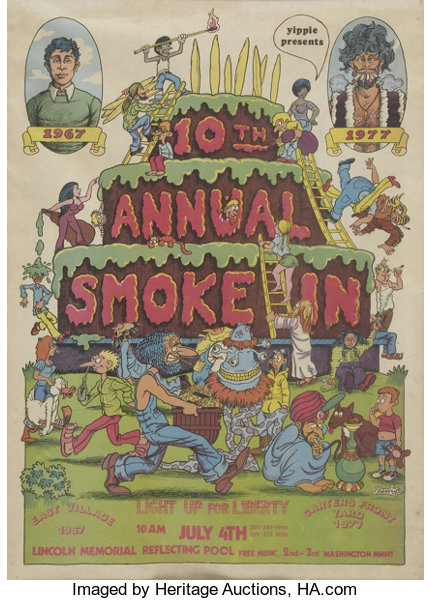
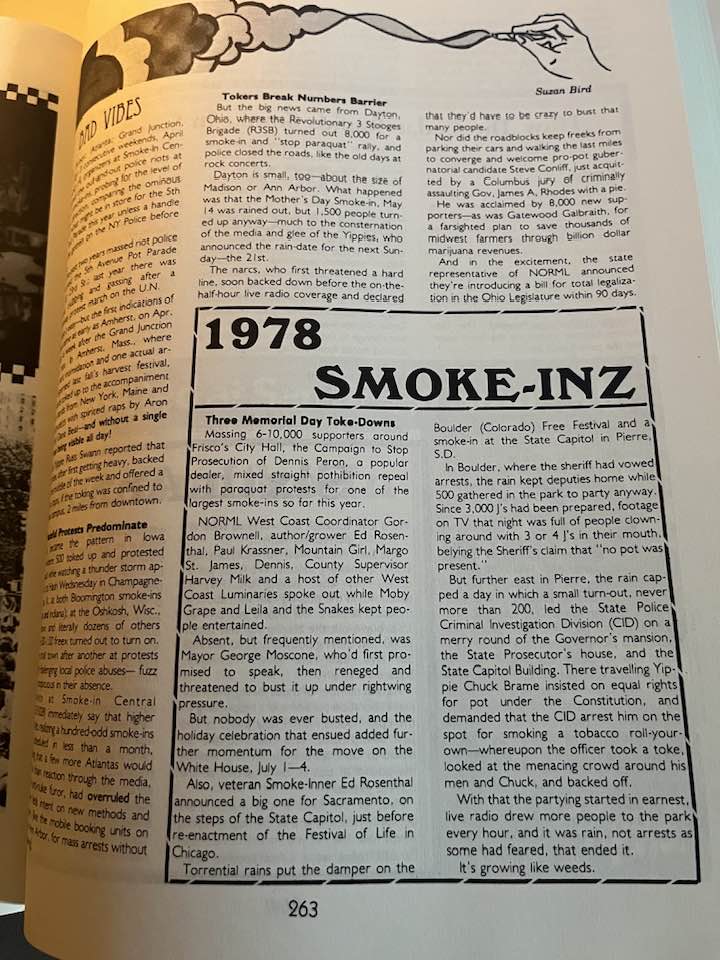
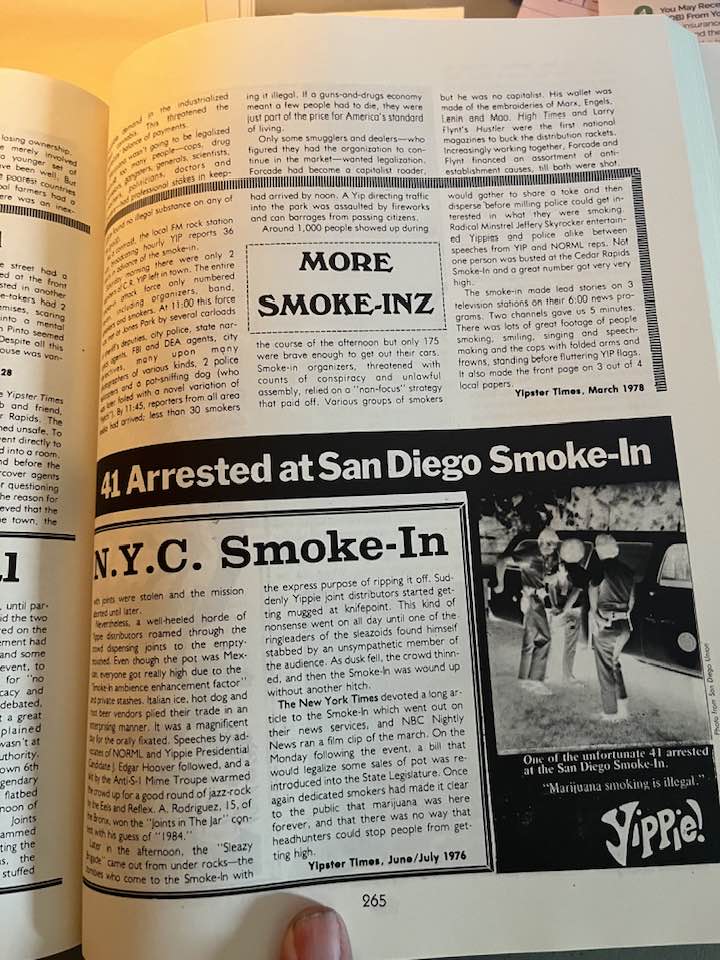
Much about the country has changed since my youth. One of the things I miss is the 4th of July smoke-in. The Youth International Party (YIP) organized smoke-ins annually across the US through the 1970s and into the early 1980s. The annual 4th of July smoke-in at Lafayette Park in DC became a counterculture tradition, as did the Ann Arbor Hash Bash. We all knew that the cops hated us but we outnumbered them so there wasn’t much they would do, although some did feature cop riots over the years, 1979 in DC comes to mind. The good news is that after all these years much of the country has finally come to its senses, legalizing marijuana to some degree, one of the few changes for the better since the coming of Reagan




















 Parallel Narratives