
 Watched “Freedom Summer” on TV the other night. It was based on Bruce Watson’s excellent book that came out a few years ago. Although the documentary didn’t break any new ground it is nevertheless a worthy treatment of a watershed moment in American history. And there was some footage that I had not seen before, from the personal collection of Richard Beymer, an actor from Hollywood who went to Mississippi with the students and filmed.* But like many other treatments of the civil rights movement, it left out a discussion of the many previous attempts to pass civil rights legislation in the US over the years, attempts that were always squashed by the southern dominated Senate. No civil rights legislation was passed into law in this country between 1875 and 1957! In fact, did you know that LBJ voted against civil rights legislation many times early in his career?
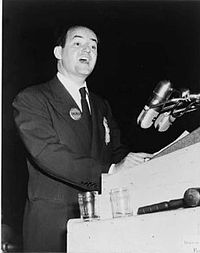
Arguably the most important early event in the chain that ultimately led to the Civil Rights and Voting Rights Acts of the 1960s, now largely forgotten, occurred at the 1948 Democratic Convention in Philadelphia. A young Hubert Humphrey, then mayor of Minneapolis and relatively unknown nationally, gave an impassioned and eloquent speech in support of a civil rights plank. He was pressured by the Democratic establishment not to give it, they said it would alienate the south and hurt Truman’s chances. But he was forward-looking and realized that, in addition to being the morally right thing to do, African Americans would soon be a powerful constituency in the north, and one day everywhere, and needed to be brought in to the Democratic tent. So he stood up and gave the speech. It is only 10 minutes long, but one of the great speeches I have ever heard. Much of the South walked-out, they formed the Dixiecrat Party under Strom Thurmond. But it turned out that they couldn’t stop the tide, they did carry a few southern states but not enough to save their cause, and Truman won. It was a turning point as the speech inspired many northern and western legislators who heard it. When Truman won the election, many realized that they could support civil rights and still survive politically.
“The time has arrived for the Democratic party to get out of the shadow of state’s rights and walk forthrightly into the bright sunshine of human rights”
Read the text and listen to the speech here:
Humphrey Speech – Philadelphia 1948
* In addition to being a film maker, Richard Beymer was an actor of some renown. Among his credits are major roles in West Side Story and The Diary of Anne Frank, and a significant part in The Longest Day. He also starred in the television serial, “Twin Peaks.”


 Parallel Narratives