Category Archives: civil rights

Life Magazine Covers The Vietnam War #4– May, 1954

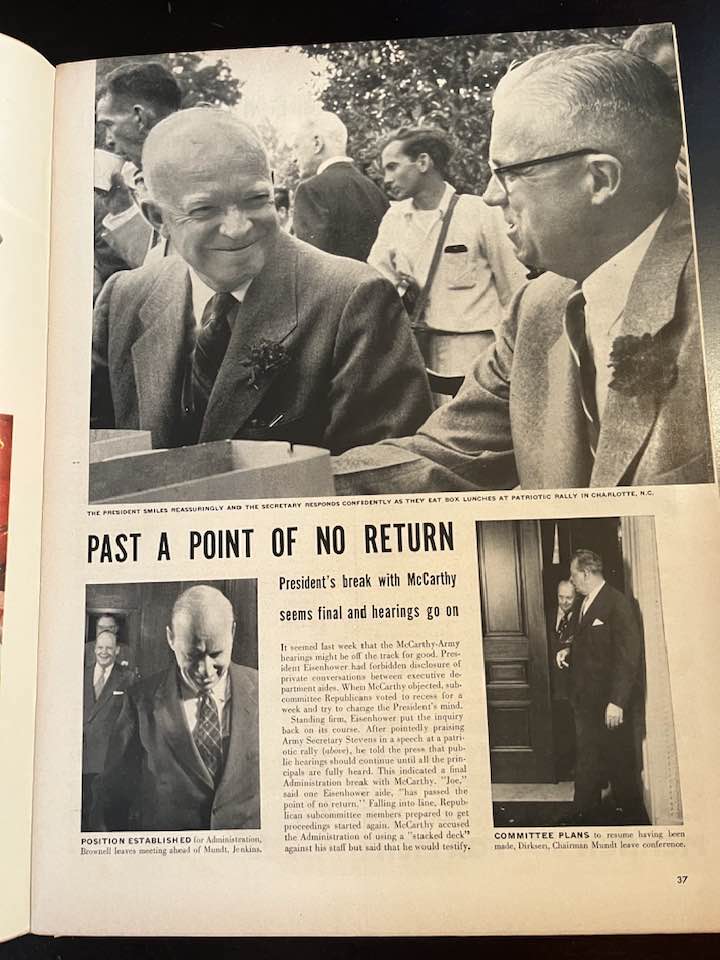
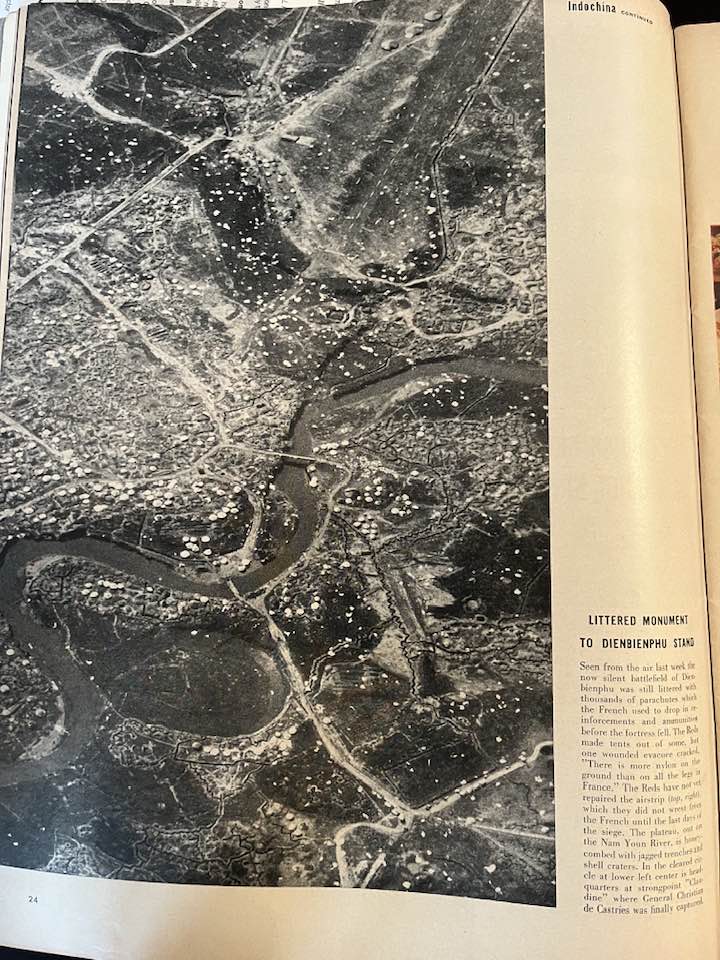
Life Magazine May 31, 1954. You’d be hard pressed to find a month in mid-century American history with more consequential events for the following decades than this one, and Life magazine was there. An article covers the French loss and retreat at the Battle of Dien Bien Phu and the subsequent Geneva Conference that led to the partition of Vietnam at the 17th Parallel. Another reports on the Brown vs Board of Education decision, which signaled the beginning of the Civil Rights era. We also learn that the Army hearings that finally brought down Joe McCarthy were under way.

Senator Joseph McCarthy (R-Wisconsin) had been riding high for several years on his claim that the Democrats were soft on, or in league with, communism and hence the government had become riddled with communists, especially the State Department. The ensuing anti-communist hysteria, known as the “Red Scare,” had brought the Republicans back to power for the first time since before the Great Depression. One tactic of red-baiting that the GOP exploited to great advantage was the claim that Truman and the Democrats had “lost” China by allowing Mao to come to power in the Chinese Revolution in 1949. The crusade known as McCarthyism caused enormous political damage and ruined many careers and lives. But now Tail Gunner Joe’s star was fading. His harsh right-wing grandstanding, much of it unsubstantiated, and his drunken antics had become a liability. Eisenhower had turned on him. Henry Luce on the other hand would remain a major espouser of the lost China accusation for years to come (Chiang Kai-Shek was his close friend). His publications would exert powerful domestic pressure on Eisenhower, who decided to involve the country in a series of Asian misadventures in Indonesia, Laos, and Vietnam.

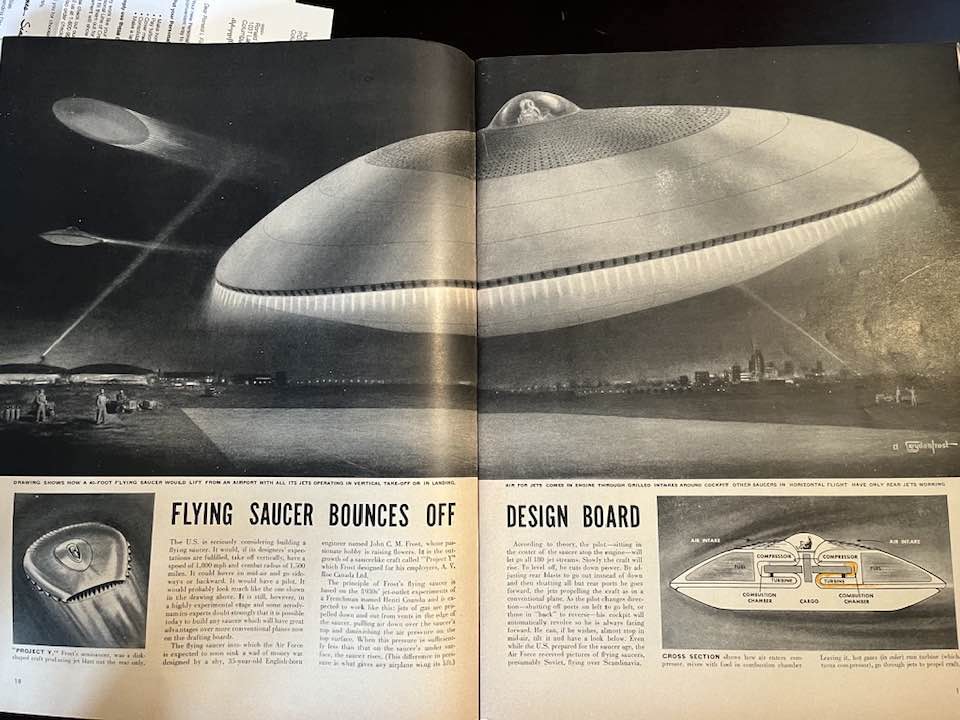
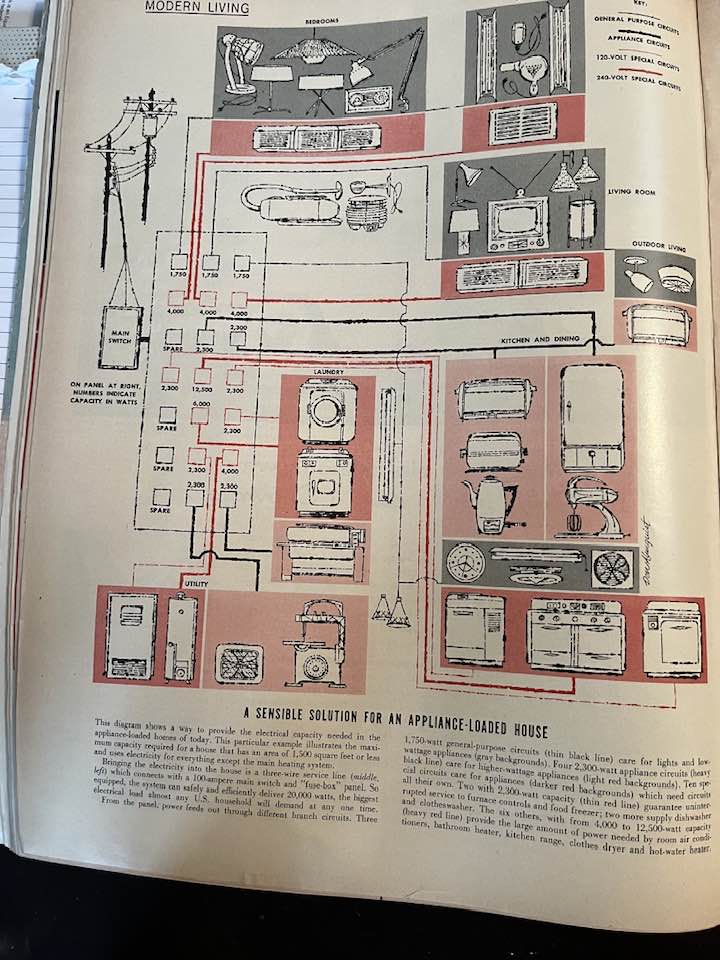
These threads would merge a decade later as the U.S. sent a massive military deployment to Vietnam, many of whom were black, brown and American Indian, in an ill-fated attempt to roll-back the communist threat officially labeled as the “domino theory,” a phrase coined in 1954 by Eisenhower in justifying initial military support for the American installed government in South Vietnam. This issue truly contains the seeds of the sixties. There is also an article on the science of flying saucers and an electrical schematic for “A Sensible Solution For An Appliance-Loaded House.”

The Punch Card As Symbol, 1964

The computer punch card, now a quaint artifact, was an important symbol of the times in 1964.

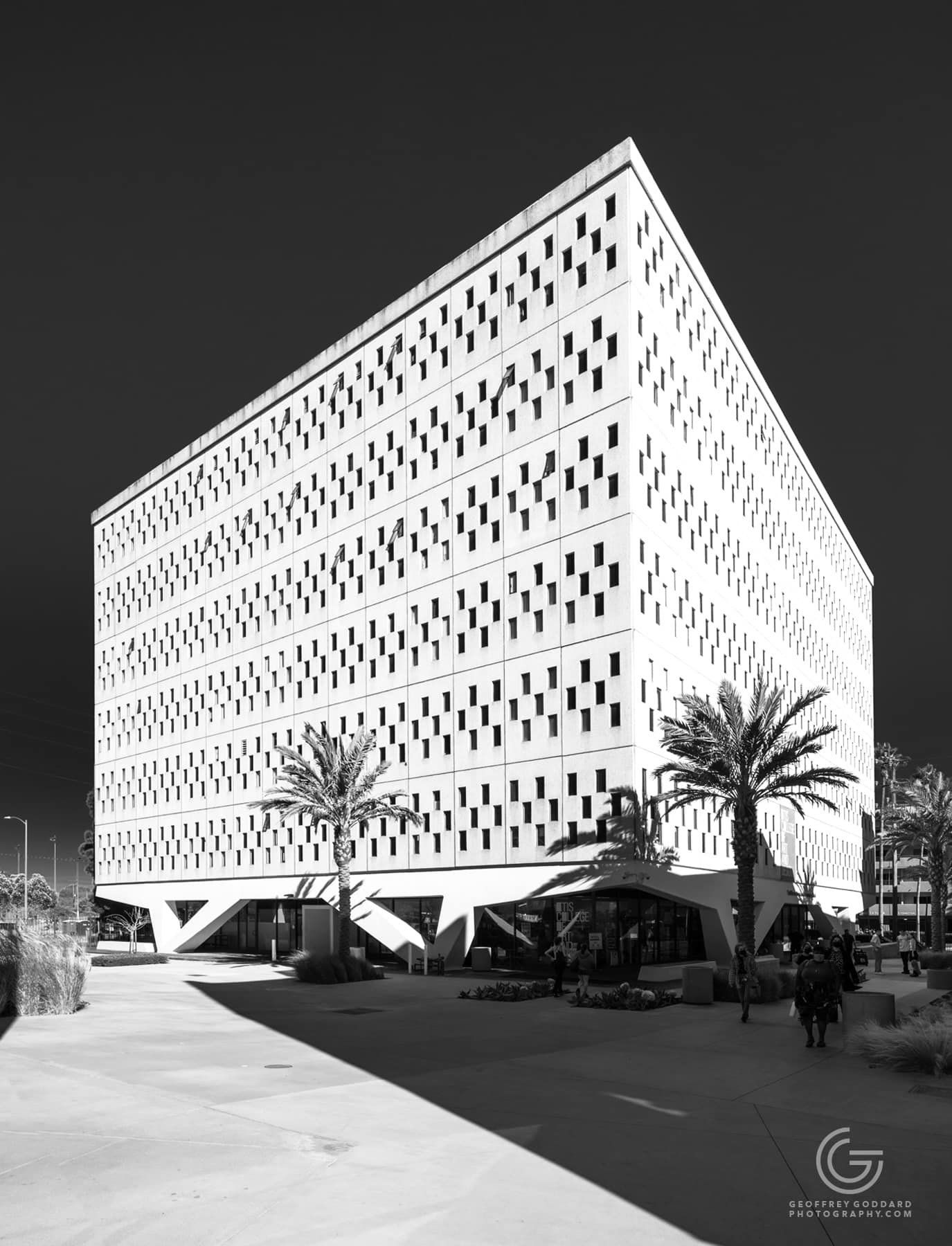
In 1964 the IBM Aerospace Headquarters building (pictured below) opened in Los Angeles. Originally built to house IBMs data processing facilities this seven-story office building with its “computer punch card” array of windows conducted the earliest versions of machine computing. It is considered an important part of industrial design history and a landmark of mid-century architecture.

That same year, in the fall of 1964, the Berkeley Free Speech Movement occurred, and the punch card was part of it. The confrontation evolved into a battle over academic freedom and the role of the university in society. Was it a factory designed to produce a managing class and “cogs in the machine”, or was it a marketplace of ideas designed to produce educated citizens?

The University of California used computer punch cards for class registration. FSM protestors turned them into a symbol of the “system” and as a symbol of alienation. The argument found its ultimate expression in the “Operation of the Machine” speech made by FSM leader Mario Savio. You can listen to the speech below. For a fascinating take on the cultural history of the punch card, including its role in the campus protests, read “Do Not Fold, Spindle or Mutilate” included below.

“Do not fold, spindle or mutilate” A cultural history of the punch card….

Berkeley Free Speech Movement Timeline

Spy Stories: Reagan, Hoover, Kerr at UC Berkeley in the 1960s

Photographs © Geoffrey Goddard (2022).

Mario Savio’s Speech at Sproul Hall Steps, December 2, 1964

Henry David Thoreau

Henry David Thoreau. His book Walden and essay Civil Disobedience influenced my thinking greatly when I read them in college. I was not the only one– Tolstoy, Gandhi, MLK, John Muir, Hemingway and Frank Lloyd Wright all mention being profoundly affected by his writings. In the 1960s Thoreau’s concepts of civil disobedience and direct action helped shape the strategies of the civil rights movement, the free speech movement and the anti-Vietnam War movement. His spirit is never far from the surface throughout the SDS manifesto, the Port Huron Statement, written by Tom Hayden.

When arrested in 1846 for refusing to pay poll taxes because of his opposition to slavery, the event that led to his writing of Civil Disobedience, he was visited in jail by Ralph Waldo Emerson. Emerson reportedly asked: Henry David, what are you doing in there? Thoreau’s reply: Ralph Waldo, what are you doing out there?

Nelson Mandela – Oakland Coliseum Stadium 06/30/90

Shortly after his release from prison in 1990 Nelson Mandela visited Oakland. Mandela came to thank the Bay Area because Oakland, Berkeley and San Francisco were among the strongest defenders of ordinances calling for divestment of stocks in American companies doing business in South Africa. The leading voice in that struggle was our congressman Ron Dellums. In 1986 the U.S. House of Representatives passed Dellums’ anti-apartheid legislation, calling for a trade restriction against South Africa and divestment. A primary precondition for lifting the sanctions was the release of all political prisoners. President Reagan vetoed the bill; however, his veto was overridden. I was at the Oakland Coliseum 29 years ago today, June 30, 1990. Mandela also thanked area longshoremen (ILWU) who refused to unload South African goods.

Related:

Remembering the Anti-Apartheid Movement in the East Bay