Category Archives: Essays

Dickey Chapelle – Trailblazing War Correspondent

Georgette Louise Meyer (March 14, 1918 – November 4, 1965), known as Dickey Chapelle (self-named after her favorite explorer, Admiral Richard Byrd), was an American photojournalist known for her work spanning from World War II to the Vietnam War.

While still in her twenties, posted with the Marines during World War II, she became one of the country’s first female war correspondents, covering the battles of Iwo Jima and Okinawa for National Geographic.

Chapelle covered the Hungarian revolt in 1956, The Lebanon Crisis in 1958, The Algerian War for Independence against France, The Cuban Revolution and the Vietnam War. In Algeria she travelled with the FLN rebels, in Cuba with Castro’s troops. She was in Vietnam and Laos as early as 1961, when US presence was still in the advisory phase. Chapelle became the first female reporter to win approval from the Pentagon to jump with American troops in Vietnam.

On the morning of November 4, 1965, she was killed by a land mine while on patrol with a Marine platoon, becoming the first war correspondent killed in the American war in Vietnam. Loved by the troops, her body was repatriated with a Marine honor guard and she was given a full Marine burial, also a first. She was the first American female reporter ever to be killed in action.

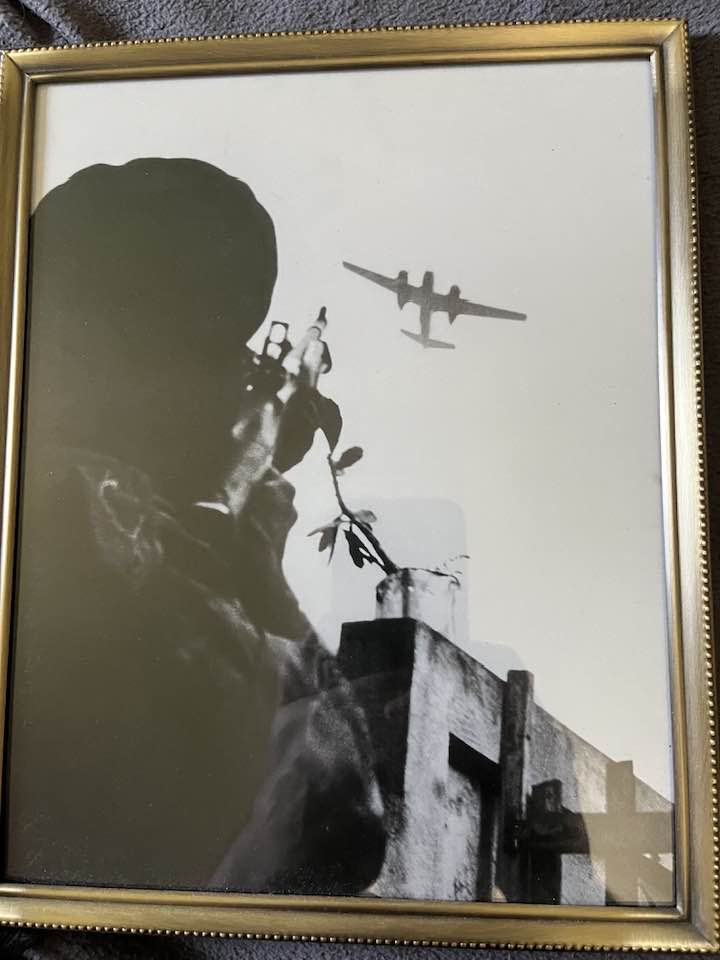
Here is a copy of one of her photos that I obtained from the Wisconsin Historical Society taken while covering the fighting in Cuba in 1958. The caption: Major Antonio Lusson, battalion commander for Castro during the fight for the town of LaMaya, fires on a strafing B-26 from Batista’s air force. Dickey Chapelle 1958.
Chapelle Gallery at Wisconsin Historical Society

Remembering ‘fearless’ war photographer Dickey Chapelle

There’s A Riot Goin’ On

There’s a Riot Goin’ On was recorded, mixed and over-dubbed, in 1970-71 by Sly Stone, mostly alone in the studio. It was made during a period of escalated drug use and turmoil between Sly and his Family Stone. The album is a sharp departure from the group’s previous 1960s records. The upbeat psychedelic soul sound of Everyday People, Dance to the Music and I Want to Take You Higher is instead replaced by a more edgy, funky and rhythmic sound. It is also very pessimistic and reflects Sly’s increasing disillusionment at the turn of 1970s, brought on by political assassinations, police brutality, the decline of the civil rights and anti-war movements, and the Nixon presidency. The first track “Luv n’ Haight” reflects his growing disdain for the hippie counterculture that was retreating from political and artistic activism, and relevance.

It is a commonplace declaration that the Altamont concert represented the “death of the sixties.” Perhaps, but for me this landmark recording also stands as a symbol of the changeover from the hopeful and progressive spirit of the 60s to the malaise and hedonism of the decades to come. This is perfectly captured in the album’s title, which was coined in response to Marvin Gaye’s album released six months before, What’s Going On, There’s a Riot Goin’ On.

As time has passed the album has consistently been praised as one of the greatest and most influential recordings of all time. It is one of the primary archetypes for the funk and hip hop genres that followed. It seems to creep higher with each release of greatest all-time lists. Rolling Stone had it at 82 on its most recent top 500. I personally put it much higher than that, and I bet George Clinton does too.

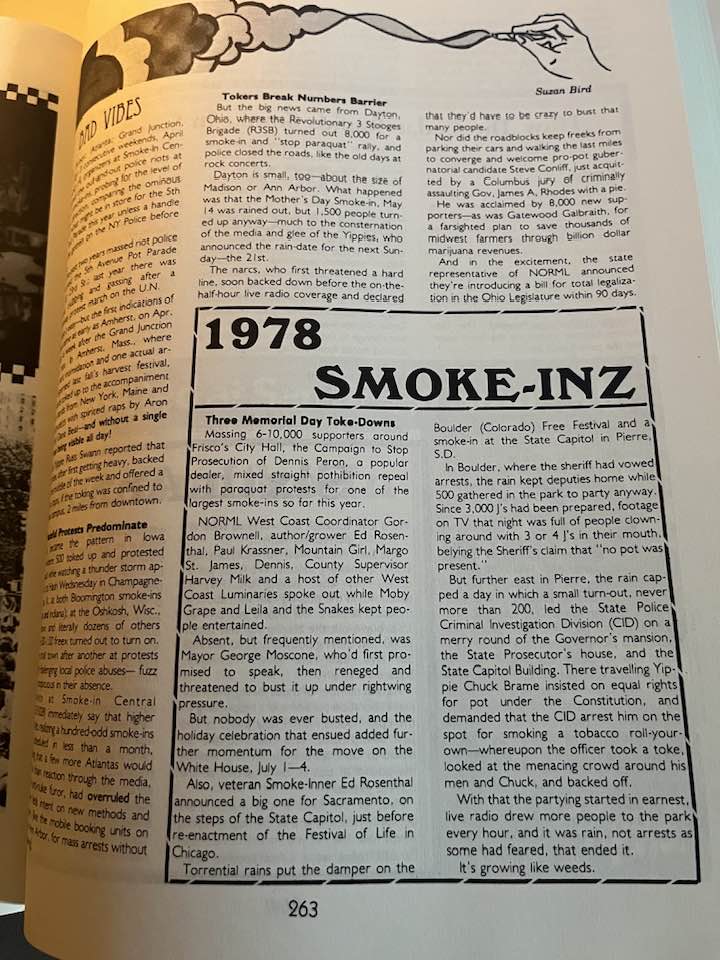
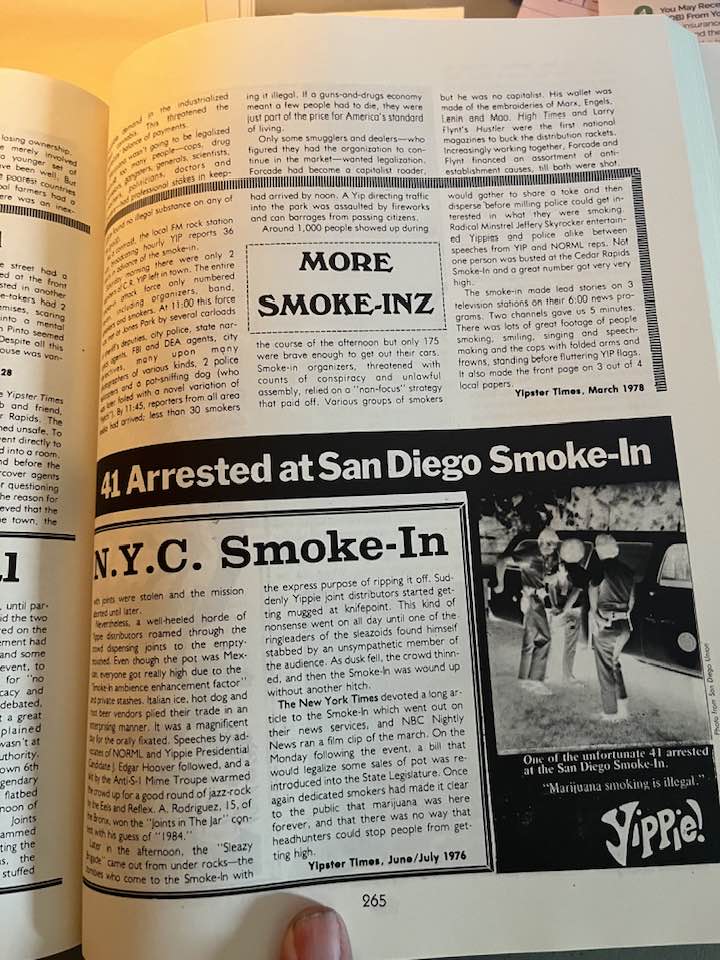
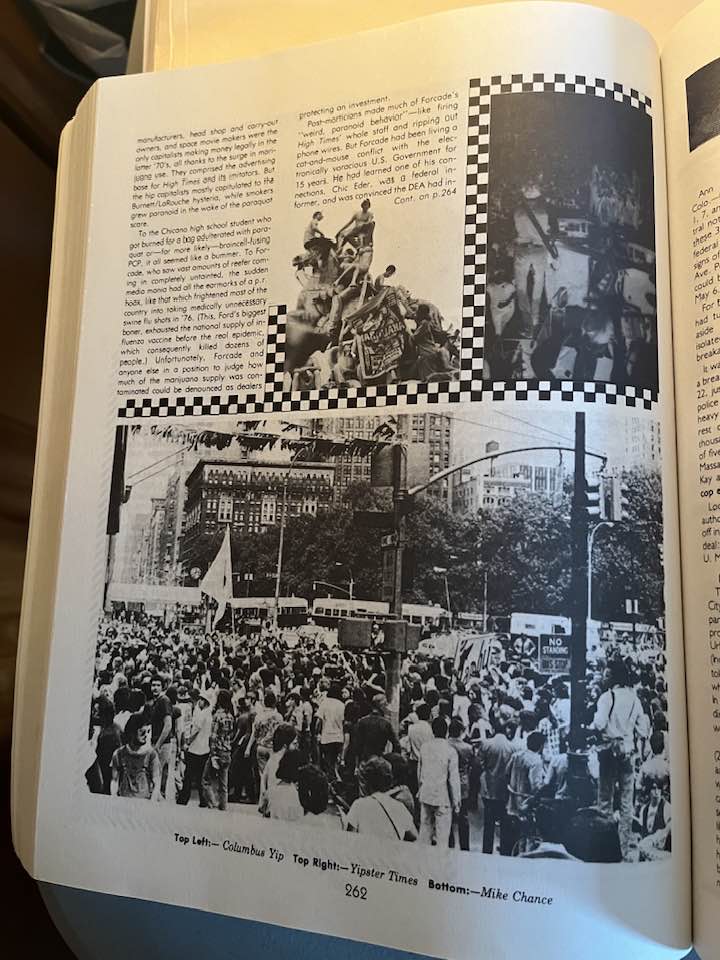
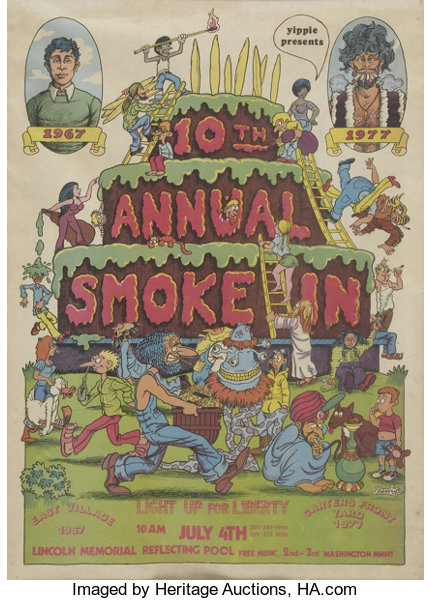
Light Up For Liberty – The Lost Age of the Smoke-In

Much about the country has changed since my youth. One of the things I miss is the 4th of July smoke-in. The Youth International Party (YIP) organized smoke-ins annually across the US through the 1970s and into the early 1980s. The annual 4th of July smoke-in at Lafayette Park in DC became a counterculture tradition, as did the Ann Arbor Hash Bash. We all knew that the cops hated us but we outnumbered them so there wasn’t much they would do, although some did feature cop riots over the years, 1979 in DC comes to mind. The good news is that after all these years much of the country has finally come to its senses, legalizing marijuana to some degree, one of the few changes for the better since the coming of Reagan

https://archive.org/details/July4thSmoke-inAtWashingtonDc

The Punch Card As Symbol, 1964

The computer punch card, now a quaint artifact, was an important symbol of the times in 1964.

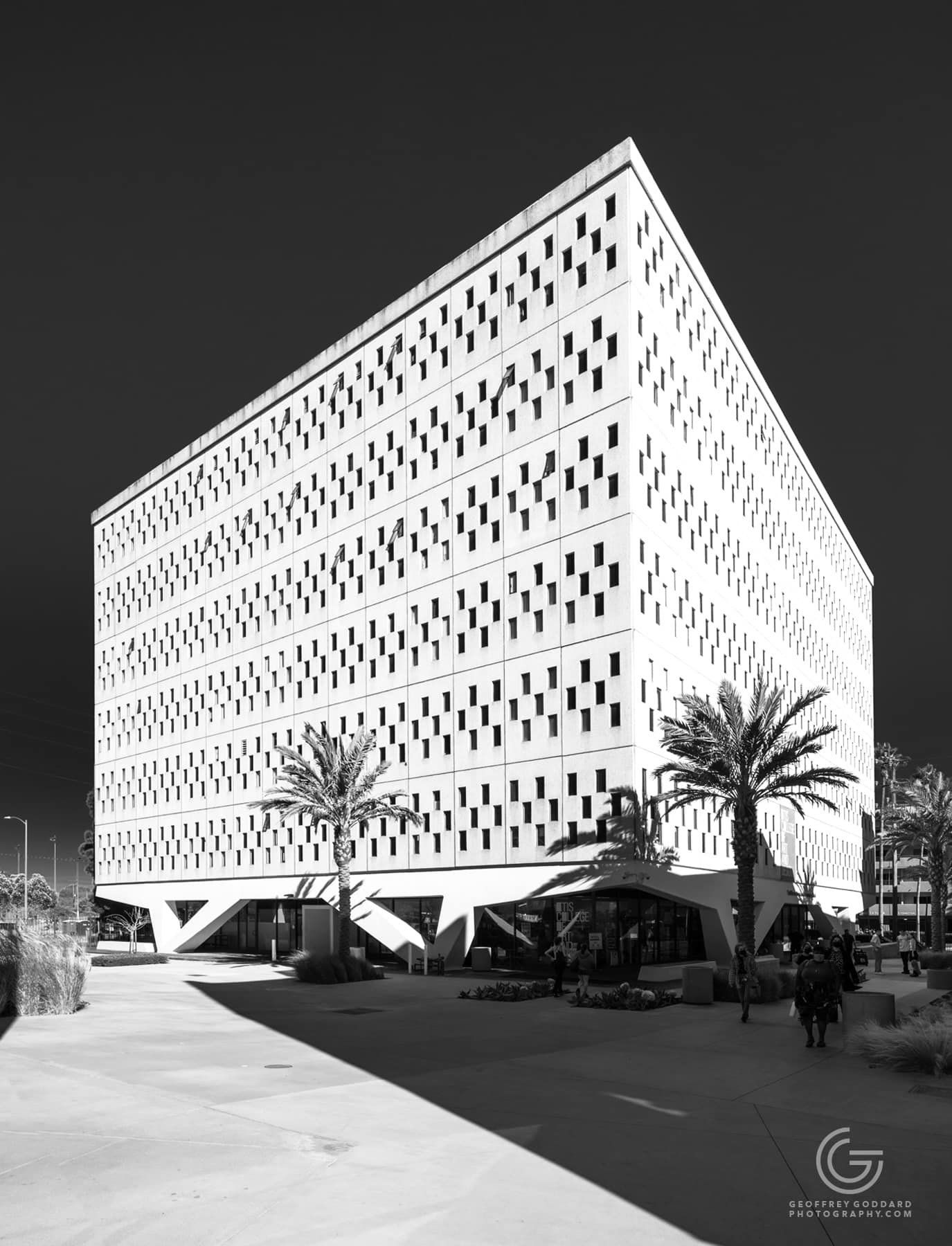
In 1964 the IBM Aerospace Headquarters building (pictured below) opened in Los Angeles. Originally built to house IBMs data processing facilities this seven-story office building with its “computer punch card” array of windows conducted the earliest versions of machine computing. It is considered an important part of industrial design history and a landmark of mid-century architecture.

That same year, in the fall of 1964, the Berkeley Free Speech Movement occurred, and the punch card was part of it. The confrontation evolved into a battle over academic freedom and the role of the university in society. Was it a factory designed to produce a managing class and “cogs in the machine”, or was it a marketplace of ideas designed to produce educated citizens?

The University of California used computer punch cards for class registration. FSM protestors turned them into a symbol of the “system” and as a symbol of alienation. The argument found its ultimate expression in the “Operation of the Machine” speech made by FSM leader Mario Savio. You can listen to the speech below. For a fascinating take on the cultural history of the punch card, including its role in the campus protests, read “Do Not Fold, Spindle or Mutilate” included below.

“Do not fold, spindle or mutilate” A cultural history of the punch card….

Berkeley Free Speech Movement Timeline

Spy Stories: Reagan, Hoover, Kerr at UC Berkeley in the 1960s

Photographs © Geoffrey Goddard (2022).

Mario Savio’s Speech at Sproul Hall Steps, December 2, 1964