The National Endowment for the Humanities has funded the creation of a publicly accessible digital archive which will stream nearly 5,000 oral history interviews conducted by the great Studs Terkel from his 45 years on Chicago radio. The site is active but currently only a fraction of the material is up. Much more to come. Check it out here:
Listen to a sample: Studs interviews Alfred McCoy in 1971 about his book on the drug trade in Southeast Asia and it’s effect on American soldiers in Vietnam.
Watched “Freedom Summer” on TV the other night. It was based on Bruce Watson’s excellent book that came out a few years ago. Although the documentary didn’t break any new ground it is nevertheless a worthy treatment of a watershed moment in American history. And there was some footage that I had not seen before, from the personal collection of Richard Beymer, an actor from Hollywood who went to Mississippi with the students and filmed.* But like many other treatments of the civil rights movement, it left out a discussion of the many previous attempts to pass civil rights legislation in the US over the years, attempts that were always squashed by the southern dominated Senate. No civil rights legislation was passed into law in this country between 1875 and 1957! In fact, did you know that LBJ voted against civil rights legislation many times early in his career?
Arguably the most important early event in the chain that ultimately led to the Civil Rights and Voting Rights Acts of the 1960s, now largely forgotten, occurred at the 1948 Democratic Convention in Philadelphia. A young Hubert Humphrey, then mayor of Minneapolis and relatively unknown nationally, gave an impassioned and eloquent speech in support of a civil rights plank. He was pressured by the Democratic establishment not to give it, they said it would alienate the south and hurt Truman’s chances. But he was forward-looking and realized that, in addition to being the morally right thing to do, African Americans would soon be a powerful constituency in the north, and one day everywhere, and needed to be brought in to the Democratic tent. So he stood up and gave the speech. It is only 10 minutes long, but one of the great speeches I have ever heard. Much of the South walked-out, they formed the Dixiecrat Party under Strom Thurmond. But it turned out that they couldn’t stop the tide, they did carry a few southern states but not enough to save their cause, and Truman won. It was a turning point as the speech inspired many northern and western legislators who heard it. When Truman won the election, many realized that they could support civil rights and still survive politically.
“The time has arrived for the Democratic party to get out of the shadow of state’s rights and walk forthrightly into the bright sunshine of human rights”
* In addition to being a film maker, Richard Beymer was an actor of some renown. Among his credits are major roles in West Side Story and The Diary of Anne Frank, and a significant part in The Longest Day. He also starred in the television serial, “Twin Peaks.”
During the Vietnam War nothing got under the skin of the war managers– LBJ, Nixon, their generals, top cops and political cronies — more than public criticism from liberal, and sometimes moderate, members of the intelligentsia, college campuses and the media. The war pushers tried every dirty trick in the book, and then some, to shut these voices down– they labeled dissenters as traitors, commies and un-American; used the FBI to spy on them (Cointelpro) and the IRS to audit them; created laws to throw them in jail for protesting, or sent in ringers and police to start riots during peace marches; and in some cases even shot them dead.
But these tactics ultimately failed. Over time the chorus of voices demanding peace steadily grew in strength and in retrospect history has shown that the opposition interpretation of the war was not only more informed, but also much more honest, than that of the establishment. In fact, we know now that, from Tonkin to Cambodia, there was no lie too big for LBJ and Nixon if it served their purposes of continuing a failed policy in the hopes of pulling off a hail Mary pass late in the game–which of course did not happen.
A true turning point in modern American politics, the shady events of the war years marked the beginning of a damaging turn toward cynicism by the American public regarding the honesty and integrity of their government. Prior to Vietnam, people may have disagreed about politics, but they essentially believed their leaders were, for the most part, honest people, public administrators with honorable intentions. But the Vietnam War– with its phony after battle briefings, trumped up body counts, constant false optimism, secret bombing campaigns and duplicitous foreign diplomacy– shattered that glossy veneer. The trend was accelerated by Watergate and then officially codified into right-wing ideology by Ronald Reagan. The fallout from the war, the war at home, started the nation on the path that has left us deeply divided, and apparently paralyzed politically.
Listen to archival broadcasts from the period featuring those who stood up against the war:
Note: with the most recent national military debacle – the Iraq War – flaming out of control again, and the hawks circling above calling for US involvement, these recordings take on a renewed significance, if for nothing else than to remind ourselves that it is possible to speak out and influence events– it’s one of the only real powers “we the people” have.
Richard Nixon played upon the growing resentments of “regular Joes” across the country. He defined this target audience as a great “silent majority,” and rallied them to his cause by railing against the elites, not the least of which were anti-war college students and professors with draft deferments. Nixon cheered in 1970 when construction workers brutally attacked peace protesters in New York. “Thank God for the hard hats!” he said. He was so successful that he rode his silent majority to electoral victories in 1968 and again in 1972.
Nixon’s political and social maneuvering was masterful, Machiavelli would have been impressed. His scheming led to wins in two presidential elections but in so doing he created a deep rift in American society that persists to this day, polarizing the United States. But Nixon didn’t dream all of these tactics up on his own. He didn’t have to look far to find the prototype for his winning strategy. It was right there in front of him, devised by another California Republican, a lesser known personality to the nation at the time, but that would change….

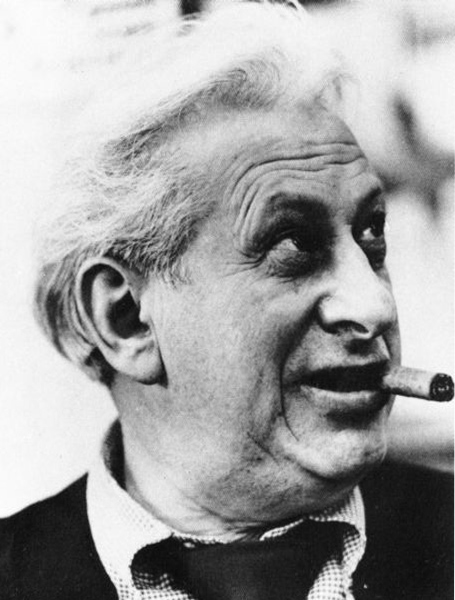 The National Endowment for the Humanities has funded the creation of a publicly accessible digital archive which will stream nearly 5,000 oral history interviews conducted by the great Studs Terkel from his 45 years on Chicago radio. The site is active but currently only a fraction of the material is up. Much more to come. Check it out here: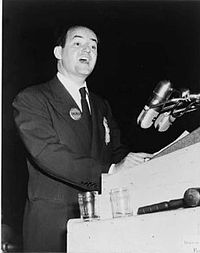


 Parallel Narratives