Category Archives: History

Henry David Thoreau

Henry David Thoreau. His book Walden and essay Civil Disobedience influenced my thinking greatly when I read them in college. I was not the only one– Tolstoy, Gandhi, MLK, John Muir, Hemingway and Frank Lloyd Wright all mention being profoundly affected by his writings. In the 1960s Thoreau’s concepts of civil disobedience and direct action helped shape the strategies of the civil rights movement, the free speech movement and the anti-Vietnam War movement. His spirit is never far from the surface throughout the SDS manifesto, the Port Huron Statement, written by Tom Hayden.

When arrested in 1846 for refusing to pay poll taxes because of his opposition to slavery, the event that led to his writing of Civil Disobedience, he was visited in jail by Ralph Waldo Emerson. Emerson reportedly asked: Henry David, what are you doing in there? Thoreau’s reply: Ralph Waldo, what are you doing out there?

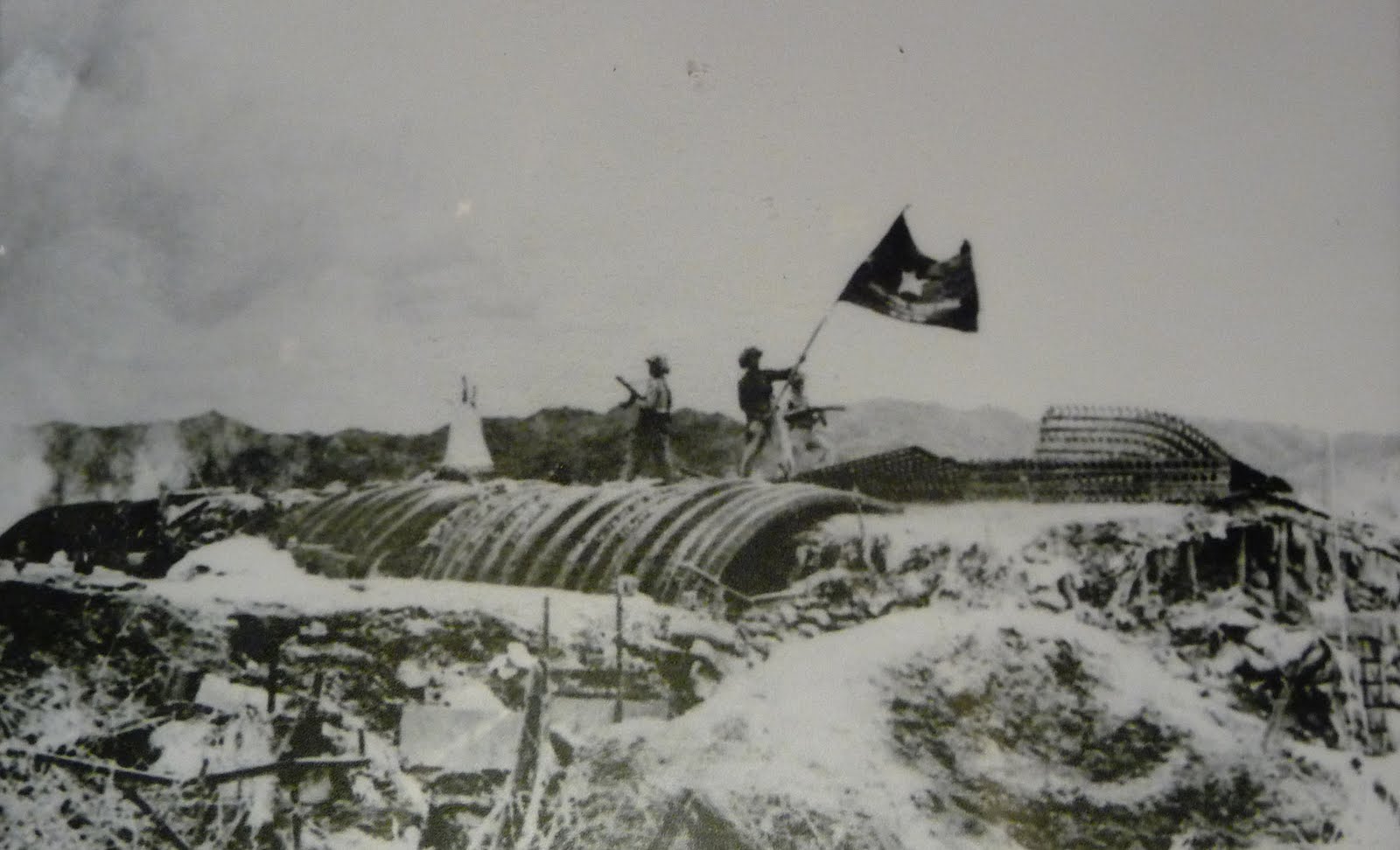
Anniversary: Dien Bien Phu

On the evening of May 7, 1954 the last remaining French position, strong point Lily, manned by Moroccan soldiers commanded by a French officer, surrendered to the attacking Vietminh, ending the two-month long siege of Dien Bien Phu and with it the French-Indochina War. The French fought long, hard, and at times effectively, for French Indochina. The U.S. government gave more financial aid to the French cause in Indochina than it gave to France in the Marshall Plan. But in the end Eisenhower refused to send troops to rescue the garrison.

Dien Bien Phu was unquestionably an important event in world history. In a sense it was the last stand of western colonialism in the Far East. The Brits had already fled India and were in the midst of the Malayan Emergency. The Dutch war of reconquest in Indonesia had been futile. Unfortunately for Ho Chi Minh and the Vietnamese people, their Chinese and Soviet allies sold them short at the bargaining table later that year in Geneva. That, mixed with American actions to negate the treaty in subsequent years, set the table for the second Indochina War, known to many Vietnamese as the “American Phase.”

The picture below is probably the most famous of the battle, in reality it was taken after the battle as part of a re-enactment staged by a Russian filmographer…

Vietnam People’s Army, First publish in 1954. – Vietnam People’s Army museum (still from Soviet filmographer Roman Karmen).

The Century Of The Self (BBC)

What do Sigmund Freud, Joseph Goebbels and Betty Crocker have in common? Ever wonder why anyone would choose to buy a Rolex when a Timex keeps time just as well? Hint: some smart people figured out how to tap into our unconscious fears and desires and over the past century we’ve been the unwitting subjects of a wildly successful mass experiment in consumer manipulation and social control. Adam Curtis of the BBC reveals who they were and how they did it…

On Every Box of Cake Mix, Evidence of Freud’s Theories (NY Times Review)

**FAIR USE NOTICE**
These Videos May Contain Copyrighted (© ) Material. The Use of Which Has Not Always Been Specifically Authorized by The Copyright Owner. Such Material is Made Available to Advance Understanding of Ecological, Political, Human Rights, Economic, Democracy, Scientific, Moral, Ethical, Social Justice Issues, Teaching, and Research. It is believed that this Constitutes a ”Fair Use” of Any Such Copyrighted Material as Provided For in Section 107 of the US Copyright Law. In Accordance With Title – 17 U.S.C. Section 107, This Material is Distributed Without PROFIT to Those Who Have Expressed a Prior General Interest in Receiving Similar Information For Research and Educational Purposes. For More Information:http://www.law.cornell.edu/uscode

Nelson Mandela – Oakland Coliseum Stadium 06/30/90

Shortly after his release from prison in 1990 Nelson Mandela visited Oakland. Mandela came to thank the Bay Area because Oakland, Berkeley and San Francisco were among the strongest defenders of ordinances calling for divestment of stocks in American companies doing business in South Africa. The leading voice in that struggle was our congressman Ron Dellums. In 1986 the U.S. House of Representatives passed Dellums’ anti-apartheid legislation, calling for a trade restriction against South Africa and divestment. A primary precondition for lifting the sanctions was the release of all political prisoners. President Reagan vetoed the bill; however, his veto was overridden. I was at the Oakland Coliseum 29 years ago today, June 30, 1990. Mandela also thanked area longshoremen (ILWU) who refused to unload South African goods.

Related:

Remembering the Anti-Apartheid Movement in the East Bay