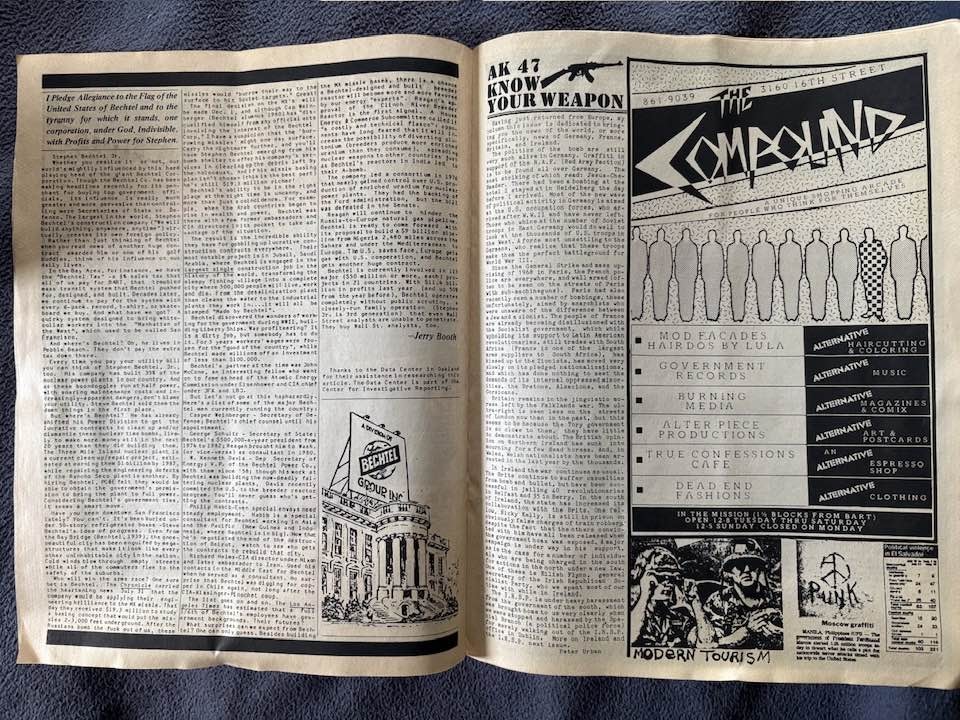
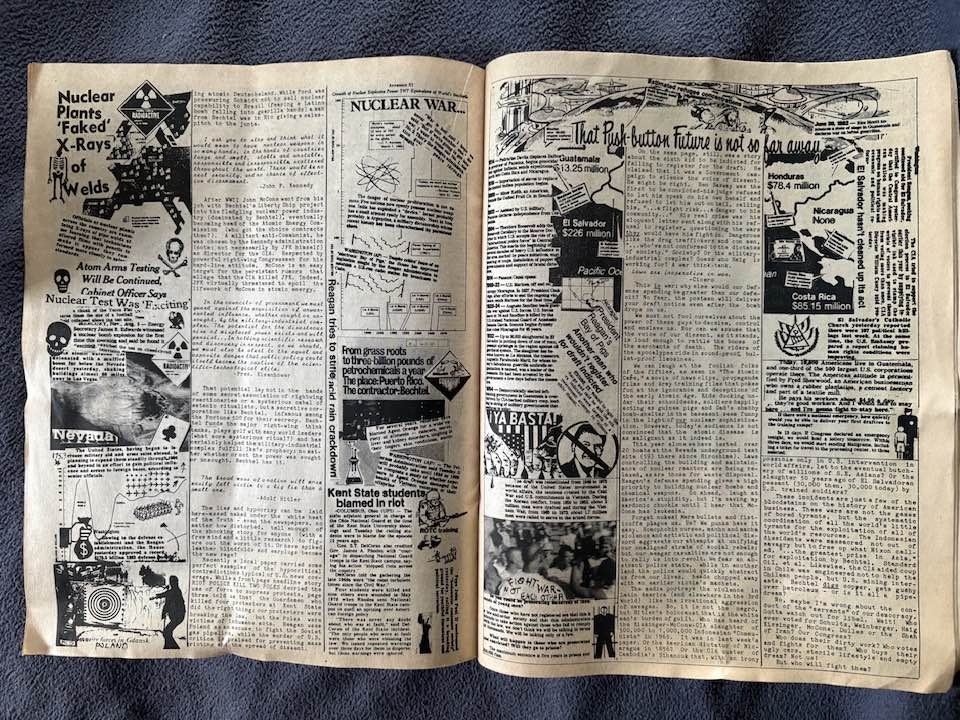
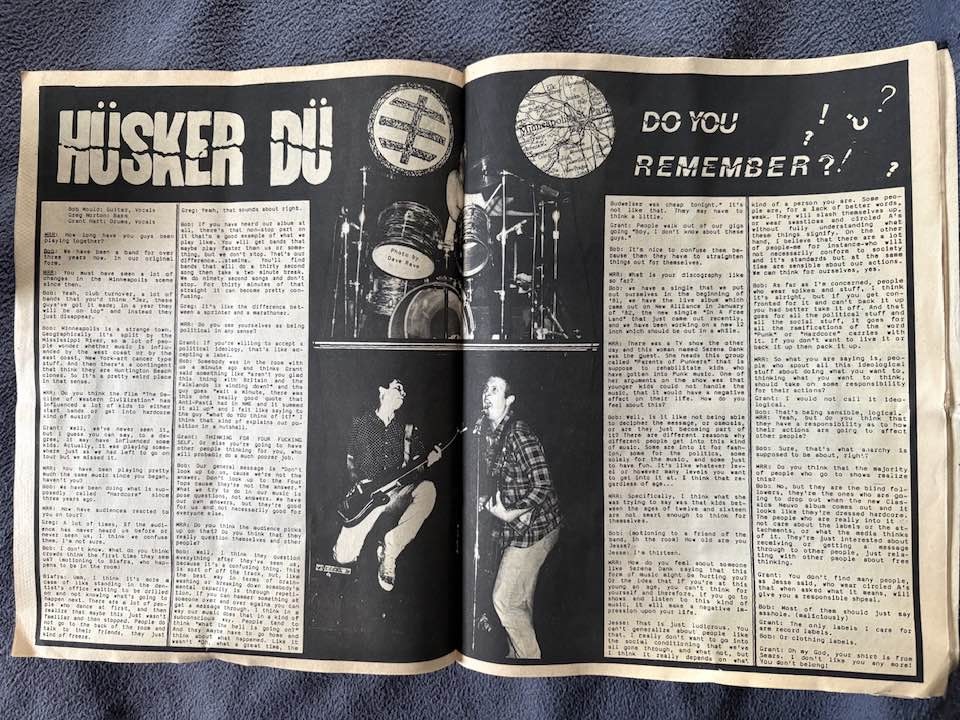
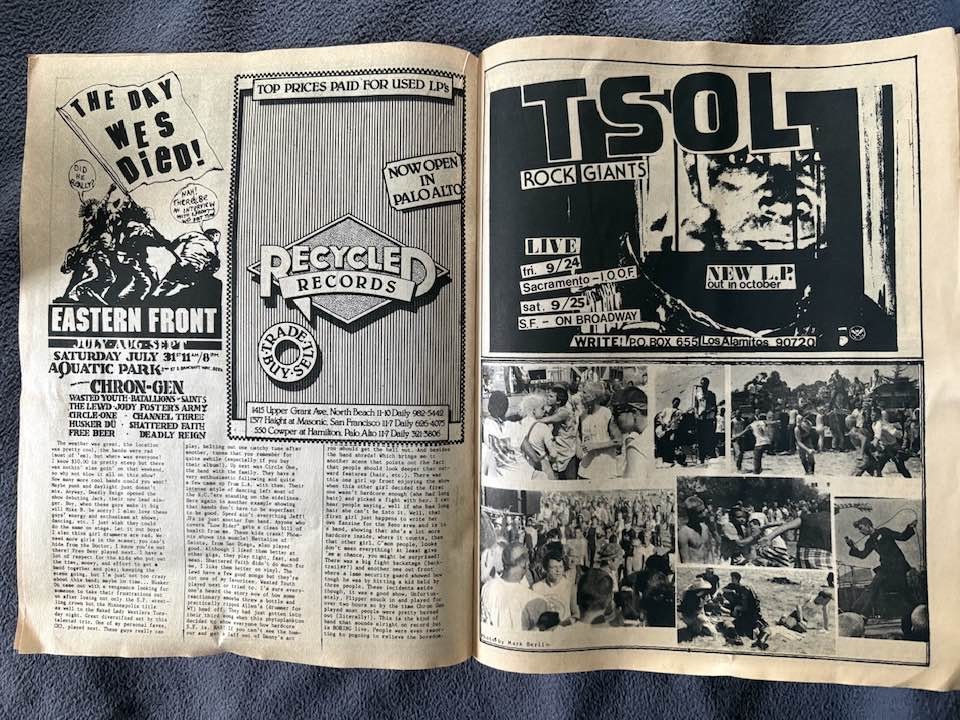
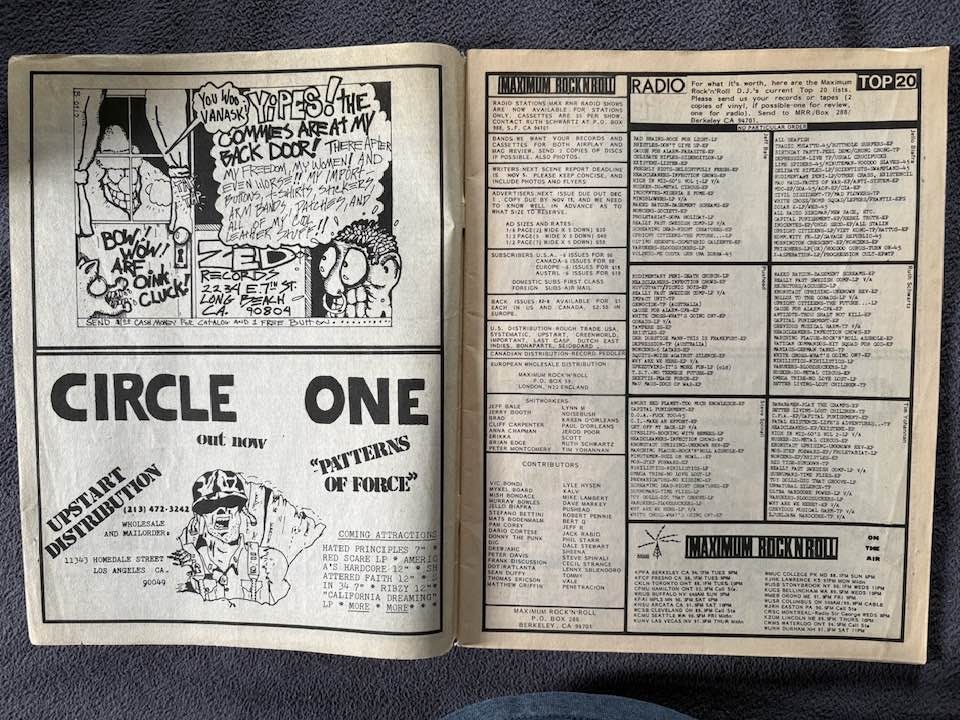
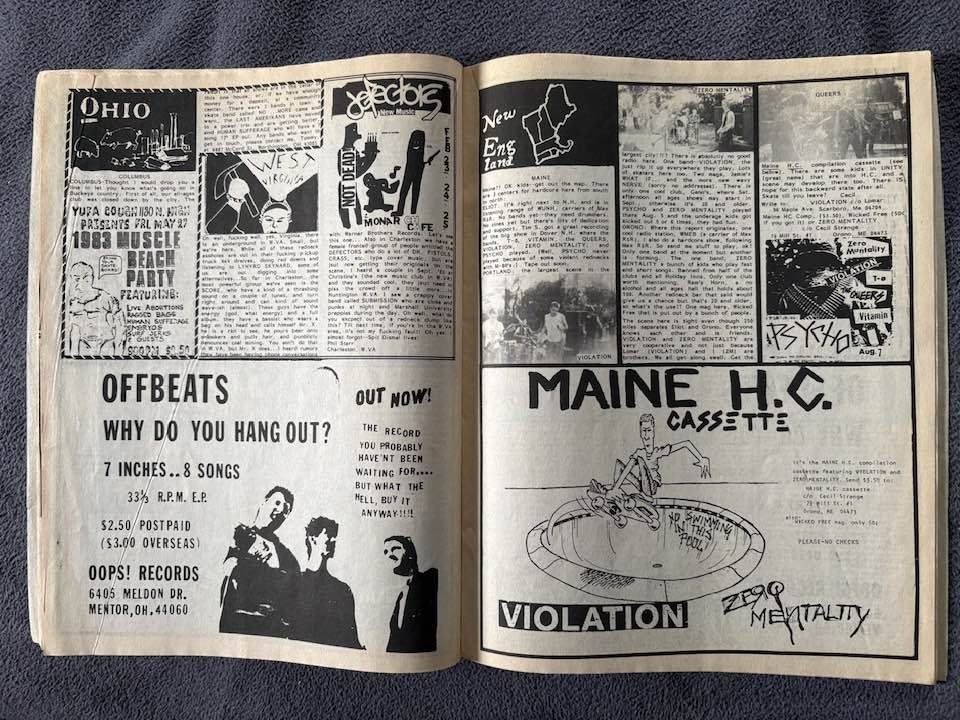
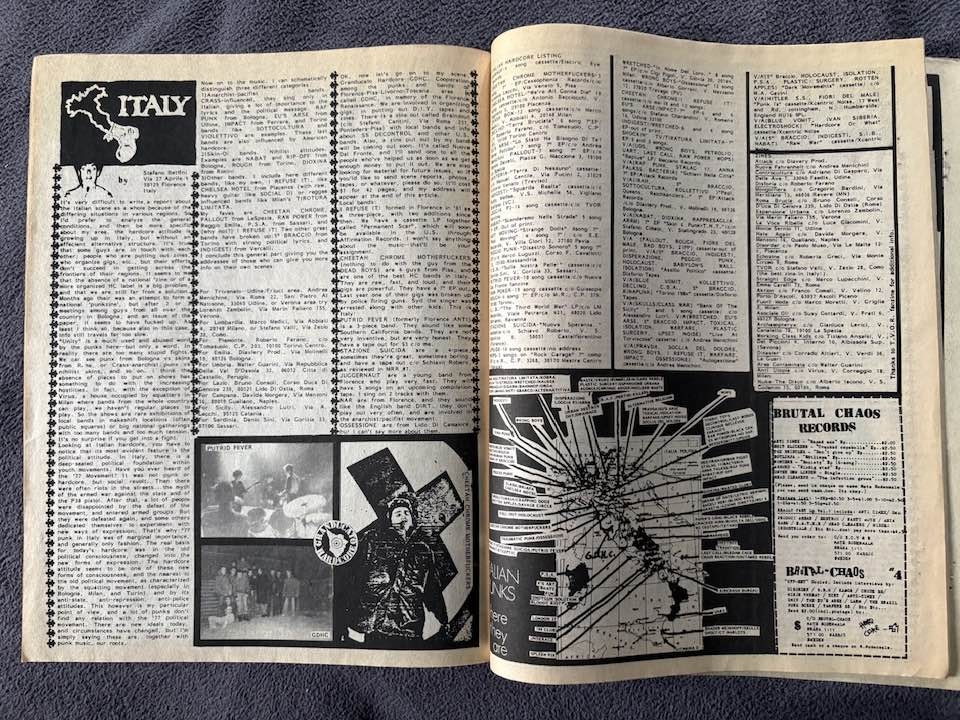
Here are a couple of artifacts from the Bay Area music scene in the 1980s. These are two of the earliest issues of the punk zine Maximum RockNRoll. The magazine was originally founded by Tim Yohannan, who also helped found the 924 Gilman Street club. Vol 1, issue 2 is from 1982. It features a scathing expose on the Bechtel corporation. Indicative of the amateurish feel of the underground press, at least some of its claims about what Bechtel was up to have been confirmed over time. Also included are early interviews with Husker Du and Dirk Dirksen. By issue 9, in 1983, MRR had begun it’s long time practice of focusing on the regional and international punk scenes. There is also a nice listing of what punk was being played on the radio in the Bay Area and elsewhere. Over 400 issues later, Maximum RockNRoll published its last in 2019.
I knew of John Sinclair from John Lennon’s song about him on Some Time in New York City and had a vague idea that he was known for being busted for pot. In fact, I still associate my earliest awareness of the term political prisoner with John Sinclair. I didn’t really know what it meant back then, but I knew it wasn’t supposed to happen here.
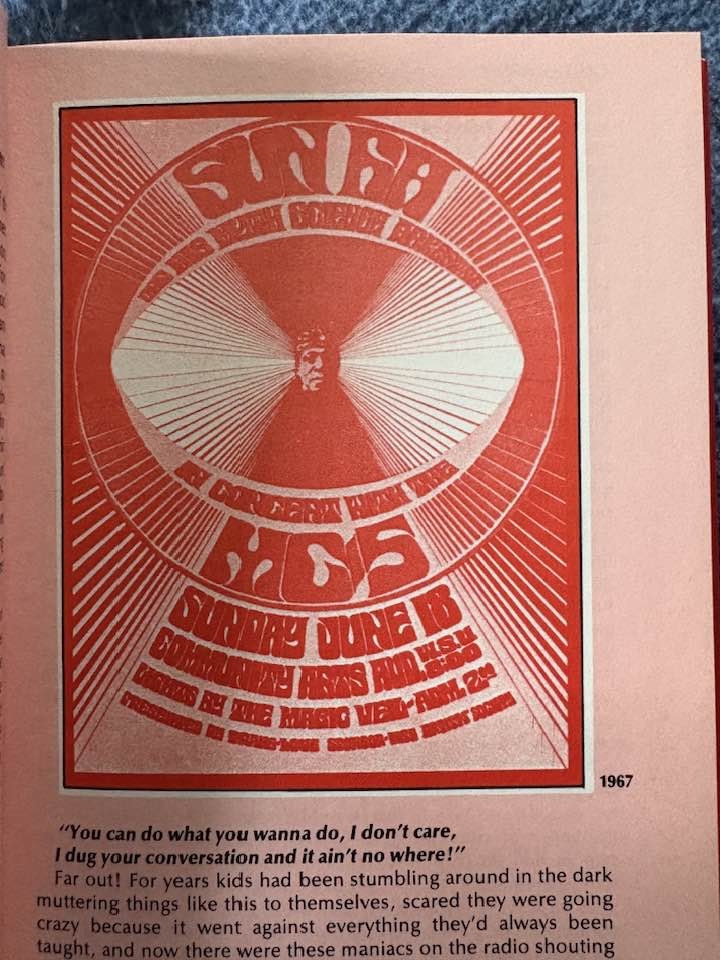
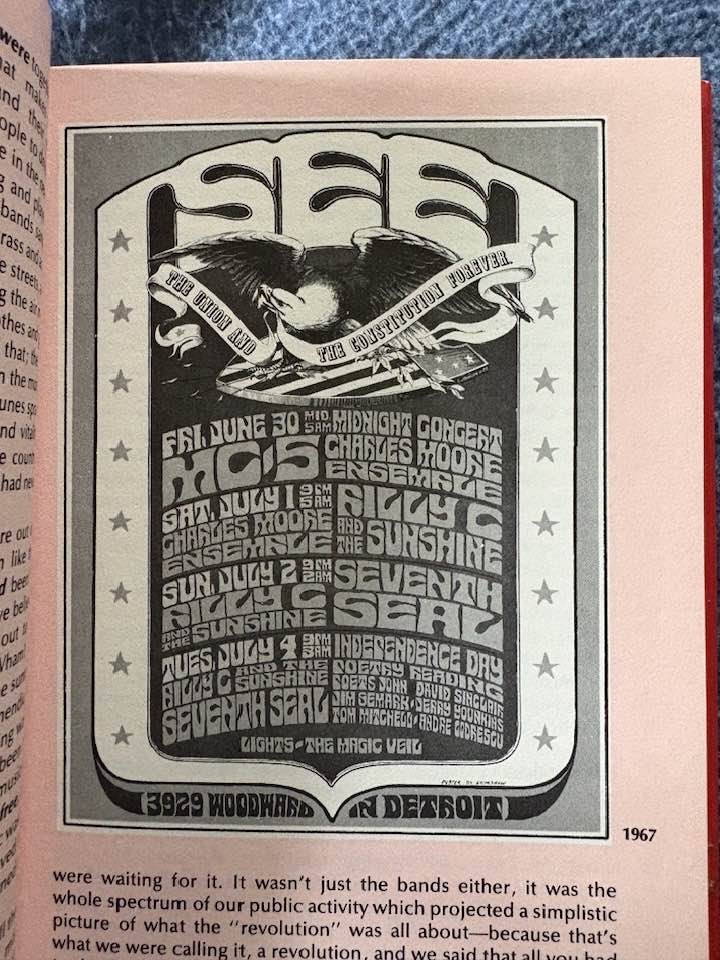
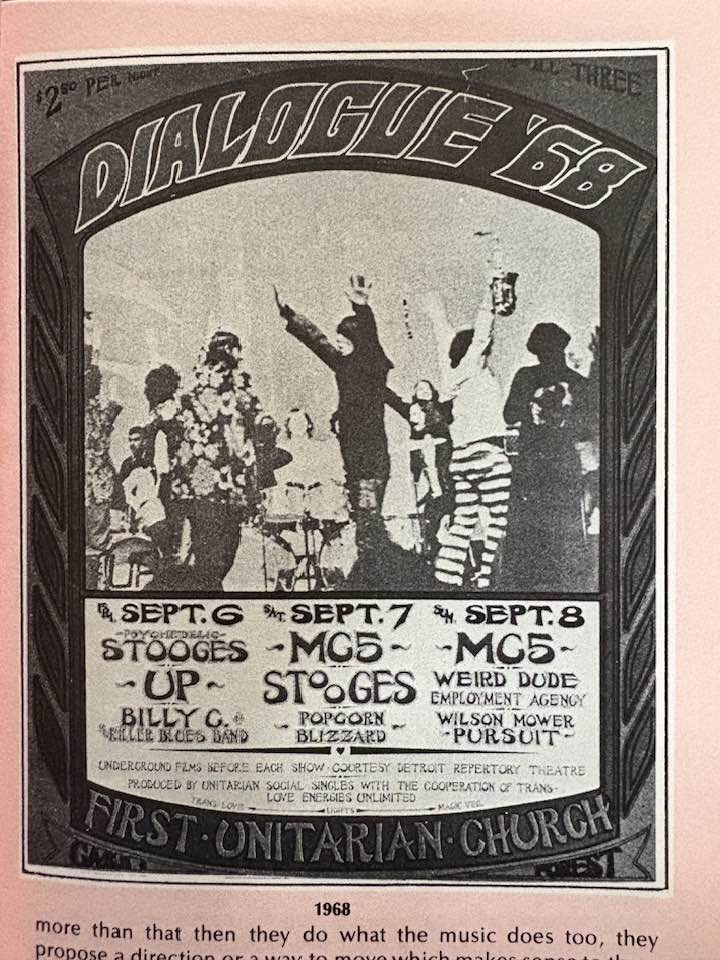
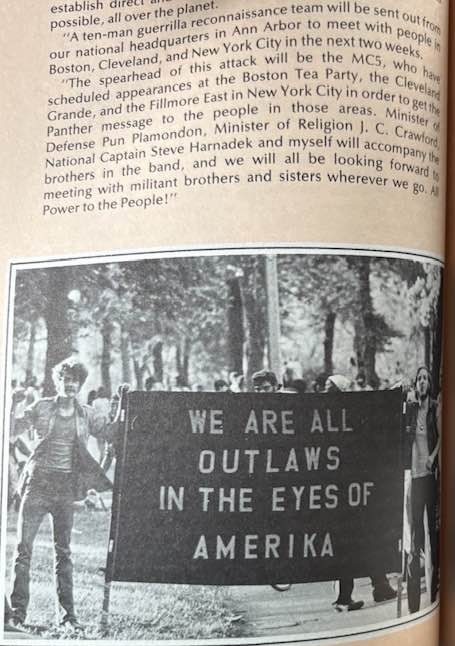
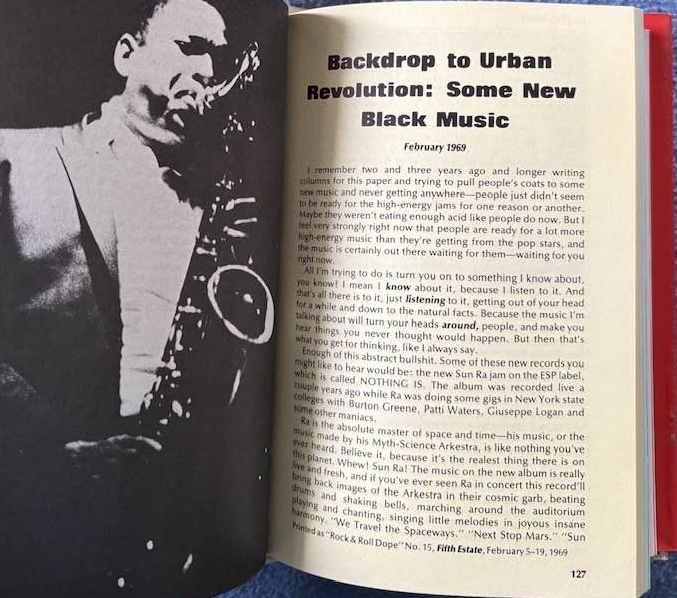
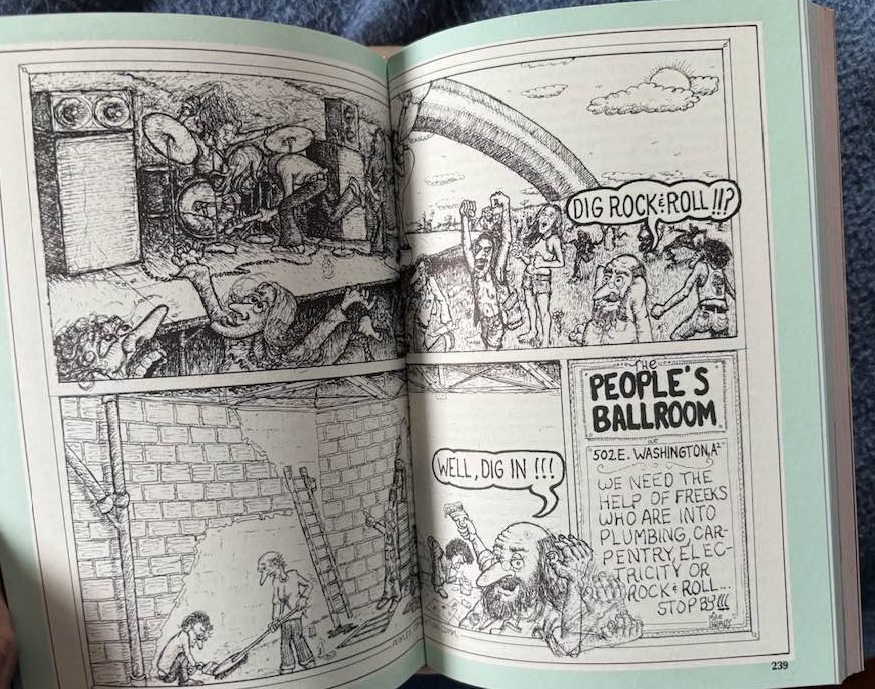
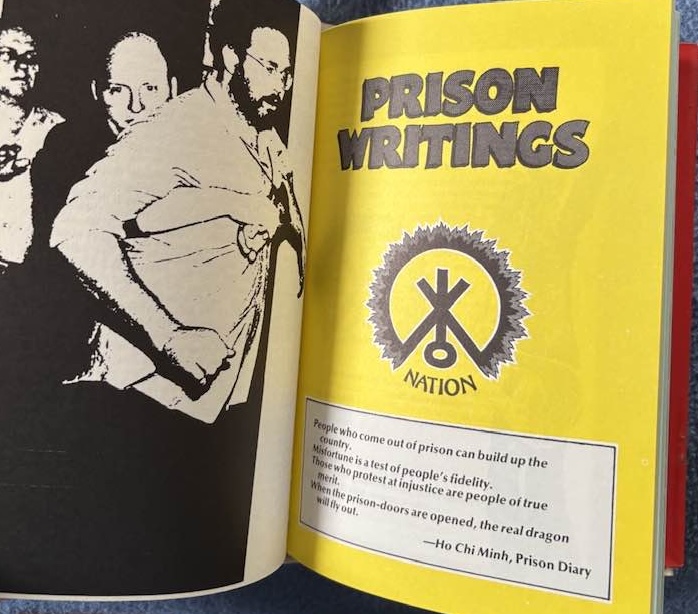
Then I saw this book at a local head shop. It was the 70s in a college town, teenagers hanging out in head shops was normal. The book was revelatory for me. It not only contained Sinclair’s writings, which I admit I didn’t read thoroughly at first, but it is also full of radical illustrations, pictures of MC5 concerts and posters, protests, etc.
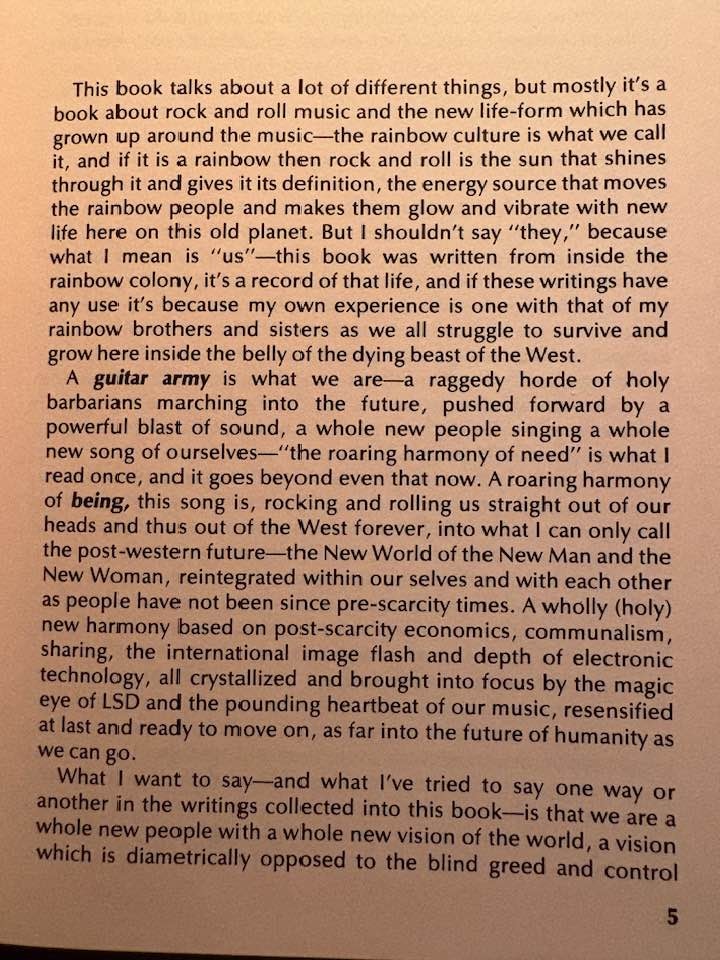
I pulled it off the shelf today and leafed through it for the first time in decades. The first page (text pictured) pretty much encapsulates perfectly the scene that I would aspire to, for better or worse, for much of my young life, propelling me across thousands of miles to hundreds of concerts and protests and smoke-ins and gatherings and friendships. Definitely for the better.
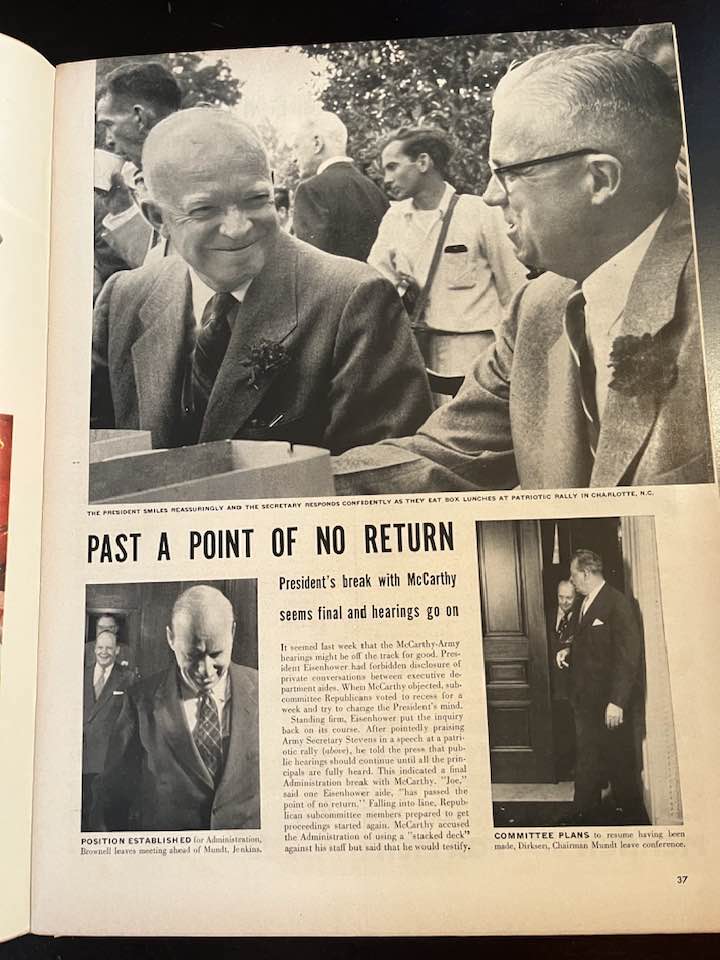
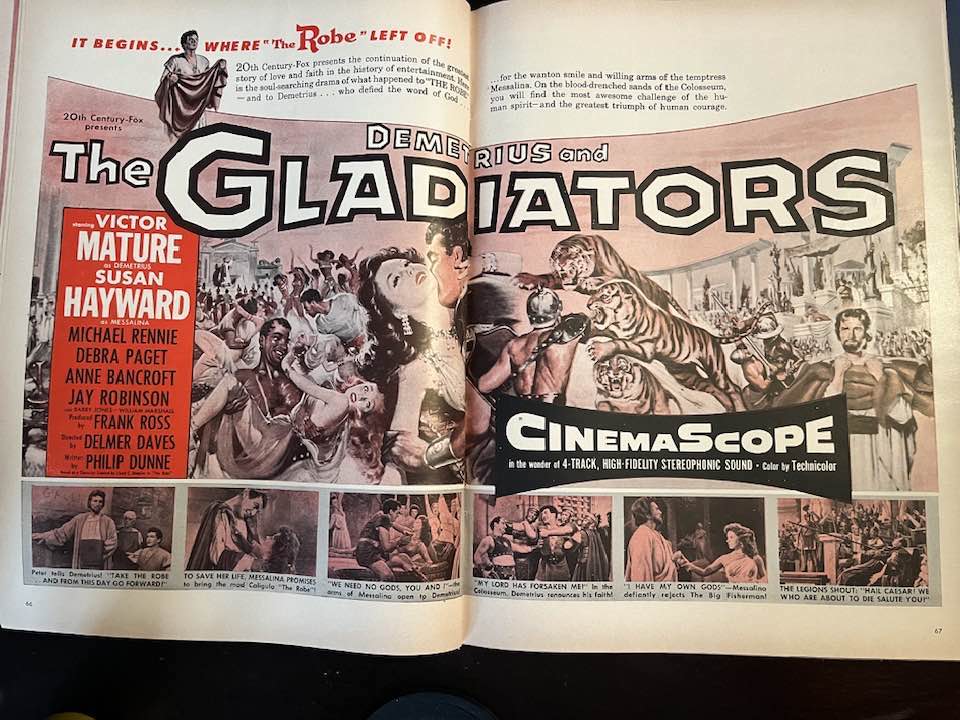
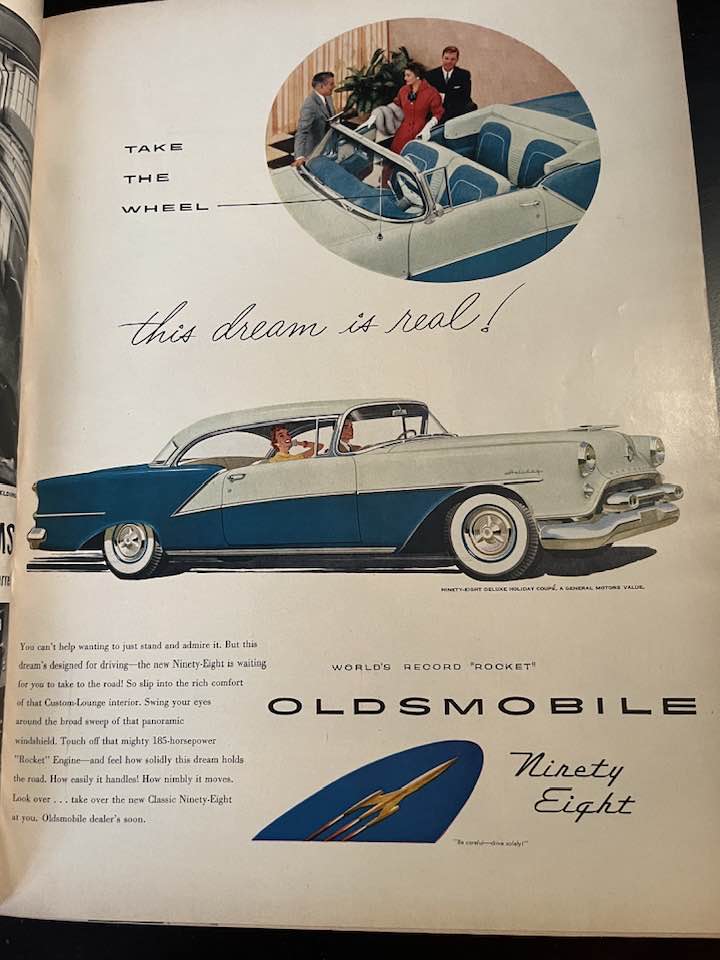
Life Magazine May 31, 1954. You’d be hard pressed to find a month in mid-century American history with more consequential events for the following decades than this one, and Life magazine was there. An article covers the French loss and retreat at the Battle of Dien Bien Phu and the subsequent Geneva Conference that led to the partition of Vietnam at the 17th Parallel. Another reports on the Brown vs Board of Education decision, which signaled the beginning of the Civil Rights era. We also learn that the Army hearings that finally brought down Joe McCarthy were under way.
Senator Joseph McCarthy (R-Wisconsin) had been riding high for several years on his claim that the Democrats were soft on, or in league with, communism and hence the government had become riddled with communists, especially the State Department. The ensuing anti-communist hysteria, known as the “Red Scare,” had brought the Republicans back to power for the first time since before the Great Depression. One tactic of red-baiting that the GOP exploited to great advantage was the claim that Truman and the Democrats had “lost” China by allowing Mao to come to power in the Chinese Revolution in 1949. The crusade known as McCarthyism caused enormous political damage and ruined many careers and lives. But now Tail Gunner Joe’s star was fading. His harsh right-wing grandstanding, much of it unsubstantiated, and his drunken antics had become a liability. Eisenhower had turned on him. Henry Luce on the other hand would remain a major espouser of the lost China accusation for years to come (Chiang Kai-Shek was his close friend). His publications would exert powerful domestic pressure on Eisenhower, who decided to involve the country in a series of Asian misadventures in Indonesia, Laos, and Vietnam.
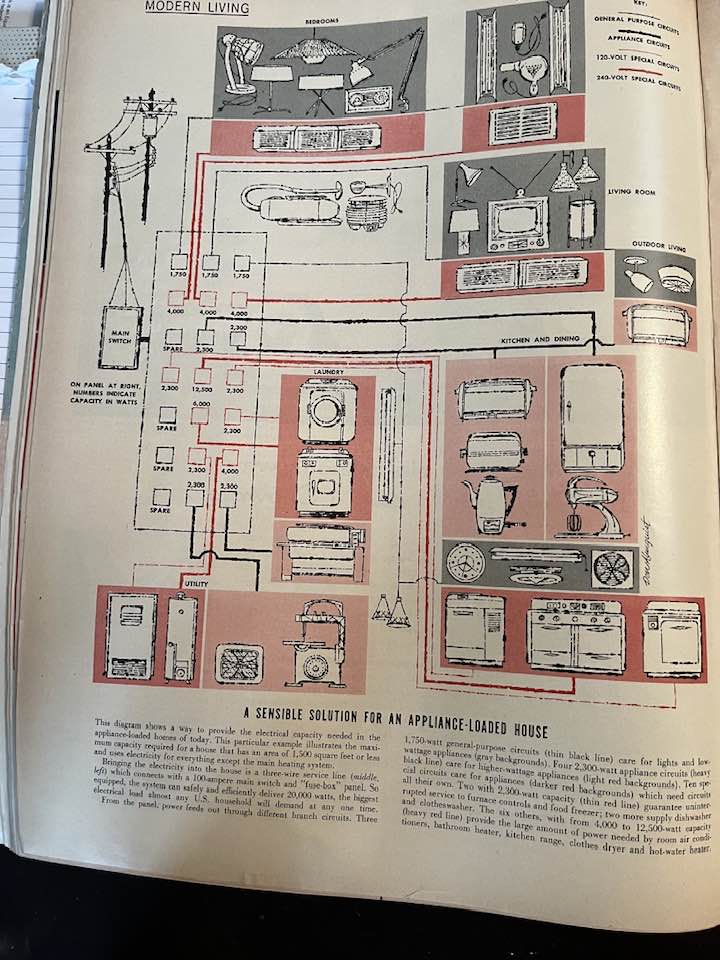
These threads would merge a decade later as the U.S. sent a massive military deployment to Vietnam, many of whom were black, brown and American Indian, in an ill-fated attempt to roll-back the communist threat officially labeled as the “domino theory,” a phrase coined in 1954 by Eisenhower in justifying initial military support for the American installed government in South Vietnam. This issue truly contains the seeds of the sixties. There is also an article on the science of flying saucers and an electrical schematic for “A Sensible Solution For An Appliance-Loaded House.”
How did the Athenians protect their democracy? The Decree of Demophantos. Here is how Google AI explains it: The Decree of Demophantos was a law passed by the Athenian assembly in 410 BCE, after the restoration of democracy following the coup of the Four Hundred. It mandated that all Athenians swear an oath to kill anyone who attempted to overthrow the democracy or held office during such a period, and to reward those who killed such individuals. This decree aimed to solidify the newly reinstated democracy and prevent future coups. Here’s a more detailed breakdown: Context: The coup of the Four Hundred was a period of oligarchic rule in Athens that temporarily replaced the democratic government. Demophantos’s Decree: The decree, inscribed on a stone tablet, contained two key parts: A declaration that anyone who overthrew the democracy or held office during its overthrow would be considered an enemy of the Athenians and could be killed with impunity. An oath that all Athenians were required to swear, affirming their commitment to defend the democracy and punish those who sought to undermine it. Oath’s Purpose: The oath served as a powerful symbol of unity and commitment to democracy. It encouraged citizens to actively defend their newly restored government by explicitly stating that they would kill those who threatened it. Historical Significance: The decree of Demophantos is considered a significant example of Athenian legislation aimed at protecting democracy and demonstrates the lengths to which the Athenians were willing to go to ensure its survival. Relationship to Tyrannicide: The decree is closely linked to the concept of tyrannicide, the killing of a tyrant. It effectively turned every citizen into a potential enforcer of the law against those who would overthrow the democracy.





























 Parallel Narratives