Category Archives: Politics

Forward Into The Past: Utah, In Fit of Nostalgia, Brings Back The Firing Squad

BatistaFireSquadA notable philosopher once wrote: “all great world-historic facts and personages appear, so to speak, twice… the first time as tragedy, the second time as farce.”

The tragedy: occurred in November 1915 when labor organizer and songwriter Joe Hill was convicted on uncorroborated circumstantial evidence and executed by a Utah firing squad. Hill’s case, appearing to be clearly rigged against him, became a national cause célèbre, with many personalities of the day weighing-in on his behalf. President Woodrow Wilson even tried to intervene to stay the execution. But in the grand tradition of states rights Utah would have none of it. After all, the after-party was set and invitations already printed. For his part, Joe Hill had already come to the conclusion (correctly as it turned out) that he was more valuable to the labor movement dead than alive. In a last letter to labor leader “Big Bill” Haywood, Hill asked to be buried across the state line, indicating that he wouldn’t want to be caught dead in Utah.  His last word, shouted while standing blindfolded, was “Fire!”  

The farce: Utah Gov. Gary Herbert signed a bill bringing back the firing squad as a method of execution. Fox News, America’s most trusted purveyors of farce, reported it this way: at the beginning of the article we learn that “The bill’s sponsor, Republican Rep. Paul Ray of Clearfield, touted the measure as being a more humane form of execution. Ray argued that a team of trained marksmen is faster and more humane than the drawn-out deaths that have occurred in botched lethal injections. The bill gives Utah options, he said. “We would love to get the lethal injection worked out so we can continue with that but if not, now we have a backup plan.” How reasonable.

In the name of fair and balanced reporting, Fox gives opponents their say a little further into the story: “Opponents, however, said firing squads are a cruel holdover from the state’s wild West days and will earn the state international condemnation.” And the last paragraph in the article: “The Washington, D.C.-based Death Penalty Information Center, which opposes capital punishment, says a firing squad is not a foolproof execution method because the inmate could move or shooters could miss the heart, causing a slower, more painful death. One such case appears to have happened in Utah’s territorial days back in 1879, when a firing squad missed Wallace Wilkerson’s heart and it took him 27 minutes to die, according to newspaper accounts.” 1879! 

And then there’s Gary Gilmore.

Here’s an idea: let’s bring the execution process into the 21st century. Why not just put the prisoner’s name on the Military’s High Value Target (HVT) hit list and send a drone to kill him one day while out exercising in the prison yard? That is clearly a more humane solution than a firing squad since the prisoner won’t even know what him/her. 

Listen to Ohio State’s own rebel songwriter Phil Ochs sing “The Ballad of Joe Hill”:

Citation:

“Utah lawmakers vote to become only state to allow firing squad.” Fox News Channel. Published December 20, 2015 2:35pm EST

Momentous Days: March 7-8, 1965

On March 7, 1965 the protest marches from Selma to Montgomery Alabama began. The first march was ended by state troopers and some county citizens, who charged on about 600 unarmed protesters after they crossed the Edmund Pettus Bridge in the direction of Montgomery. The event became known as Bloody Sunday. By Monday morning LBJ was knee-deep in a political confrontation of epic proportions. His recorded phone conversations that day show that he was more upset with MLK than with Wallace.

Meanwhile, on the other side of the world, with much less fanfare, his Marines were landing on Red Beach 2 near Da Nang in South Vietnam, marking the beginning of what the Vietnamese call the “American War.” That was March 8, 1965. The next day LBJ authorized the use of Napalm. Before the year was out he would be “waist deep in the big muddy.” Quite a weekend.

Note: six years later, on March 8, 1971, anti-war protesters broke into a Media, Pennsylvania FBI office and stole a trove of classified documents that revealed the FBI’s COINTELPRO (Counter Intelligence Program). The covert program was aimed at spying on, discrediting, and disrupting domestic political organizations, primarily the anti-Vietnam War movement. One of the principal players in the COINTELPRO story was one Mark Felt, later revealed as “Deep Throat” in the Watergate Scandal:


The Mysterious Death of Ruben Salazar

RubenSalazar44 years ago, on August 29, 1970, Ruben Salazar was killed by a Los Angeles County sheriff’s deputy during a peace march against the Vietnam War in Los Angeles. His death is the lasting legacy of a pivotal moment in the Chicano-American civil rights movement. The antiwar march, known as the Chicano Moratorium, was nearly 30,000 strong and thus the largest Mexican-American rally to date. Along the way an “incident” sparked chaos giving sheriff’s deputies the pretext to move in with force, rushing the crowd with billy clubs and tear gas. It soon became the biggest and bloodiest riot in L.A. since the Watts riot in 1965.

Salazar had worked for years at the Los Angeles Times but by the time of his death he had moved on to KMEX, where he felt he had more freedom to report on issues important the Chicano community. By August 1970 he had become the most influential Latino journalist of his day and over the years his criticism of the authorities’ treatment of the Latino community had grown increasingly strident. While covering the march, Ruben took refuge in a nearby cafe when things got too hot in the streets. The cafe was quickly surrounded by the police. What happened next has been the subject of heated arguments ever since. The only certainty is that Ruben Salazar never made it out alive.  The LA County Coroner ruled the killing a homicide but the deputy who’s gun fired the fatal shot was never charged. The L.A. Sheriff’s Department held out until 2012 before releasing its records of the case, and then only to settle under the pressure of a lawsuit brought by the Mexican American Legal Defense Fund. That information has broadened our understanding of the events but by no stretch has the controversy been cleared up. As reported earlier this year by the LA Times the “legacy of Ruben Salazar has reached folklore heights since the journalist’s suspicious death in 1970 at 42.”

Check out these Ruben Salazar resources on the Web:

The LA Times Ruben Salazar Files

Watch The PBS Documentary Here:

Ruben Salazar: Man in the Middle

Trailer:

Studs Terkel Radio Archive

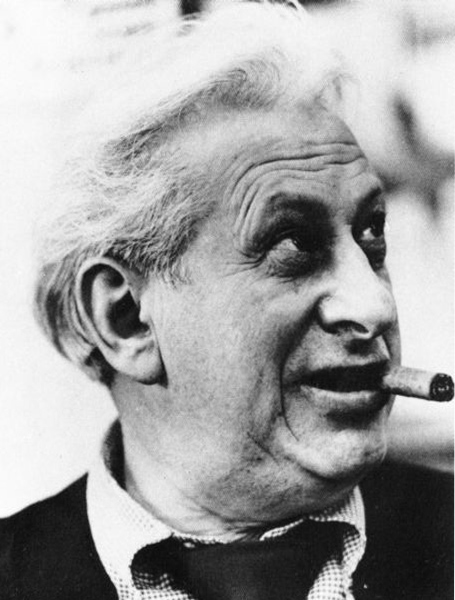
Studs_Terkel_-_1979-1The National Endowment for the Humanities has funded the creation of a publicly accessible digital archive which will stream nearly 5,000 oral history interviews conducted by the great Studs Terkel from his 45 years on Chicago radio. The site is active but currently only a fraction of the material is up. Much more to come. Check it out here:

Studs Terkel Radio Archive

Listen to a sample: Studs interviews Alfred McCoy in 1971 about his book on the drug trade in Southeast Asia and it’s effect on American soldiers in Vietnam.