Category Archives: The Sixties

There’s A Riot Goin’ On

There’s a Riot Goin’ On was recorded, mixed and over-dubbed, in 1970-71 by Sly Stone, mostly alone in the studio. It was made during a period of escalated drug use and turmoil between Sly and his Family Stone. The album is a sharp departure from the group’s previous 1960s records. The upbeat psychedelic soul sound of Everyday People, Dance to the Music and I Want to Take You Higher is instead replaced by a more edgy, funky and rhythmic sound. It is also very pessimistic and reflects Sly’s increasing disillusionment at the turn of 1970s, brought on by political assassinations, police brutality, the decline of the civil rights and anti-war movements, and the Nixon presidency. The first track “Luv n’ Haight” reflects his growing disdain for the hippie counterculture that was retreating from political and artistic activism, and relevance.

It is a commonplace declaration that the Altamont concert represented the “death of the sixties.” Perhaps, but for me this landmark recording also stands as a symbol of the changeover from the hopeful and progressive spirit of the 60s to the malaise and hedonism of the decades to come. This is perfectly captured in the album’s title, which was coined in response to Marvin Gaye’s album released six months before, What’s Going On, There’s a Riot Goin’ On.

As time has passed the album has consistently been praised as one of the greatest and most influential recordings of all time. It is one of the primary archetypes for the funk and hip hop genres that followed. It seems to creep higher with each release of greatest all-time lists. Rolling Stone had it at 82 on its most recent top 500. I personally put it much higher than that, and I bet George Clinton does too.

The Punch Card As Symbol, 1964

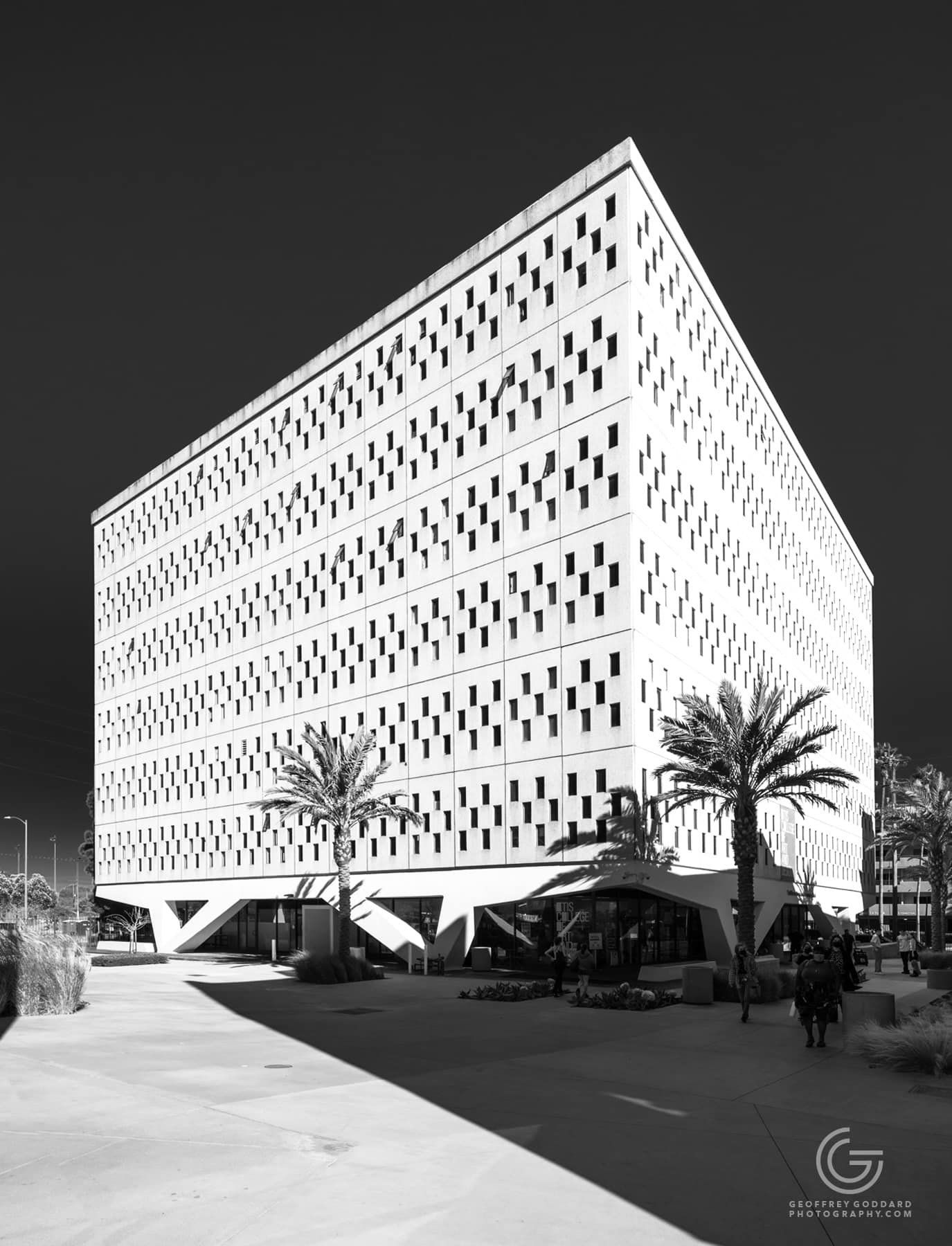
The computer punch card, now a quaint artifact, was an important symbol of the times in 1964.

In 1964 the IBM Aerospace Headquarters building (pictured below) opened in Los Angeles. Originally built to house IBMs data processing facilities this seven-story office building with its “computer punch card” array of windows conducted the earliest versions of machine computing. It is considered an important part of industrial design history and a landmark of mid-century architecture.

That same year, in the fall of 1964, the Berkeley Free Speech Movement occurred, and the punch card was part of it. The confrontation evolved into a battle over academic freedom and the role of the university in society. Was it a factory designed to produce a managing class and “cogs in the machine”, or was it a marketplace of ideas designed to produce educated citizens?

The University of California used computer punch cards for class registration. FSM protestors turned them into a symbol of the “system” and as a symbol of alienation. The argument found its ultimate expression in the “Operation of the Machine” speech made by FSM leader Mario Savio. You can listen to the speech below. For a fascinating take on the cultural history of the punch card, including its role in the campus protests, read “Do Not Fold, Spindle or Mutilate” included below.

“Do not fold, spindle or mutilate” A cultural history of the punch card….

Berkeley Free Speech Movement Timeline

Spy Stories: Reagan, Hoover, Kerr at UC Berkeley in the 1960s

Photographs © Geoffrey Goddard (2022).

Mario Savio’s Speech at Sproul Hall Steps, December 2, 1964

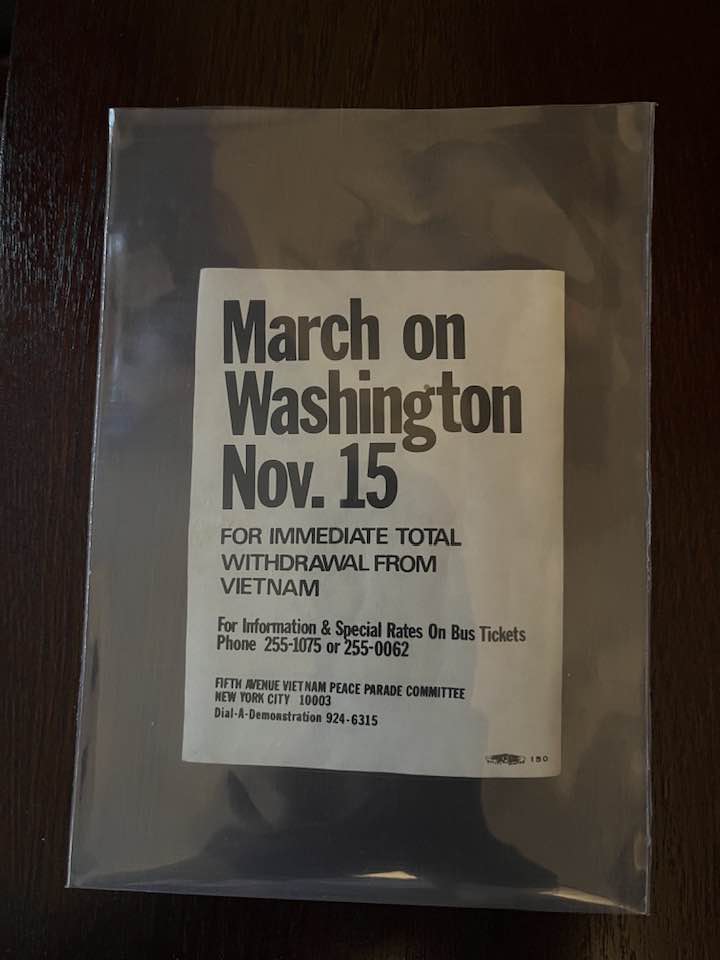
Vietnam Era Anti-War Stickers and Buttons

Personal collection of Vietnam era anti-war stickers and buttons. Many of the major events are represented:

– April 15, 1967. Spring Mobe protests in New York City (300,000 meet in Central Park and march to the United Nations) and in San Francisco.

– October 21, 1967. March on the Pentagon. 100,000 are on the National Mall in Washington DC. Norman Mailer’s book The Armies of the Night describes the event.

– October 15, 1969. National “Moratorium to End the War in Vietnam” was a massive demonstration and teach-in across the United States. Over a quarter of million people attended the Moratorium march in Washington, D.C.

– November 14, 1969. National student strike and “March against Death” in front of the White House.

– November 15, 1969. The Mobe’s 2nd Moratorium March mobilizes 500,000 in Wash DC and San Francisco. The news of the My Lai Massacre had broken a few days earlier.

– April 24, 1971. Demonstration on the National Mall draws approximately half a million protestors to D.C. In addition over 100,00 participate in San Francisco, the largest demonstration on the West Coast.

– The large blue button commemorates the peace treaty signed on January 27, 1973. Hoa Binh is Vietnamese for Peace.

– Eugene McCarthy’s 1968 presidential campaign challenged Lyndon B. Johnson on a primarily anti–war platform. Riding a wave of dissatisfaction after the Tet Offensive McCarthy finished in a strong second place in the New Hampshire primary, prompting LBJ to decline a run for re-election.

– Nixon resigned to avoid impeachment during the Watergate scandal. It all began with Daniel Ellsberg and the Pentagon papers published in 1971. The White House approved the formation of “The Plumbers” to silence Ellsberg. Led by G. Gordon Liddy and E. Howard Hunt, the crime committed was to burglarize Ellsberg’s psychiatrist’s office to search for damning information to use to discredit him. They found nothing. The bungled operation started Nixon and his cohorts down the slippery slope of crimes that culminated in the botched break-in at Democratic National Committee headquarters at the Watergate office complex nine months later.

Henry David Thoreau

Henry David Thoreau. His book Walden and essay Civil Disobedience influenced my thinking greatly when I read them in college. I was not the only one– Tolstoy, Gandhi, MLK, John Muir, Hemingway and Frank Lloyd Wright all mention being profoundly affected by his writings. In the 1960s Thoreau’s concepts of civil disobedience and direct action helped shape the strategies of the civil rights movement, the free speech movement and the anti-Vietnam War movement. His spirit is never far from the surface throughout the SDS manifesto, the Port Huron Statement, written by Tom Hayden.

When arrested in 1846 for refusing to pay poll taxes because of his opposition to slavery, the event that led to his writing of Civil Disobedience, he was visited in jail by Ralph Waldo Emerson. Emerson reportedly asked: Henry David, what are you doing in there? Thoreau’s reply: Ralph Waldo, what are you doing out there?