Category Archives: US Military

Stamps, Gold, And Sandinistas: A Short History of Gunboat Diplomacy in Nicaragua

The Panama Canal almost ended up in Nicaragua…

In 1902, after years of struggle and tragedy far from home, the French were grinding down in their calamitous Panama Canal effort. The overextended European power was anxious to cut its losses and hoped to entice the adventurous U.S. President, Theodore Roosevelt, into assuming ownership of the disastrous headache. The initial price offer was reportedly $100 million. Here in the States powerful business forces were pushing our government to blast our own shipping shortcut through Nicaragua and Congress was leaning toward the Nicaragua plan. The House had already voted in favor of building the canal there and it seemed a virtual shoo-in that the Senate would follow suit. The French reduced the price tag to $40 million out of desperation but the prospects for a successful sale appeared dim.

Then fate intervened. On May 8, 1902 Mount Pelee erupted on the island of Martinique, killing an estimated 29,000 people! It remains one of the deadliest volcanic eruptions in history. Even though Martinique is over 1,500 miles from Managua, it is in the Caribbean, and it was big news, so the question of volcanoes in the Nicaraguan canal zone resurfaced on Capitol Hill. The Nicaraguans sternly denied the presence of any active volcanoes and for the time being the vote looked safe.

According to author Stephen Kinzer, the French Panama Canal Company had hired an agent, William Cromwell, to lobby the U.S. Congress for the Panama option. Cromwell was about to leave town empty-handed when at the last minute a colleague showed him a recent Nicaraguan postage stamp. In an episode of unbelievable bad timing for the Nicaraguans, the stamp displayed a picture of the Momotombo volcano spewing lava and smoke. Seizing the moment, the lobbyist reportedly scoured the various Washington DC area stamp sellers and acquired copies to circulate to the senators. Accompanying the stamp was a note suggesting that the evidence proved that Nicaragua was no stranger to violent geological events and the Nicaraguans knew it. It was a Hail Mary, but the stamp ploy was successful. On June 28, 1902 The Senate voted for the Spooner Act authorizing the purchase of France’s Panama Canal assets. The Nicaraguan canal was dead. It was in an amazing turn of events that had devastating consequences for Nicaraguan people. (See Kinzer, Stephen – Overthrow: America’s Century of Regime Change From Hawaii to Iraq. Times Books, 2006)

The Fletcher Brothers’ Gold Mine…

When it looked like the canal would traverse Nicaragua, American officials and Nicaraguan President Jose Santos Zelaya enjoyed positive relations. After the deal fell through everything changed. Zelaya’s hostility toward foreign interests operating in and near his country grew. With time his rhetoric of economic nationalism proved to be his undoing. In 1906 he sent troops to neighboring Honduras, overthrowing a government that ruled at the behest of the United Fruit (Chiquita), Standard Fruit (Dole), and Cuyamel Fruit Companies.* He then tried to foment revolution in El Salvador for similar purposes. His efforts brought the area to the verge of international war, prompting intervention in Honduras by the United States to restore order, i.e., the fruit cartels.

Eventually the American interests decided enough was enough. According to Kinzer, American President William Taft closely followed the increasingly belligerent doings of Mr. Zelaya. When Zelaya threatened to cancel the lucrative La Luz y Los Angeles mining concession, and seize the mines held by the influential Fletcher Brothers of Pennsylvania, Taft’s Secretary of State Philander Knox used the pretext to go on the offensive. Kinzer describes the connection:

“the Philadelphia-based La Luz and Los Angeles Mining Company … held a lucrative gold mining concession in eastern Nicaragua. Besides his professional relationship with La Luz, Knox was politically and socially close to the Fletcher family of Philadelphia, which owned it. The Fletchers protected their company in an unusually effective way. Gilmore Fletcher managed it. His brother, Henry P.Fletcher, worked at the State Department, holding a series of influential positions and ultimately rising to undersecretary. Both detested Zelaya, especially after he began threatening, in 1908, to cancel the La Luz concession. Encouraged by the Fletcher brothers, Knox looked eagerly for a way to force Zelaya from power.”

Knox commenced a sabre rattling campaign in the press. He seized on several minor incidents in Nicaragua, one in which an American tobacco merchant was briefly jailed, to paint the Nicaraguan regime as brutal and oppressive. He sent diplomats to Nicaragua whom he knew to be strongly anti-Zelaya, and passed their lurid reports to friends in the press. Soon American newspapers were screaming that Zelaya had imposed a “reign of terror” in Nicaragua and had become “the menace of Central America.” As their sensationalist campaign reached a peak, President Taft gravely announced that the United States would no longer “tolerate and deal with such a medieval despot.”

The handwriting was on the wall for the long-serving Nicaraguan president. In October 1909 an American proxy, General Juan Jose Estrada, declared himself president, igniting revolution in the country. When U.S. officials tried to persuade Costa Rica to invade Nicaragua in support of Estrada Costa Rican officials declined, stating that they considered the United States to be a more serious threat to Central American peace and harmony than Zelaya. Taft then ordered troops to Panama to further intimidate the besieged Zelaya. In December, the Nicaraguan president ordered the execution of two U.S. soldiers of fortune for fighting in Estrada’s rebellious army. Probably not the wisest course of action. The United States broke off diplomatic relations and the Marines landed in the country. Within two months Zelaya was forced to resign. He had ruled Nicaragua since 1893. Estrada later marched unopposed into Managua. The New York Times printed this when Estrada was sworn in: “On that day began the American rule of Nicaragua, political and economic.” (Kinzer – Overthrow)

A succession of conservative rulers went on supporting the U.S. military occupation that lasted until 1933. Meanwhile, the Fletcher Brothers continued to run their gold mines in Nicaragua.

The Sandino Insurrection…

After the fall of Zelaya the country endured years of humiliating subservience to foreign interests, with pliant rulers propped up by the U.S. Military. In the mid-1920s opposition increased, finally spilling over into civil war. By 1927 the war had been going on for three years and the fighting was becoming a real threat to U.S. interests. Rebels began to menace American companies, including the Fletcher owned mines. The American President, Calvin Coolidge, countered by sending more troops and proposing a solution which entailed United States oversight of a presidential election in 1928. In addition, funding was provided for the creation of a new national security force that was to be trained by the Marine Corps and nominally led by Nicaraguan soldiers, The Guardia Nacional de Nicaragua was born. (See U.S. Naval institute – Marines in Nicaragua, 1927-32)

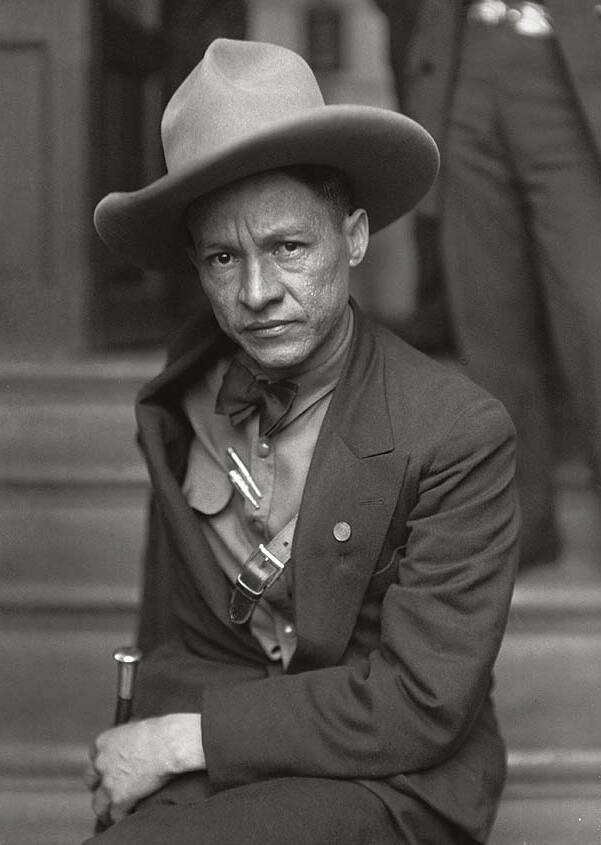
The civil war was taking a heavy toll on Leftist forces. Many rebels had left the field, or had been killed. One refused to back down. In July 1927, with his legendary San Albino Manifesto, the revolutionary, Augusto “Cesar” Sandino, proclaimed his war of resistance against U.S. intervention. Over the next six years, his forces, the original Sandinistas, engaged in a military campaign that was a classic example of asymmetric guerrilla warfare. Once again, the Fletcher Brothers and their mines were at the center of events, and once again an American president sent troops, but this time the Marines could not save them.

According to a Herald Tribune report on April 23, 1928:

“The first report of the raid reached Mr. Fletcher, who is brother of Henry P. Fletcher, ambassador to Rome, on Saturday, April 21. It read: “On the 12th Sandino raided La Luz (name of the mine), taking all gold, money, merchandise, and animals. Also Marshall and all employees prisoners.”

“Mr. Fletcher immediately communicated with the State Department, asking that the Marines be sent to rescue the prisoners. Fletcher indicated that Sandino had returned to the mine following the raid on April 12 and was forcing the superintendent and his American assistants to operate the property, which he says produces about $30,000 worth of gold monthly.” (Herald Tribune April 23, 1928)

On May 7, 1928 Time magazine reported:

“Last week President James Gilmore Fletcher of the mining corporations and his co-owning brothers, G. Fred & D. Watson Fletcher, all of Manhattan, were irate. President Fletcher dashed to Washington to inform Secretary of State Frank Billings Kellogg that much was amiss in the valley of the purling Pis-Pis River. The Fletcher mines had been seized, he declared, by the forces of General Augusto Calderon Sandino, whom. U. S. Marines have been hunting vainly up and down Nicaragua for many a month.

To correspondents President Fletcher said bitterly: “My brothers and I are not in politics down there, and we have nothing to do with Wall Street. . . . From the meagre information I have the losses from looting our movable property may run to $100,000; but if the pipe line and mill plant have been destroyed the loss might run to $3,000,000 . . . and the owners would face ruin. … I guess this is what comes of investing one’s money in foreign countries.” (Time May 7, 1928)

On May 28, 1928 Time Magazine quoted from Sandino’s letter to Fletcher:

“I have the honor to inform you that on this day your mine has been reduced to ashes. . . . The losses which you have sustained in the aforementioned mine you may collect from the Government of the United States and Mr. Calvin Coolidge, who is truly responsible for the horrible and disastrous situation through which Nicaragua is passing at present.

“As long as the Government of the United States of North America does not order retirement of its pirates from our territory there will be no guarantee in this country for North Americans residing in Nicaragua.

“In the beginning I was confident that the people of North America would not be in accord with the abuses committed in Nicaragua by the Government of Mr. Calvin Coolidge, but I am now convinced that North Americans in general uphold the attitude of Coolidge in my country; and it is for this reason that all that is North American that falls into our hands assuredly will have come to its end.

“(Signed) Augusto Calderon Sandino, “(Seal)”

Such was a letter found last week amid the ruins of the two Nicaraguan gold mines owned by brothers of U. S. Ambassador to Italy Henry P. Fletcher which were recently gutted by Nicaraguan guerrillas with a loss of $2,000,000. (Time, May 28, 1928)

A year later, May 9, 1929 Time Magazine reported:

“President Coolidge sent 6,000 Marines to Nicaragua and their officers told them to “Get Sandino dead or alive!” In two years of furious guerrilla fighting no one ever “got” General Augusto Calderon Sandino, though at last this slender, sallow, wild-eyed patriot was driven from Nicaragua. Last week a roving correspondent found Sandino in Yucatan, the arid Mexican state which bulges like a sand blister out into the Gulf of Mexico.” (Time May 9, 1929)

After a devastating earthquake hit Managua, Sandino returned to Nicaragua in 1931 to continue the fight for liberation. His continued resistance was a key factor in the eventual removal of the Marines from Nicaragua in 1933, although deep military budget cuts brought on by the Great Depression in the U.S. were also critical.

Sandino was never caught by the Marines, but he was eliminated nonetheless. While attending peace talks at the Presidential Palace in 1934 he was double-crossed by General Anastasio Somoza of the Guardia Nacional. The rebel leader’s murder was most likely carried out without the approval of the president, Juan Sacasa. The Guardia then forced Sacasa out of office and installed Somoza two years later. The Guardia Nacional de Nicaragua became Somoza’s personal police force and it kept the Somoza family dynasty in power for the following four decades. But in the end, in a textbook example of the phenomenon known as blowback, Augusto Sandino’s struggle, his defense of national self-determination, and his development of guerrilla warfare tactics, inspired the rise of Nicaragua’s Frente Sandinista de Liberacion Nacional (FSLN), the modern Sandinistas, who finally ended the right-wing Somoza family tyranny in 1979. What goes around comes around.

Epilogue...

Nicaragua’s failed dream of a canal linking its Atlantic and Pacific coasts turned out to be a costly nightmare. After the stamp episode and Zelaya’s subsequent overthrow by agents of the United States the country suffered through a series of banana wars and decades of tin-pot dictators and brutal Somoza family rule on behalf of American interests. The promise of the Sandinista revolution in 1979 was never realized, it did not arrest the poverty and strife brought on by years of political repression and economic instability. Today, its radical goals have largely faded into thermidor.

Panama’s reward for success on the other hand has been considerable. Around 14,000 ships transit the Panama canal each year, carrying 300m tons of cargo, earning the country about $2.5 billion in 2022. In 2022 the IMF ranked Panama 55th in the world in GDP per capita adjusted for relative purchasing power, Nicaragua did not make the top 100. (Panama Canal Traffic by Fiscal years)

*In 1904, the writer O. Henry coined the term “banana republic” to describe Honduras, inspired by his experiences there, where he had lived for six months.

Also of interest:

United States Intervention in Nicaragua, 1909-33

Congressional record, Senate April 1928

Remembering Sandino – Jacobin Magazine March 7, 2017

Jungle Journalism. Time Magazine March 26, 1928

William Walker Bio

Chesty Puller Bio

The Marines Pioneer Air Support in Nicaragua

How a US president and JP Morgan made Panama: and turned it into a tax haven – Guardian April 9, 2016

Cambodia, Kent State and the Kissinger Question?

May 4, 1970. Tin soldiers and Nixon coming. One of my long-standing fantasies has been to ask Henry Kissinger: if you could have a do-over, would you still instruct Nixon to invade Cambodia? Of course I’d have to administer some sort of truth serum first….

In many ways the Vietnam war had begun to turn in the United States’ favor by 1970. Albeit a political victory, the Tet Offensive in early 1968 had been a military disaster for the Vietcong.* Thousands of the best VC warriors were killed. As a result the authority of their Northern leaders had eroded greatly in VC eyes. For their part, Hanoi had lost faith in the southerners as surrogate fighters. By 1970 the VC was almost wiped out as a fighting force, and along with it went much of the tactical connection between the revolution and the villagers. The fish had almost been stripped from the water. The war was being fought primarily by NVA troops coming down the Ho Chi Minh Trail. But how long could they keep it up? In addition their de facto fifth column in the States, the anti-war movement, was fading. Peace talks were beginning to bear fruit for the first time. A negotiated settlement, what seemed like a pipe dream just a short time earlier, now seemed a real possibility. 

At home, as mentioned above, after years of marching, much of the anti-war movement had splintered. After turning out by the hundreds of thousands for protest events– Vietnam Day and the Teach-ins in 1965, the March on the Pentagon in 1967, Chicago 1968 and the National Moratorium in 1969– many had become demoralized by the lack of success and had gone home. Press and media coverage was also dissipating, the war was still raging in South Vietnam but it was no longer daily front page news. It seemed that the nation had decided to check out. Then suddenly, out of the blue it, Nixon invaded Cambodia. It was like throwing gas on a fire that appeared to be burning out.

Here is what was lost at that moment, by that decision:

1) World Stage: the war was never really supported by the allies but, not wanting to strain relations with their most powerful partner, most condoned it by looking the other way. Nevertheless, throughout the 1960s America’s credibility steadily plummeted along with its fortunes on the battlefield. Our friends couldn’t reconcile what they were seeing on TV and reading in newspapers with what they were being told by American leadership. This optic had been a signature of the war domestically for years, US military press briefings were famously known as the five o’clock follies, but the allies were slower to come to the conclusion that they too were being taken for a ride.

While Washington publicly denied it the U.S. Air Force had been secretly bombing in Cambodia and Laos throughout much of the war. They got away with it for the most part because the focus of reporting was primarily on what was happening next door in Vietnam. The invasion of Cambodia in 1970 sent reporters streaming across the border along with the troops, many of whom saw the tell-tale signs of previous bombing and reported on it.** Suddenly Cambodia went from a largely unknown sideshow on the world stage to front page news. Whatever credibility Washington still had internationally was severely damaged at this point. 

In truth, I doubt that Nixon or Kissinger gave a damn what the allies thought. In fact, it was deals made later with the enemies, Russia (SALT1) and China (1972 visit), not the allies, for which Nixon would end up being remembered. Those were master strokes indeed, and quickened the end of the war by peeling off the primary bankrollers from the Vietnamese cause, but it’s debatable whether the U.S. has ever fully recovered our prestige in the eyes of the world after our debacle in Vietnam and Cambodia. 

2) Vietnam: by 1970 North Vietnam’s benefactor nations, China and the USSR, were growing impatient with the seemingly endless war (remember the conflict really began way back in 1945 with the French). The war was beginning to become a political liability, especially for the Russians, who were already making overtures to the west to open dialogue on nuclear arms control. It had also become a money pit. Both countries were growing tired of sending support personnel and materials at discounted rates. Ho had died about six months earlier and the pressure was on the North Vietnamese politburo to come to the peace table seriously.

The invasion of Cambodia, its relative failure, and the political reaction to it back in the States, most famously at Kent State, immediately turned the situation back in North Vietnam’s favor. College campuses erupted across the country and protestors flooded back into the streets. Suddenly the North Vietnamese project had new legs as the Chinese and Russians watched the pictures of mayhem and discord in the heart of enemy territory. The time was again right to strike while the iron was hot. Each decided to renew the commitment to the cause. It would be another two and a half years before serious peace talks would resume.

3) Cambodia: Cambodia’s Prince Sihanouk had been walking a tight rope to keep his country out of the war on his doorstep. Under the guise of neutrality, which really wasn’t, he had so far miraculously kept out of the line of fire. But to do it he had made a deal with the North Vietnamese communists to allow them to use bases in his country near the border with South Vietnam and transport war materials through his port, called Sihanoukville. In return the North promised to contain the burgeoning monstrosity growing within Cambodia’s borders, the Khmer Rouge. What happened after they left indicates that the North Vietnamese troops had had a measure of success in this. Here’s how they left…

American generals, and pro-war pundits, had been calling for a Cambodian invasion for years. Because of the allowance by Sihanouk of NVA troops on his territory, in places like the Parrot’s Beak, within quick striking distance of Saigon, they bellowed that it was not a fair fight. They may have been right, but we were in someone else’s neighborhood, and fair doesn’t always enter into the equation. At any rate, LBJ’s fear of condemnation by western allies and world opinion kept him within the lines. But he bowed out in 1968. Enter Nixon/Kissinger. 

In March 1970 Sihanouk was ousted in a coup by Lon Nol. The CIA’s role has been disputed, author Tim Weiner in Legacy of Ashes says that the agency was caught off guard, nevertheless our government quickly backed Lon Nol. Sihanouk was gone, his country seized from him while on vacation. In the ensuing chaos, Lon Nol opened the door for a U.S. invasion. Nixon/Kissinger, motivated by the relentless urging from the Right, and a recent viewing of George C. Scott in Patton, pulled the trigger. The troops poured across the border on May 1, 1970 (ARVN had gone in the day before). In the end the operation was indecisive, several bases were captured, but not the command base that was the object.

From the long view of history though, what did occur was the migration of the North Vietnam troops and bases across the border to relative safety in Laos. Thus removing a critical buffer to the rise of the Khmer Rouge. The vacuum was quickly filled by those murderous thugs. The threat of U.S. military retaliation kept the Khmer insurgency at bay for a time (the U.S. maintained an embassy, an ambassador and military police for five more years in Phnom Penh), but it continued to grow, and kill, in the countryside, waiting for the chance to attack the heart. That chance came when the Americans evacuated in April 1975.

Was the Cambodian genocide inevitable? One can’t really say for sure. One thing is clear though, the removal of the NVA in 1970 allowed the cancer to grow in the shadows. The Vietnamese would not return until 1979, when they came back to crush the Khmer Rouge and put an end to the killing fields. Nearly 2 million Cambodians died in that despicable bloodbath.

4) The United States: when Nixon went on TV in prime-time on the night of April 30, with his bulldog persona and colorful battle maps, the country was blind-sided. Most people had no idea about the secret bombing that had been going on in Cambodia (or Laos). Just days before, Secretary of State William P. Rogers had testified before the House Appropriations Subcommittee saying “the administration had no intentions…to escalate the war. We recognize that if we escalate and get involved in Cambodia with our ground troops that our whole program [Vietnamization] is defeated.” (1) Rogers and Secretary of Defense Melvin Laird were both opposed to any such operation. They argued that it would re-ignite domestic opposition in the U.S. and might derail the ongoing peace negotiations in Paris. Both were allegedly castigated by Henry Kissinger for their lack of enthusiasm. It turned out both were right!

Many watching in the U.S. must have wondered what the hell was going on. By 1970 the line from the war managers was that we were winding down, Nixon had reduced troop levels significantly, in fact he just recently announced the withdrawal of another 150,000 troops later in the year, the boys will be home before you know it, as winners. Then came Cambodia, a well-coordinated American invasion of a new country, an expansion? People watched the carnage on TV in their living rooms, only this time the killing was happening at home, on college campuses. The Kent State massacre, as it has come to be known, was a crucial turning point in public opinion against the war. It took a while though, the original public reaction was strongly against the demonstrators. But over time the image of a student dead on the ground became one of the most lasting images of the war. Eventually even parents and grandparents in middle-America would turn (the war had come home- our kids are now being killed). Tragically, close to nine thousand more Americans would lose their lives before the nightmare finally ended in 1975.

The invasion of Cambodia turned out to be one of the costliest strategic errors in American 20th century foreign policy. It led to unneeded suffering by many thousands of families in Asia and in America, including those of four young innocents in Kent Ohio.

* Tet had been a controversial strategy. There were heated arguments within the communist camp over whether the time was right to launch the third stage of Mao’s revolutionary warfare, large scale battle with the enemy. Much of the VC leadership opposed the idea, they had been having increasing success fighting a second stage guerrilla war. The Hanoi faction on the other hand was growing impatient. They knew their backers in Moscow and Peking wouldn’t stay in forever. But they were also also divided on tactics. For example, the great hero of the victory over the French at Dien Bien Phu, General Vo Nguyen Giap, a northerner, opposed the plan. But he was overruled, by Le Duan and Le Duc Tho, both originally from South Vietnam. The decision was made to launch the sneak attack. They almost pulled it off militarily, but ultimately fell short.

** This scenario would be repeated a year later in Laos with the launching of the ill-fated Operation Lam Son 719.

(1) Lipsman, Samuel; Doyle, Edward (1983). The Vietnam Experience Fighting for Time. Boston Publishing Company)

Forward Into The Past: Utah, In Fit of Nostalgia, Brings Back The Firing Squad

BatistaFireSquadA notable philosopher once wrote: “all great world-historic facts and personages appear, so to speak, twice… the first time as tragedy, the second time as farce.”

The tragedy: occurred in November 1915 when labor organizer and songwriter Joe Hill was convicted on uncorroborated circumstantial evidence and executed by a Utah firing squad. Hill’s case, appearing to be clearly rigged against him, became a national cause célèbre, with many personalities of the day weighing-in on his behalf. President Woodrow Wilson even tried to intervene to stay the execution. But in the grand tradition of states rights Utah would have none of it. After all, the after-party was set and invitations already printed. For his part, Joe Hill had already come to the conclusion (correctly as it turned out) that he was more valuable to the labor movement dead than alive. In a last letter to labor leader “Big Bill” Haywood, Hill asked to be buried across the state line, indicating that he wouldn’t want to be caught dead in Utah.  His last word, shouted while standing blindfolded, was “Fire!”  

The farce: Utah Gov. Gary Herbert signed a bill bringing back the firing squad as a method of execution. Fox News, America’s most trusted purveyors of farce, reported it this way: at the beginning of the article we learn that “The bill’s sponsor, Republican Rep. Paul Ray of Clearfield, touted the measure as being a more humane form of execution. Ray argued that a team of trained marksmen is faster and more humane than the drawn-out deaths that have occurred in botched lethal injections. The bill gives Utah options, he said. “We would love to get the lethal injection worked out so we can continue with that but if not, now we have a backup plan.” How reasonable.

In the name of fair and balanced reporting, Fox gives opponents their say a little further into the story: “Opponents, however, said firing squads are a cruel holdover from the state’s wild West days and will earn the state international condemnation.” And the last paragraph in the article: “The Washington, D.C.-based Death Penalty Information Center, which opposes capital punishment, says a firing squad is not a foolproof execution method because the inmate could move or shooters could miss the heart, causing a slower, more painful death. One such case appears to have happened in Utah’s territorial days back in 1879, when a firing squad missed Wallace Wilkerson’s heart and it took him 27 minutes to die, according to newspaper accounts.” 1879! 

And then there’s Gary Gilmore.

Here’s an idea: let’s bring the execution process into the 21st century. Why not just put the prisoner’s name on the Military’s High Value Target (HVT) hit list and send a drone to kill him one day while out exercising in the prison yard? That is clearly a more humane solution than a firing squad since the prisoner won’t even know what him/her. 

Listen to Ohio State’s own rebel songwriter Phil Ochs sing “The Ballad of Joe Hill”:

Citation:

“Utah lawmakers vote to become only state to allow firing squad.” Fox News Channel. Published December 20, 2015 2:35pm EST

Momentous Days: March 7-8, 1965

On March 7, 1965 the protest marches from Selma to Montgomery Alabama began. The first march was ended by state troopers and some county citizens, who charged on about 600 unarmed protesters after they crossed the Edmund Pettus Bridge in the direction of Montgomery. The event became known as Bloody Sunday. By Monday morning LBJ was knee-deep in a political confrontation of epic proportions. His recorded phone conversations that day show that he was more upset with MLK than with Wallace.

Meanwhile, on the other side of the world, with much less fanfare, his Marines were landing on Red Beach 2 near Da Nang in South Vietnam, marking the beginning of what the Vietnamese call the “American War.” That was March 8, 1965. The next day LBJ authorized the use of Napalm. Before the year was out he would be “waist deep in the big muddy.” Quite a weekend.

Note: six years later, on March 8, 1971, anti-war protesters broke into a Media, Pennsylvania FBI office and stole a trove of classified documents that revealed the FBI’s COINTELPRO (Counter Intelligence Program). The covert program was aimed at spying on, discrediting, and disrupting domestic political organizations, primarily the anti-Vietnam War movement. One of the principal players in the COINTELPRO story was one Mark Felt, later revealed as “Deep Throat” in the Watergate Scandal: