Life December 29, 1947 – Introduction of Ho Chi Minh
Photos from Life magazine, and others, that featured stories about the Vietnam War. Shared here in chronological order, along with some historical background for context. They are interesting artifacts of the time period. The ads are memory inducing too.
For people of my generation who grew up in the 1960s the war in Vietnam was, along with the Civil Rights Movement, the biggest ongoing news story of our youth. A substantial portion of popular culture, music, literature, movies etc, developed in reaction to these events. Much has been made of the role of TV media in influencing public opinion during the war, ultimately turning the majority of Americans against it. The war has been called the first living room war.
Less has been made of the role of the print media in leading the country into the war. No entity was more prominent in that role than Henry Luce’s Time and Life magazines. By 1950 nearly half of all college educated men in America regularly read these magazines, a number which grew throughout the 50s and 60s before ultimately fading in the late 60s under competition from television. Luce was immensely influential in political circles. Life introduced American readers to Ho Chi Minh in the December 29, 1947 issue.
By late 1947 the French had concluded that they weren’t going to take back their former colony without a substantial amount of military aid. Unfortunately for them they also knew that most Americans were staunch anti-colonialists. Truman was facing a tough re-election in 1948 and did not want to be seen as supporting colonialism. The French then hit on a brilliant strategy. They rehabilitated the son of a former emperor and installed him as the nominal “sovereign.” They then re-branded the war, not as a colonial reacquisition, but as a fight for Vietnamese nationalism versus Ho Chi Minh’s communists, ergo a crucial front in the life and death struggle between the west and soviet-directed communism. Life Magazine was quick to take up the cause. The ploy worked, the U.S. waded waist deep into the big muddy…
In the mid-1960s FM radio featured a handful of “progressive” or “freeform” programs that became foundational influences on a growing counter-cultural generation. Coinciding with the youth backlash against the sterile consumerism of the 1950s, against the “plastic people” as the Mothers of Invention coined them, listeners were primarily urban kids, many recently radicalized by the civil rights, free speech and anti-Vietnam war movements, many others were just lovers of provocative thought and music.
In the early days most FM and AM stations were owned by the same broadcasting companies. AM simply duplicated their programming onto the FM band in an effort to broaden audiences. Everything began to change in 1964 when the FCC moved to enact a non-duplication rule in an effort to broaden the chances for under-represented demographics to be served. The rule, emerging in the midst of the civil rights struggles, was at first vigorously opposed by many established AM/FM affiliate stations as an egregious example of government overreach, not to mention the financial costs of hiring new staff and DJs.
Not all stations resisted, WBAI in New York and Pacifica stations in California were early adopters for example, but powerful owners did manage to delay official enactment until January 1, 1967. Once passed the FM Non-Duplication Rule required FM stations to broadcast original content over 50% of their broadcast day. This little remembered event was a key moment in the cultural formation of the 1960s and early 1970s (and my life!). Programmers could no longer take the lazy route of repetitiously spinning Top 40 banality, they were forced to begin experimenting. Many gave disc jockeys more freedom and control over the material on their shows. These new “underground” jockeys began to manipulate their playlists to feature a broad range of genres interspersed with political and cultural discussions, comedy and interviews. The style came to be known as freeform. There was no preset playlist schedule to follow. The only rules were those laid down by the FCC regarding profanity and station identification. With no stylistic boundaries, programming was shaped by the intellectual eclecticism and uniqueness of the individual personalities behind the mic.
The first prototype for what would become freeform radio was Pacifica Radio (KPFA in Berkeley, California) launched in 1949 by a group World War II conscientious objectors. KPFA was dedicated to free artistic expression and countering many of the accepted political norms of the early postwar period. The first so-called freeform radio show was Night Sounds hosted by John Leonard. It was here that beat poets like Ginsberg, Corso, Ferlinghetti and Kerouac were heard for the first time over the airwaves. This was powerful stuff. Other founding fathers included WBAI New York’s Bob Fass, WOR New York’s Murray the K (who called himself the 5th Beatle) and in Los Angeles it was KPFK’s pioneering talk show “Radio Free oZ” hosted by the Firesign Theatre troupe.
But perhaps the most recognized commercial freeform station was San Francisco’s KMPX, with its DJ/program director Tom “Big Daddy” Donahue. His timing was perfect, coming online in the run-up to the summer of love just as the San Francisco sound was beginning to peak. On any evening in San Francisco one could tune in and hear everything from the Stones, Mingus and Miles Davis to Mongolian chants. KMPX-FM and Donahue were the amplifiers that first brought the likes of Janis Joplin, Jefferson Airplane, Grateful Dead and Quicksilver Messenger Service to the Bay Area and world.
One evening in April 1967, Donahue invited Phil Lesh and Jerry Garcia to be guest DJs on KMPX. Listen to the show below. This fascinating time-capsule has Phil and Jerry discussing the Grateful Dead’s brand-new debut album, their upcoming first tour in the east and odd topics such as a top-secret “sound gun.” But the real treat is the exposure of the musical influences that shaped Garcia and Lesh, both very young at the time, culled straight from their own personal record collections! I have visions of them riding the Muni bus from the Haight to downtown, stacks of wax tucked under their arms. Listen and Enjoy…
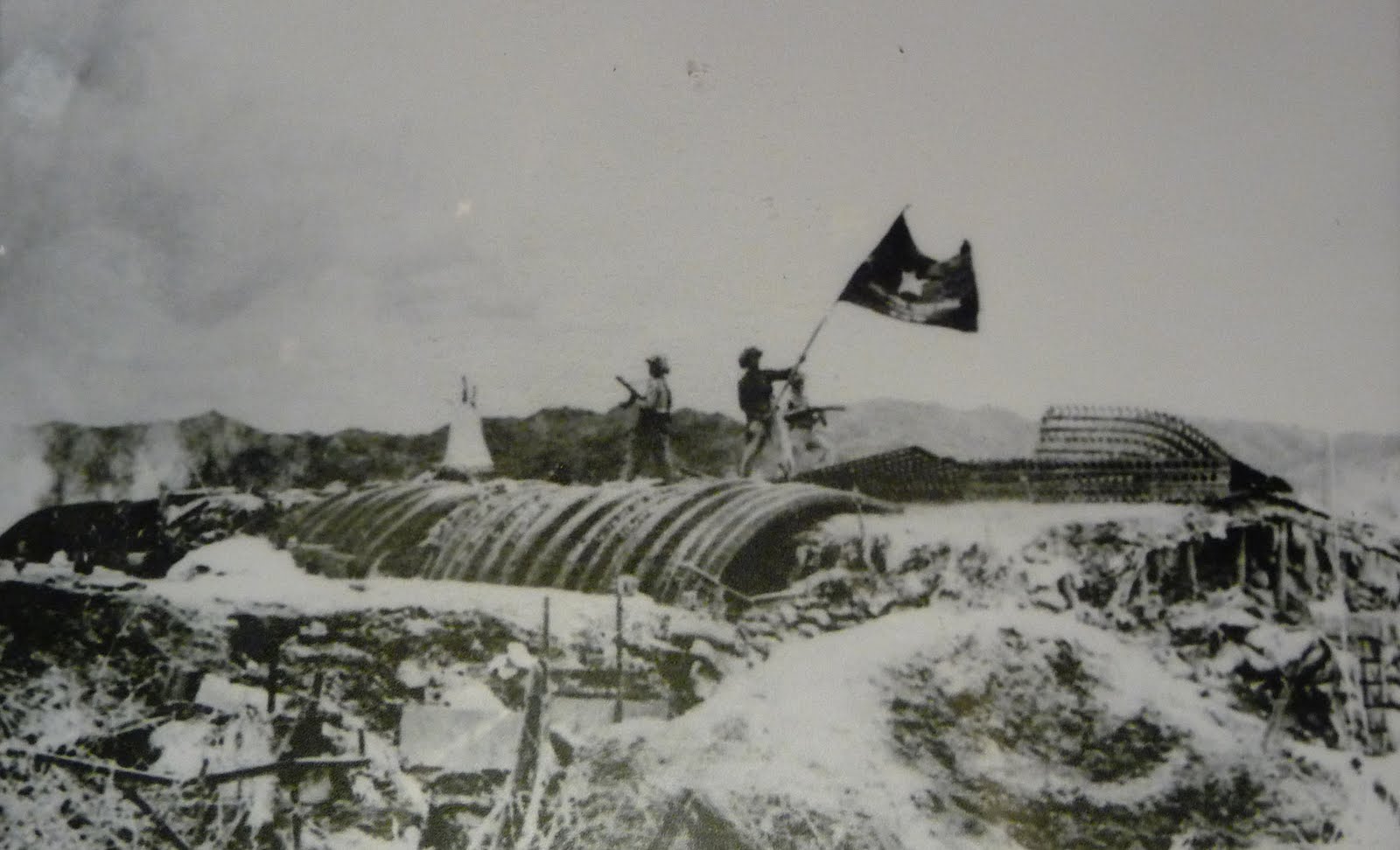
On the evening of May 7, 1954 the last remaining French position, strong point Lily, manned by Moroccan soldiers commanded by a French officer, surrendered to the attacking Vietminh, ending the two-month long siege of Dien Bien Phu and with it the French-Indochina War. The French fought long, hard, and at times effectively, for French Indochina. The U.S. government gave more financial aid to the French cause in Indochina than it gave to France in the Marshall Plan. But in the end Eisenhower refused to send troops to rescue the garrison.
Dien Bien Phu was unquestionably an important event in world history. In a sense it was the last stand of western colonialism in the Far East. The Brits had already fled India and were in the midst of the Malayan Emergency. The Dutch war of reconquest in Indonesia had been futile. Unfortunately for Ho Chi Minh and the Vietnamese people, their Chinese and Soviet allies sold them short at the bargaining table later that year in Geneva. That, mixed with American actions to negate the treaty in subsequent years, set the table for the second Indochina War, known to many Vietnamese as the “American Phase.”
The picture below is probably the most famous of the battle, in reality it was taken after the battle as part of a re-enactment staged by a Russian filmographer…
Vietnam People’s Army, First publish in 1954. – Vietnam People’s Army museum (still from Soviet filmographer Roman Karmen).
What do Sigmund Freud, Joseph Goebbels and Betty Crocker have in common? Ever wonder why anyone would choose to buy a Rolex when a Timex keeps time just as well? Hint: some smart people figured out how to tap into our unconscious fears and desires and over the past century we’ve been the unwitting subjects of a wildly successful mass experiment in consumer manipulation and social control. Adam Curtis of the BBC reveals who they were and how they did it…





 Parallel Narratives