Category Archives: Asia

Life Magazine Covers The Vietnam War #4– May, 1954

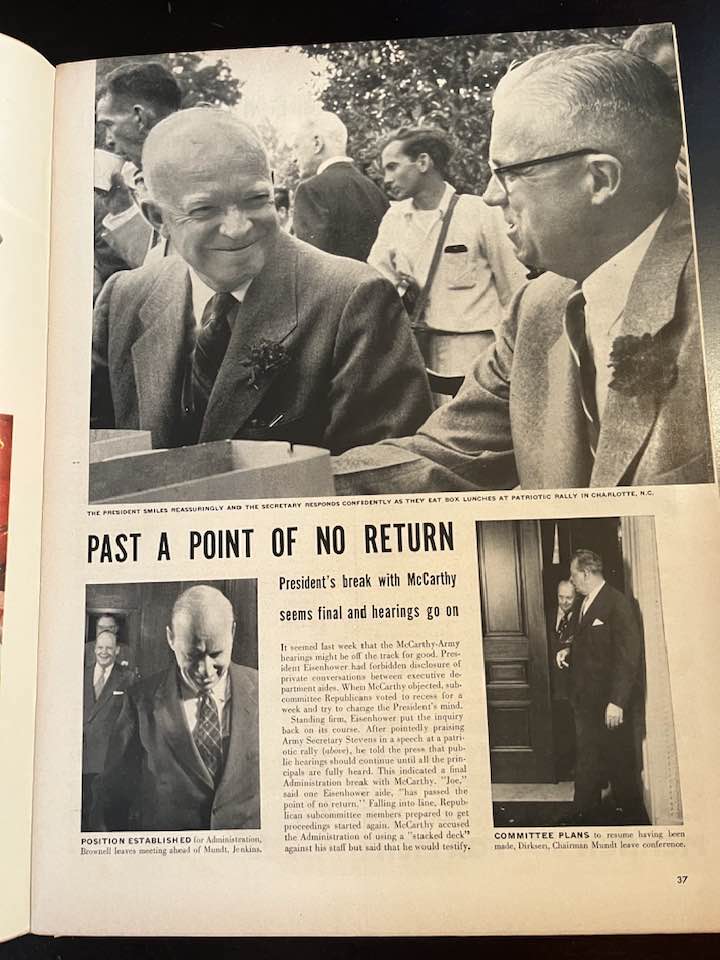
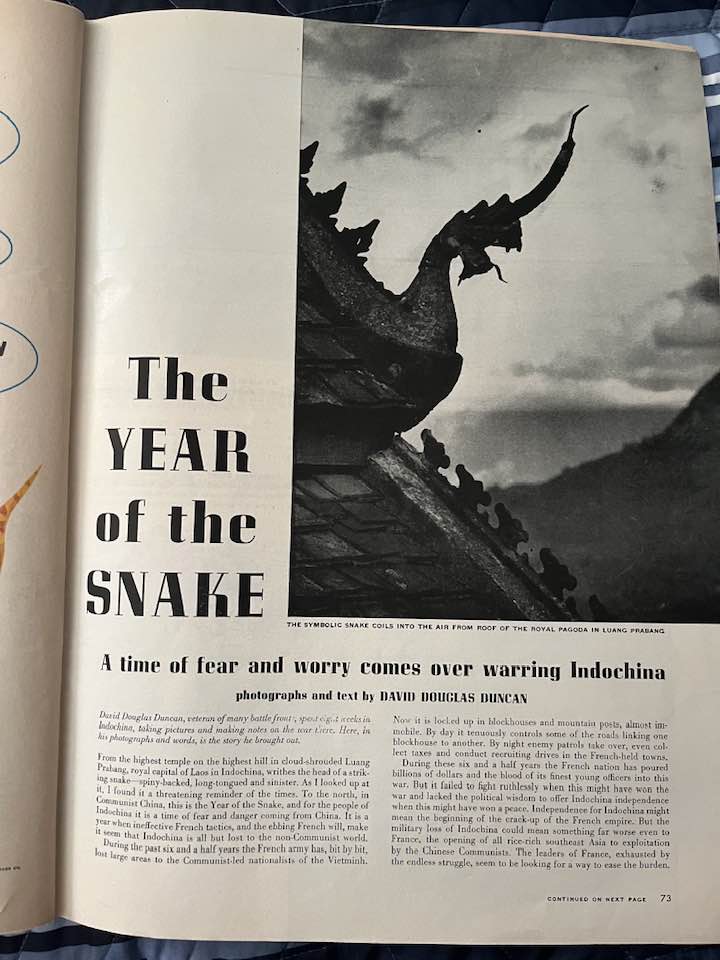
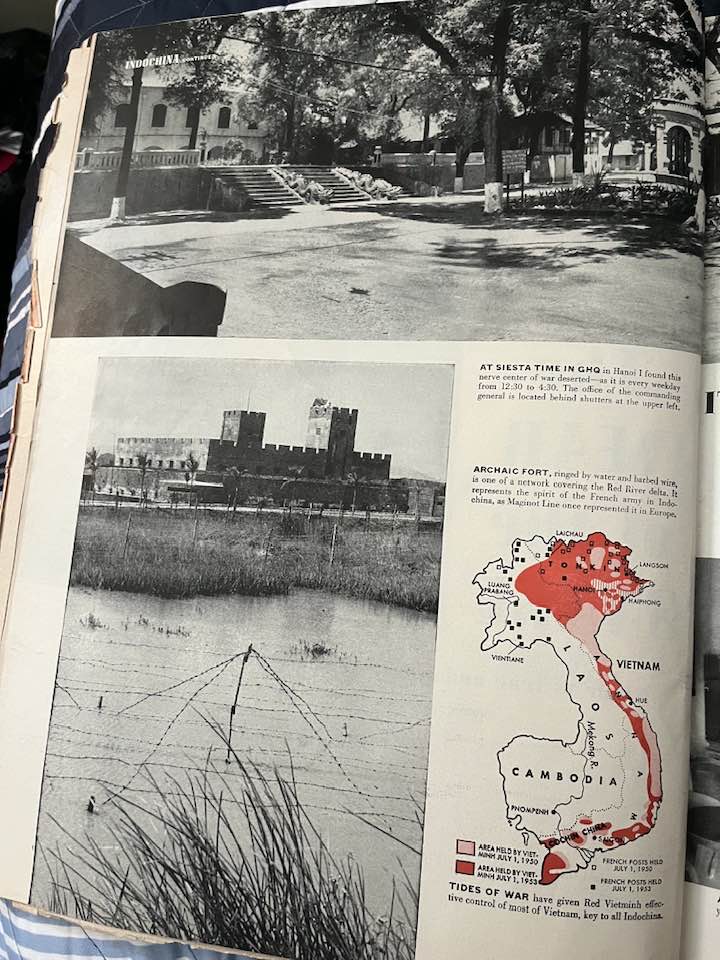
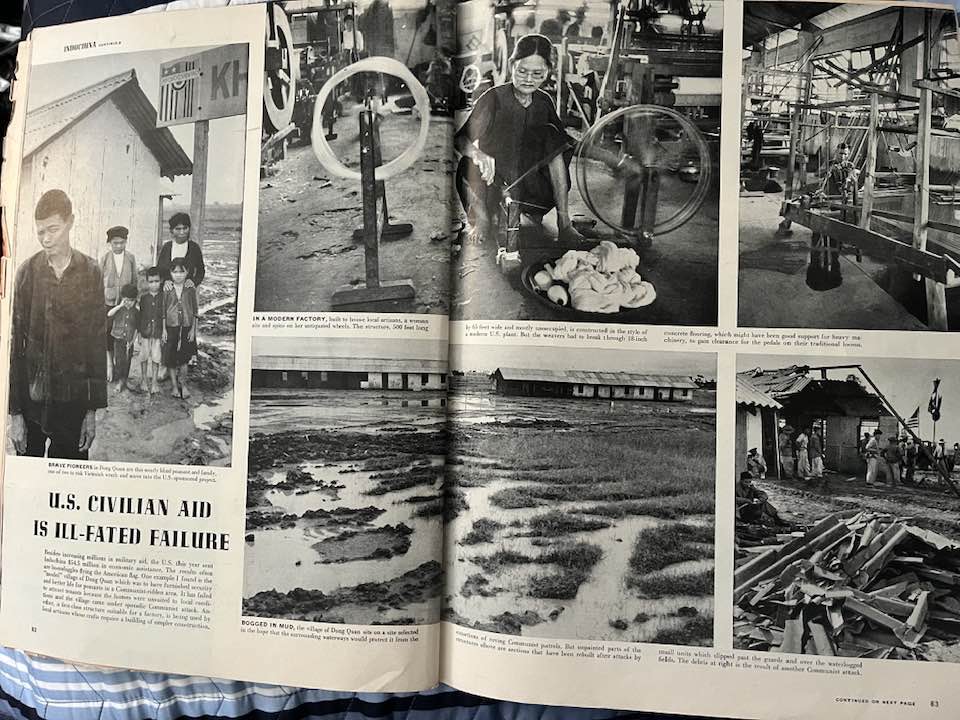
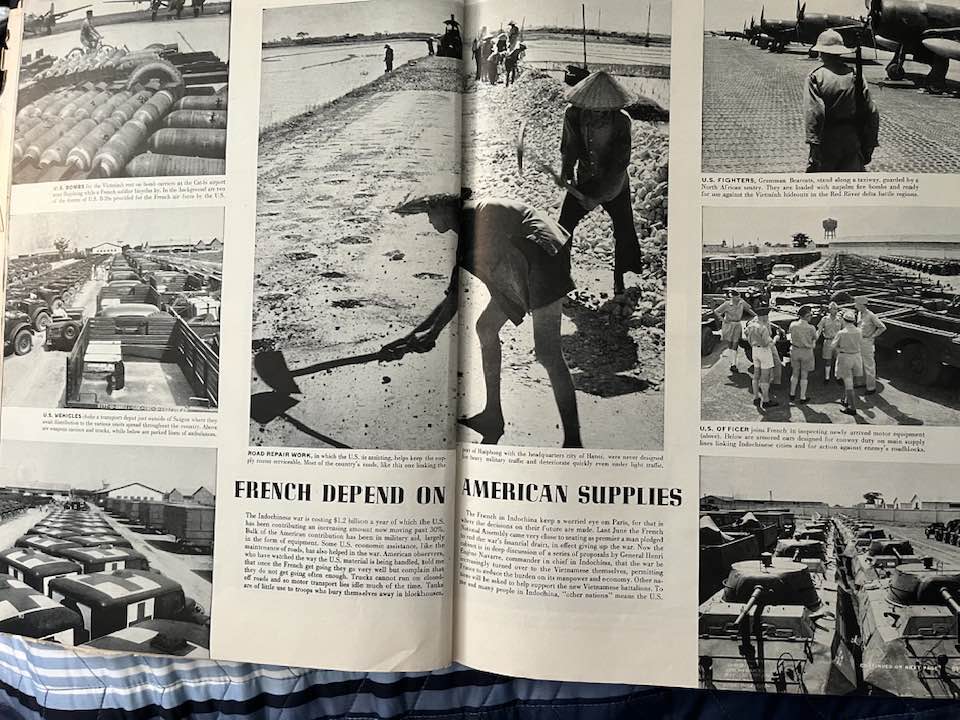
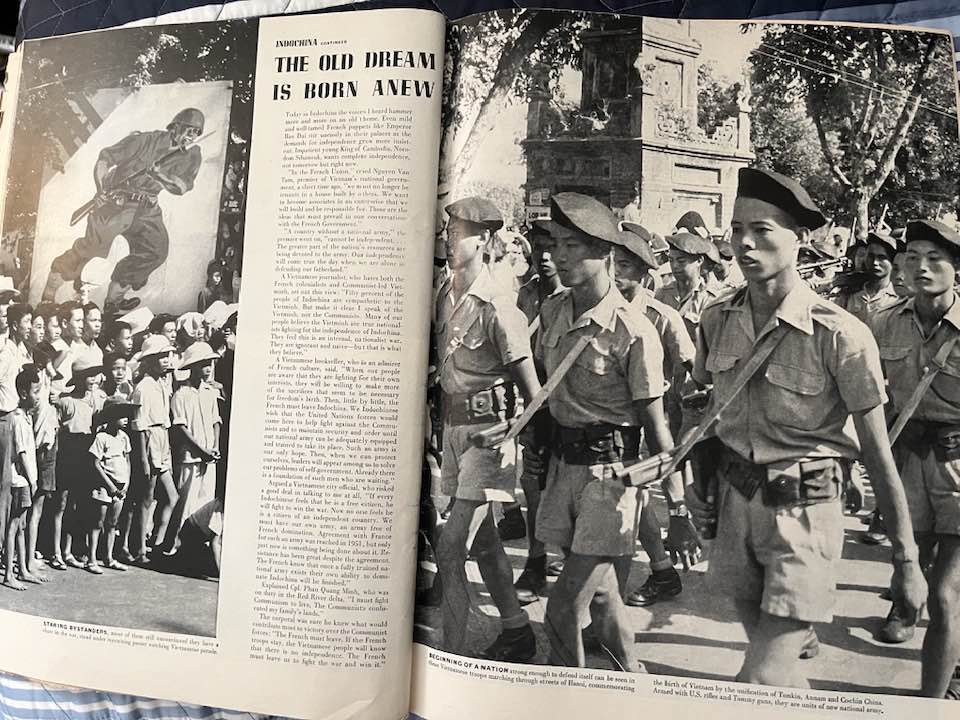
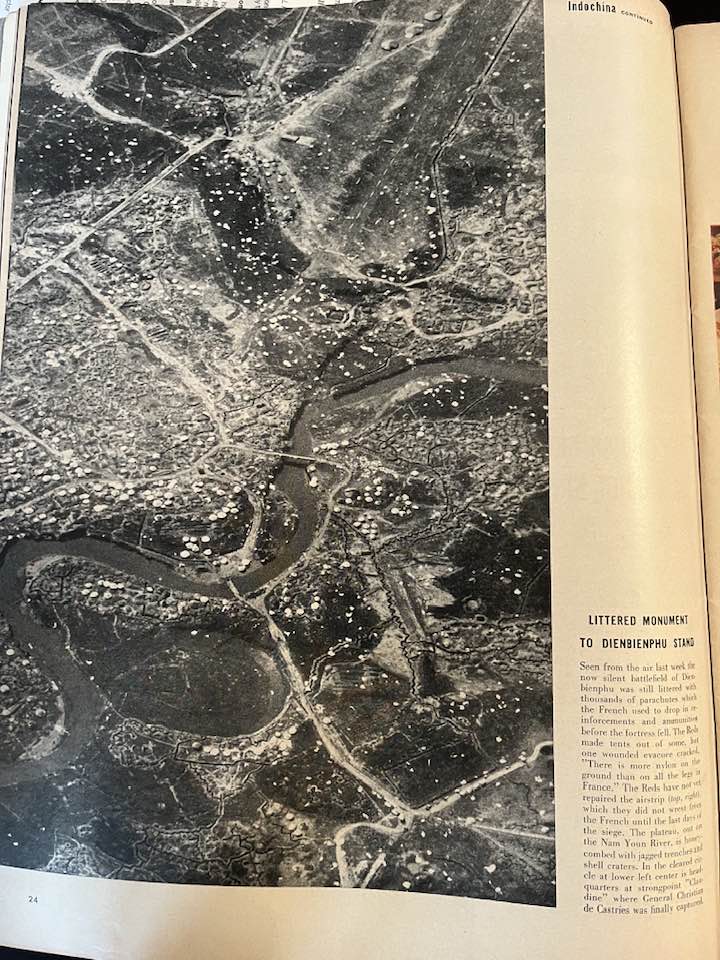
Life Magazine May 31, 1954. You’d be hard pressed to find a month in mid-century American history with more consequential events for the following decades than this one, and Life magazine was there. An article covers the French loss and retreat at the Battle of Dien Bien Phu and the subsequent Geneva Conference that led to the partition of Vietnam at the 17th Parallel. Another reports on the Brown vs Board of Education decision, which signaled the beginning of the Civil Rights era. We also learn that the Army hearings that finally brought down Joe McCarthy were under way.

Senator Joseph McCarthy (R-Wisconsin) had been riding high for several years on his claim that the Democrats were soft on, or in league with, communism and hence the government had become riddled with communists, especially the State Department. The ensuing anti-communist hysteria, known as the “Red Scare,” had brought the Republicans back to power for the first time since before the Great Depression. One tactic of red-baiting that the GOP exploited to great advantage was the claim that Truman and the Democrats had “lost” China by allowing Mao to come to power in the Chinese Revolution in 1949. The crusade known as McCarthyism caused enormous political damage and ruined many careers and lives. But now Tail Gunner Joe’s star was fading. His harsh right-wing grandstanding, much of it unsubstantiated, and his drunken antics had become a liability. Eisenhower had turned on him. Henry Luce on the other hand would remain a major espouser of the lost China accusation for years to come (Chiang Kai-Shek was his close friend). His publications would exert powerful domestic pressure on Eisenhower, who decided to involve the country in a series of Asian misadventures in Indonesia, Laos, and Vietnam.

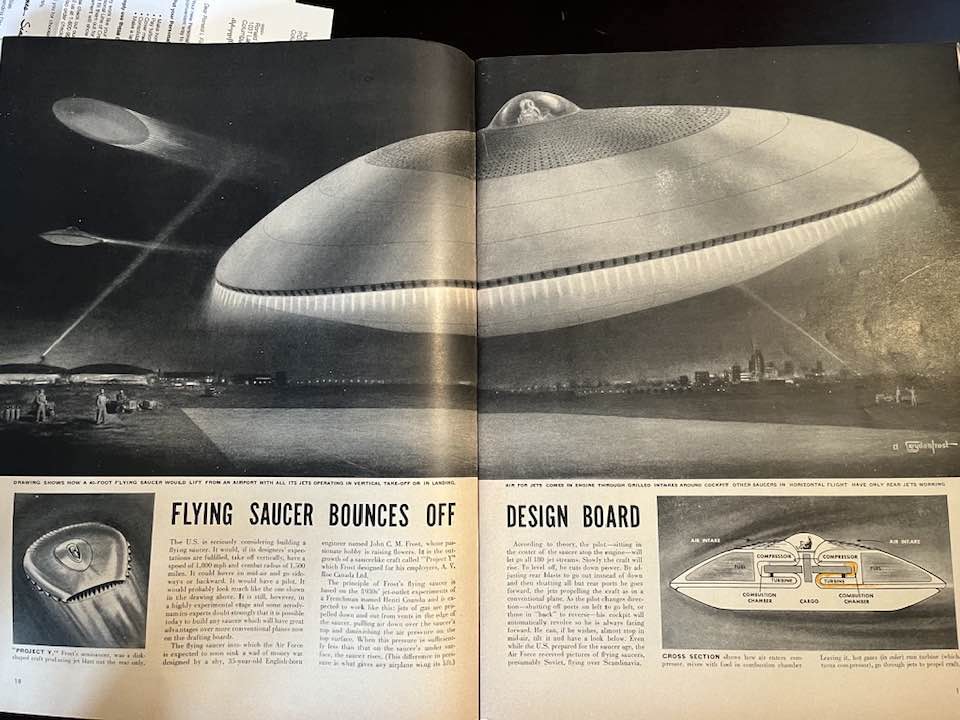
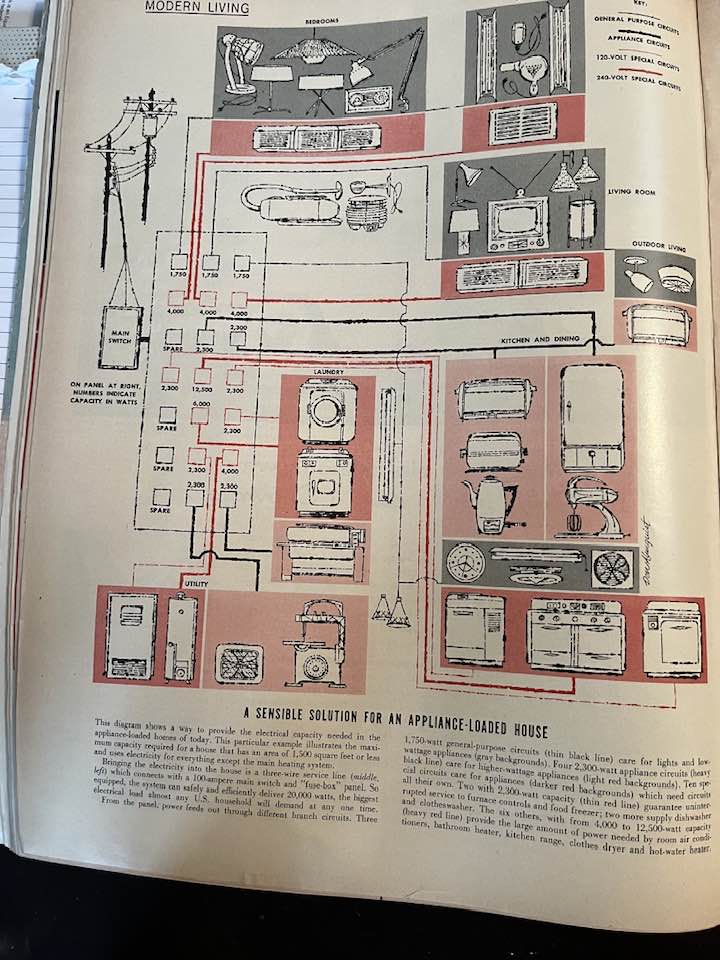
These threads would merge a decade later as the U.S. sent a massive military deployment to Vietnam, many of whom were black, brown and American Indian, in an ill-fated attempt to roll-back the communist threat officially labeled as the “domino theory,” a phrase coined in 1954 by Eisenhower in justifying initial military support for the American installed government in South Vietnam. This issue truly contains the seeds of the sixties. There is also an article on the science of flying saucers and an electrical schematic for “A Sensible Solution For An Appliance-Loaded House.”

Life Magazine Covers The Vietnam War #3 – August, 1953

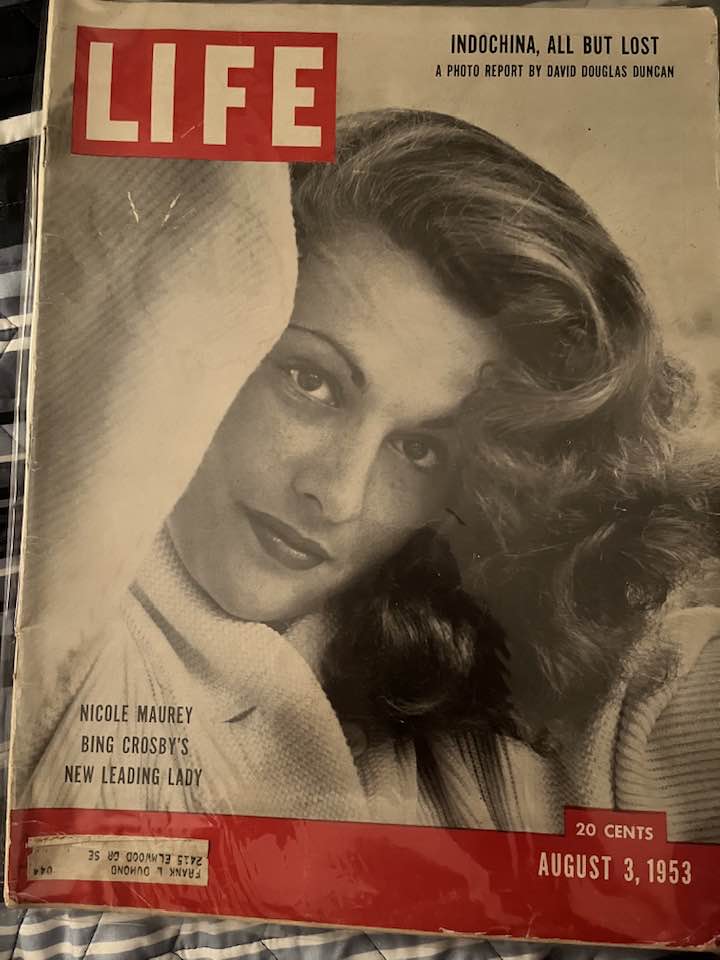
Life Magazine August 3, 1953 – Pessimism Sets In

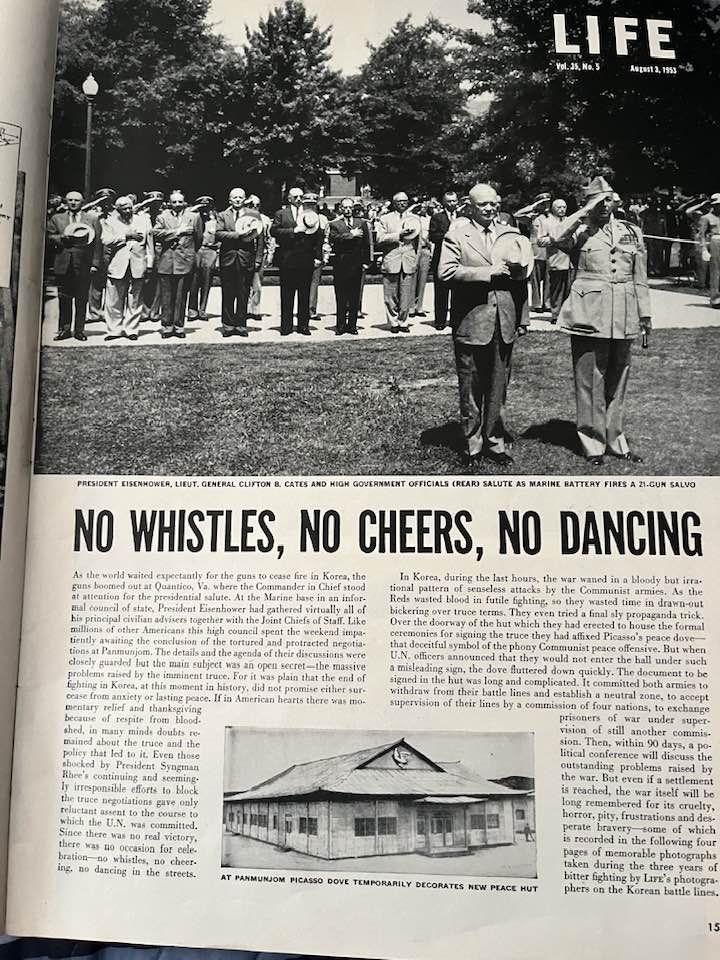
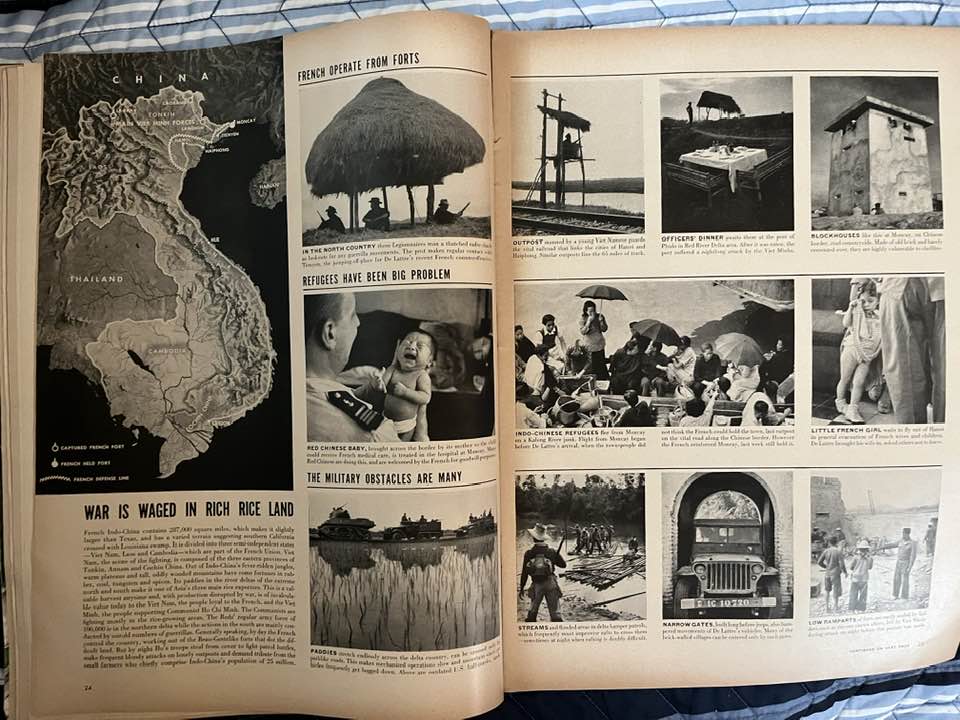
This issue is notable for several reasons. First, there is an article covering the ceasefire agreement ending formal fighting in the Korean War. Entitled “No Whistles, No Cheers, No Dancing” it is less than enthusiastic, not surprising considering Henry Luce’s antipathy toward the Chinese Communists. The French were also less than enthusiastic about the agreement, since it freed up the Chinese to focus on supporting Ho Chi Minh’s forces in the ongoing Indochina War.

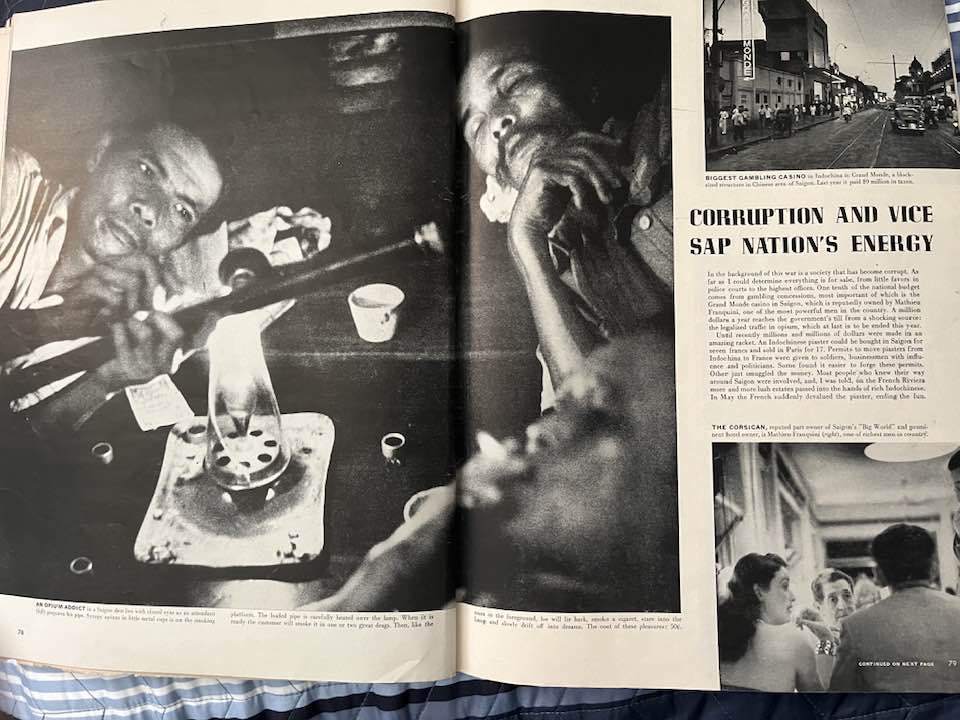
Second, we are introduced for the first time in the Vietnam context to the great combat photographer David Douglas Duncan, from whom we will see more during the American phase of the war. The photos captioned “Corruption and Vice Sap Nation’s Energy” convey the effects of the opium trade in Saigon. We get a rare glimpse of the Grand Monde Casino and the French underworld boss Mathieu Franchini, the Corsican, who controlled most of Saigon’s opium exports to Marseille. (see Bodard, Lucien, The Quicksand War: Prelude to Vietnam. Faber and Faber Limited, London, 1967. And, McCoy, Alfred. The Politics of Heroin in Southeast Asia. Harper and Row, New York, 1972.)

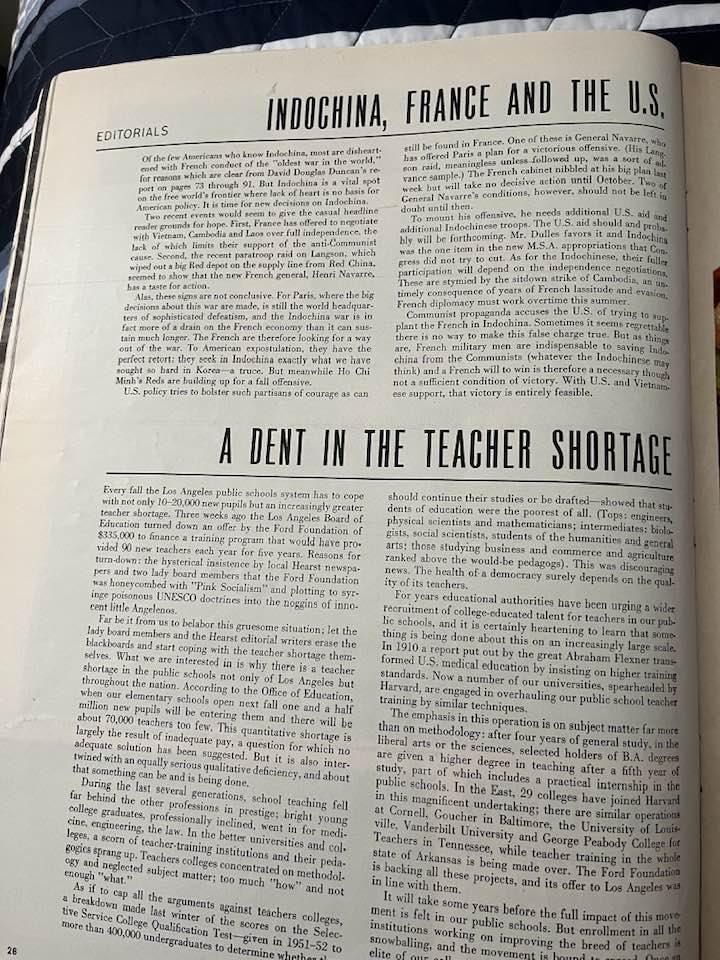
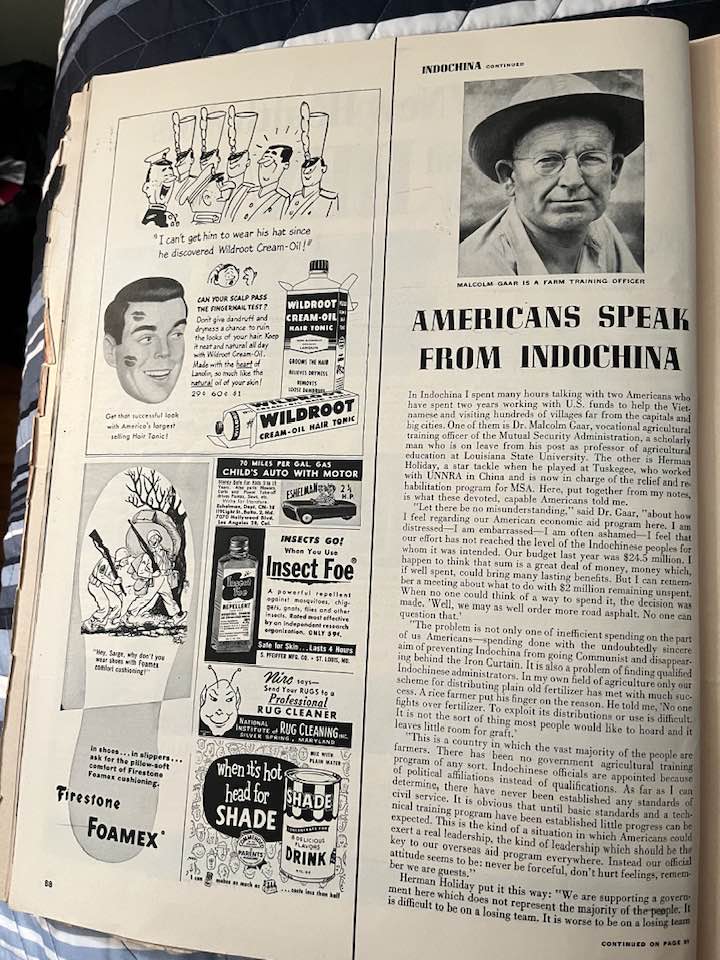
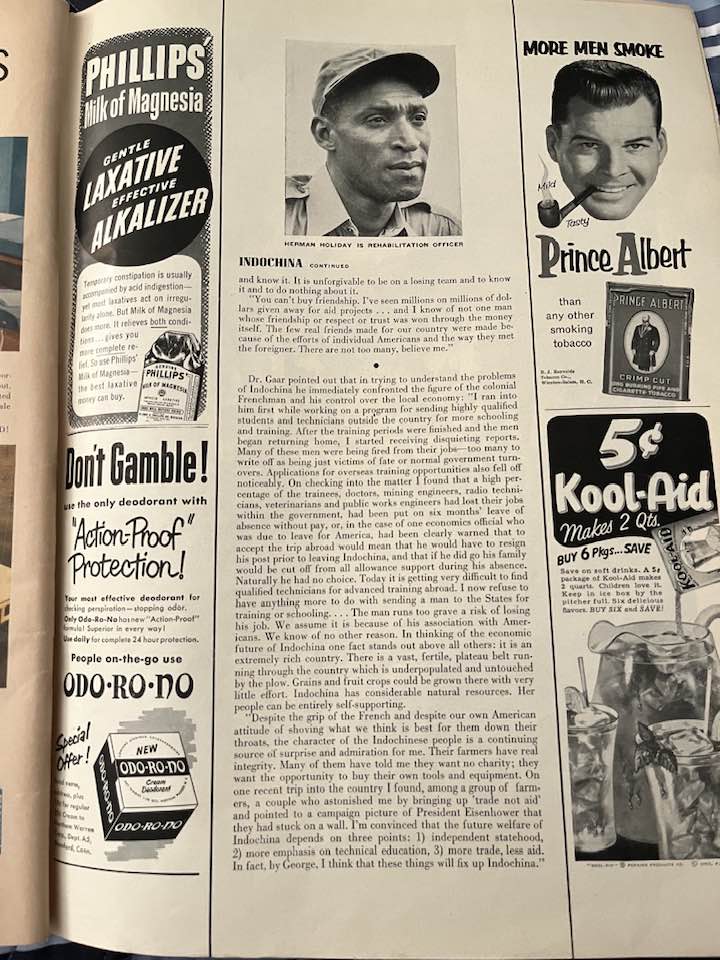
Last, with the title “Indochina All But Lost” featured on the cover, the first time that the war is mentioned on a cover, a turn toward pessimism about the ultimate outcome is apparent. The editorial on page 28 titled Indochina, France and the U.S. (shown below) posits that “Americans who know Indochina” are disheartened with France’s conduct of the war, calling Paris “the world headquarters of sophisticated defeatism,” and that it is time for new decisions on Indochina.*

This was an abrupt departure from the hopeful tone of previous Life reporting on the Indochina War. Just two years earlier the novelist Graham Greene had visited Vietnam, sent by Luce as a correspondent for Life. In the July 30, 1951 issue Greene reported on the war in Malaya, known as the Malayan Emergency. He crossed into the Tonkin region of Indochina on that trip. He ends his article with a comparison between the two insurgencies, both featuring colonial armies fighting local Communists. Greene applauds the performance of the Vietnamese Catholic infused forces that were helping the French while he denigrates the Malayan armed police fighting alongside the British, a hasty judgement that may have been clouded by his overt Catholicism. Yet, with more time spent in Vietnam, after gaining a better understanding of the situation, history and players, his confidence appears to have waned. A subsequent report, while not overly critical of the French forces, was not enthusiastic about their chances of prevailing either. Luce censored the article, and no other American publishers would run it. The piece ended up in the French magazine, Paris Match, for which Greene had become a correspondent. What he saw on that assignment, and future trips for Paris Match, provided the foundation for his masterpiece “The Quiet American,” considered to be one the greatest novels of the Cold War period. (see Greene, Graham, Indochina: France’s Crown of Thorns, Paris Match, July 12, 1952. And, Greene, Graham, Reflections, ed. Adamson, Judith, Reinhardt, New York, 1990.)

* The editors mention the arrival of General Henri Navarre and his proposed plan for a victorious offensive as a hopeful development. They urge Paris to accept the plan, stating that with “Vietnamese and American assistance victory is entirely feasible.” This so-called victorious offensive turned out to be Operation Castor, which ended with the Battle of Dien Bien Phu.

Related Articles:

All Propagated with the Best Intentions”: Greene, the U.S. and Indochina 1951-55

Graham Greene’s Prescient War-Reporting from Vietnam Predicted How Badly It Would Go

How Graham Greene’s Novel About American Policy in Vietnam Was Subverted by Hollywood

In Our Time No Man Is a Neutral

The Wily American

Our Man in Hollywood

Their Man in Saigon

The Mafia Comes to Asia

David Douglas Duncan Photos

Life Magazine Covers The Vietnam War #2 – January, 1951

Life January 22, 1951 – General Jean de Lattre Enters

1949-50 were critical years in the evolution of the Cold War. In 1949 the Soviets detonated their first atomic bomb and Mao’s communist forces defeated Chiang Kai Shek and took control of China. Henry Luce, founder and editor-in-chief of Time and Life magazines, was born in China. The son of a missionary, Luce spent his childhood there, and was a great admirer of Chiang Kai Shek. He had featured Chiang on the cover of Time ten times and had named him person of the year in 1937. 

Then in June 1950 communist North Korea crossed the 38th parallel and attacked South Korea. While the world’s attention was focused on Korea and the fear of an atomic war, Ho Chi Minh’s top general, Vo Nguyen Giap, launched a series of devastating attacks on French forts north of Hanoi along the Chinese border. The French were routed and forced to abandon the forts, leaving behind many tons of precious artillery, ammunition and guns. The French army was demoralized and plans were being made to evacuate French citizens and soldiers’ families. It looked as if the Vietminh were on the verge of winning the war.  

Enter General Jean de Lattre de Tassigny. The famous French hero of Verdun and the Resistance against the Nazis temporarily stopped the bleeding. He immediately canceled all evacuations, reasoning that by keeping their families in danger the soldiers would have something to fight for. Ironically, it was his own son who was killed a few months later in battle by the Vietminh. De Lattre died of cancer the following year, never recovering from his son’s death. The French-Indochina War would continue on for three more bloody years.

Here is the Life Magazine edition from January 22, 1951 with an overly hopeful piece announcing his arrival….

Vietnam Snapshot: French Defeats Along RC 4 – Indochina, Fall 1950

Vietnam Snapshot: Battle of Mao Khe (March 23-28, 1951)

Vietnam Snapshot: The French Armed Forces at War, 1945 -54

Vietnam Essay: Indochina War, Meat Grinder War (1951-1953)

Vietnam Era Anti-War Stickers and Buttons

Personal collection of Vietnam era anti-war stickers and buttons. Many of the major events are represented:

– April 15, 1967. Spring Mobe protests in New York City (300,000 meet in Central Park and march to the United Nations) and in San Francisco.

– October 21, 1967. March on the Pentagon. 100,000 are on the National Mall in Washington DC. Norman Mailer’s book The Armies of the Night describes the event.

– October 15, 1969. National “Moratorium to End the War in Vietnam” was a massive demonstration and teach-in across the United States. Over a quarter of million people attended the Moratorium march in Washington, D.C.
– November 14, 1969. National student strike and “March against Death” in front of the White House.

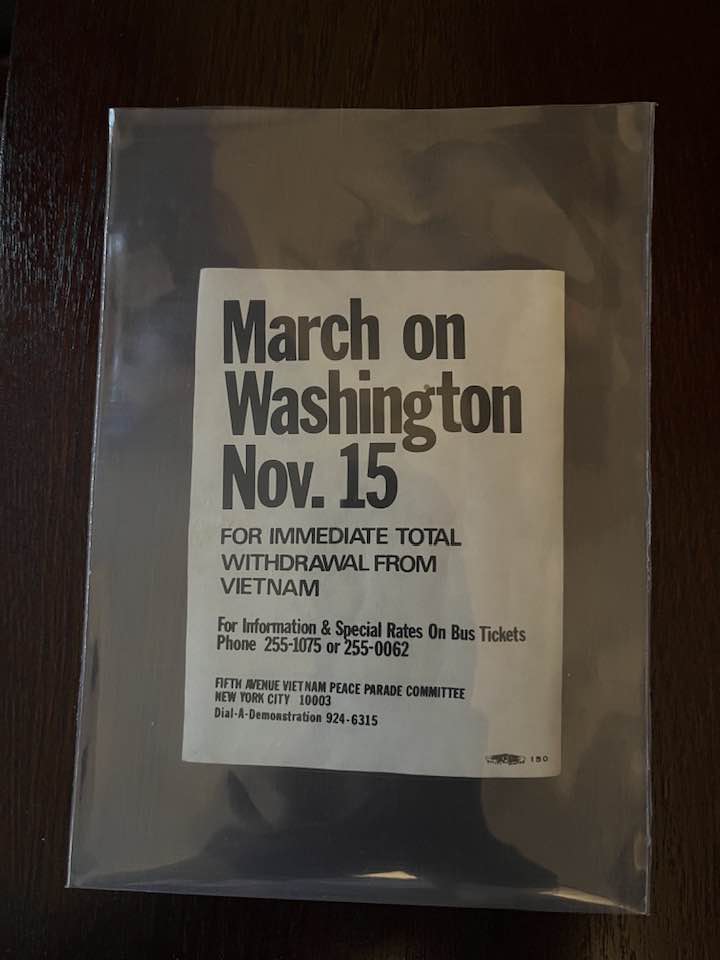
– November 15, 1969. The Mobe’s 2nd Moratorium March mobilizes 500,000 in Wash DC and San Francisco. The news of the My Lai Massacre had broken a few days earlier.

– April 24, 1971. Demonstration on the National Mall draws approximately half a million protestors to D.C. In addition over 100,00 participate in San Francisco, the largest demonstration on the West Coast.

– The large blue button commemorates the peace treaty signed on January 27, 1973. Hoa Binh is Vietnamese for Peace.

– Eugene McCarthy’s 1968 presidential campaign challenged Lyndon B. Johnson on a primarily anti–war platform. Riding a wave of dissatisfaction after the Tet Offensive McCarthy finished in a strong second place in the New Hampshire primary, prompting LBJ to decline a run for re-election.

– Nixon resigned to avoid impeachment during the Watergate scandal. It all began with Daniel Ellsberg and the Pentagon papers published in 1971. The White House approved the formation of “The Plumbers” to silence Ellsberg. Led by G. Gordon Liddy and E. Howard Hunt, the crime committed was to burglarize Ellsberg’s psychiatrist’s office to search for damning information to use to discredit him. They found nothing. The bungled operation started Nixon and his cohorts down the slippery slope of crimes that culminated in the botched break-in at Democratic National Committee headquarters at the Watergate office complex nine months later.