Category Archives: Photography

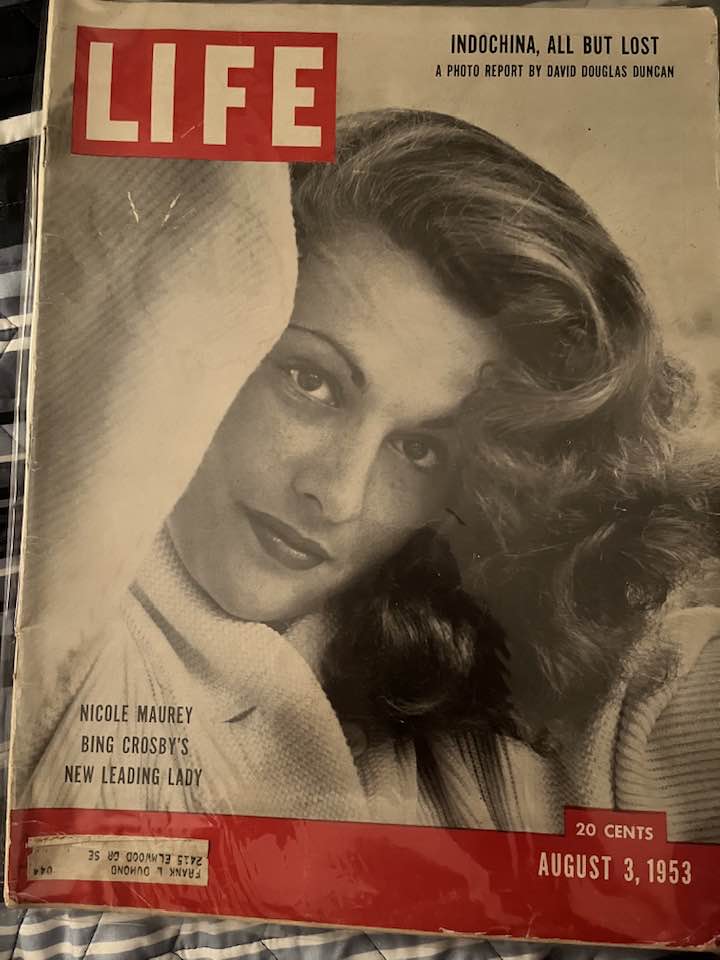
Life Magazine Covers The Vietnam War #3 – August, 1953

Life Magazine August 3, 1953 – Pessimism Sets In

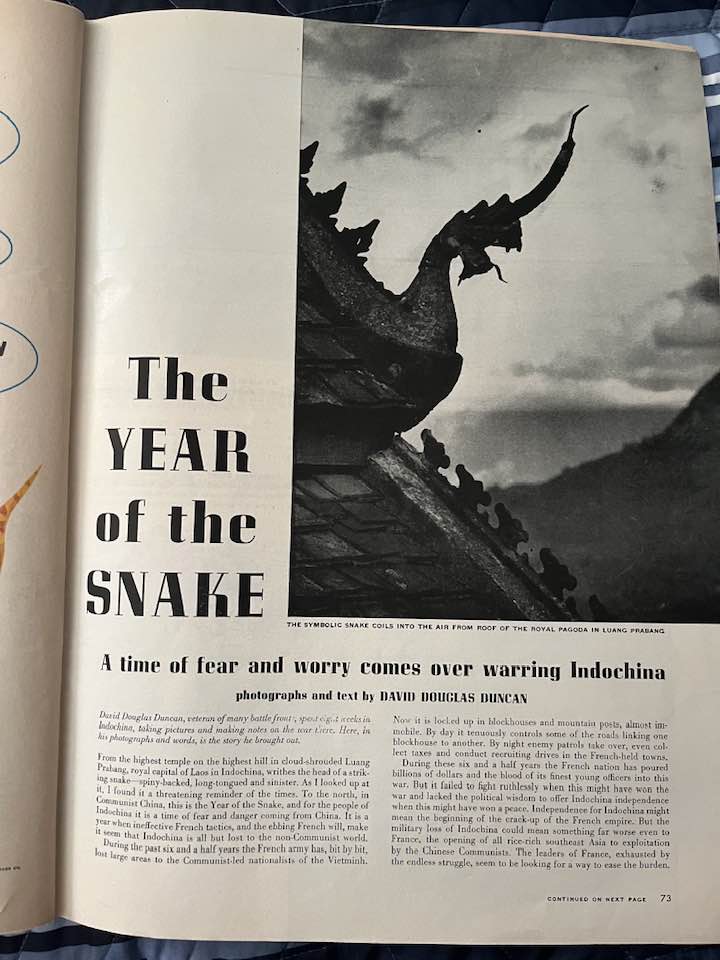
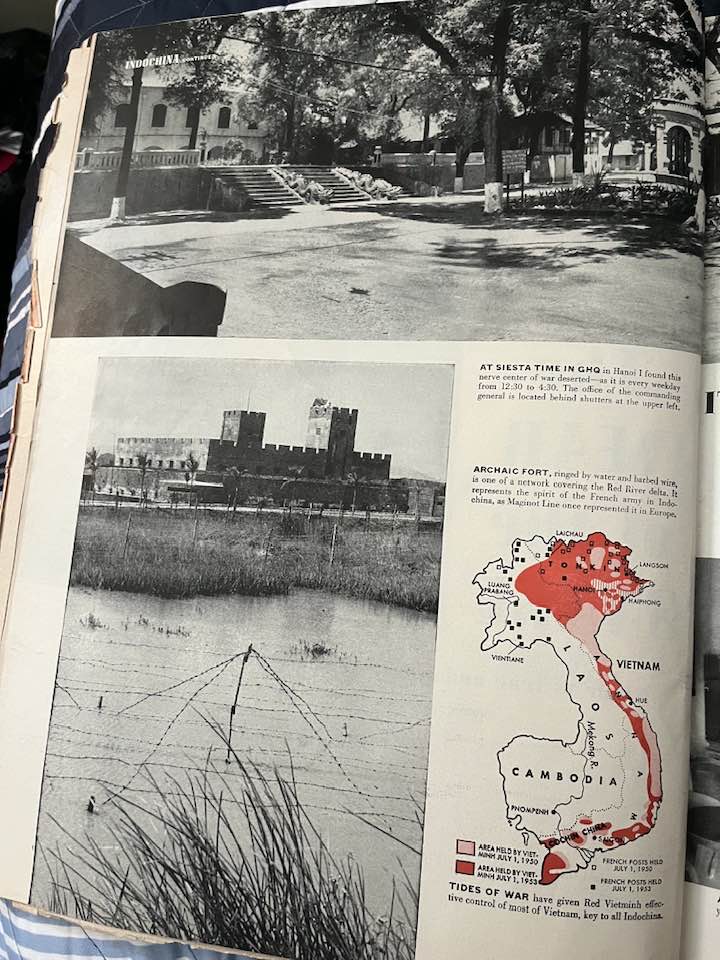
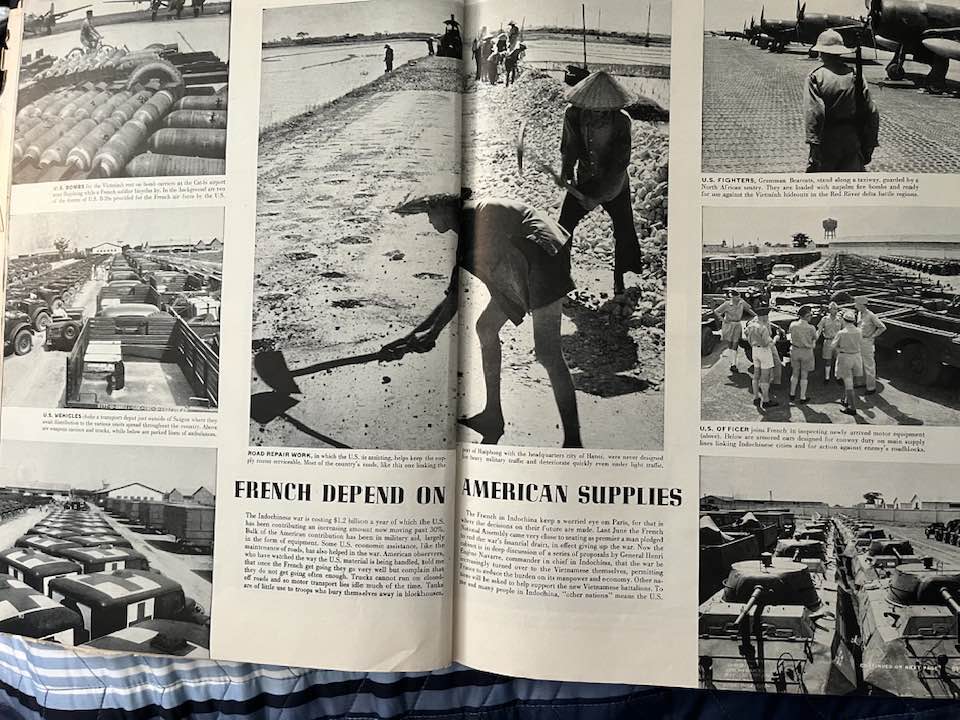
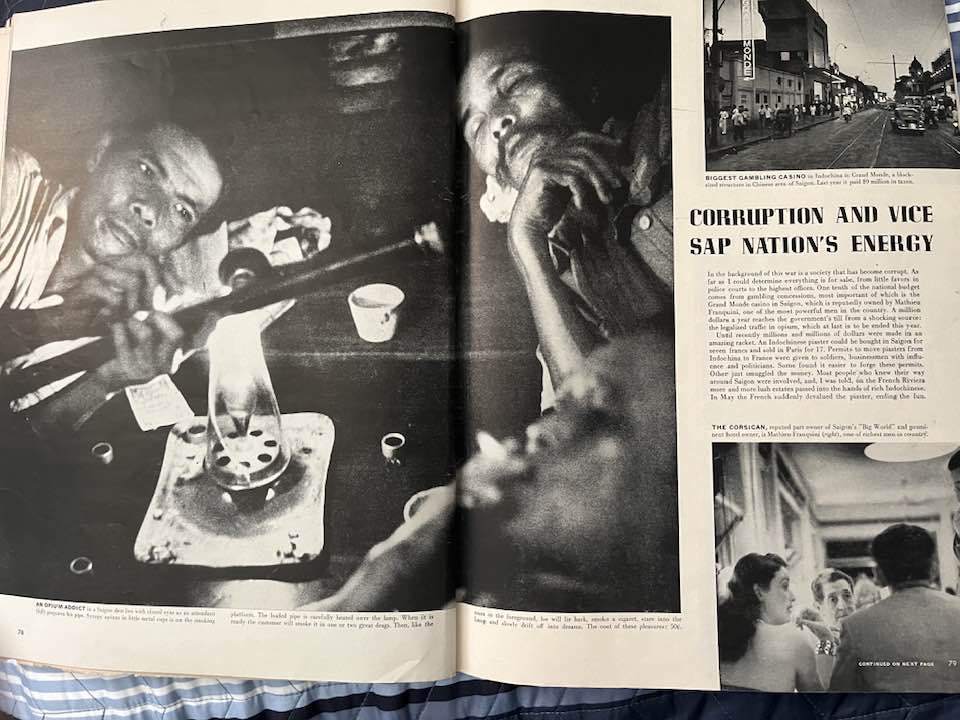
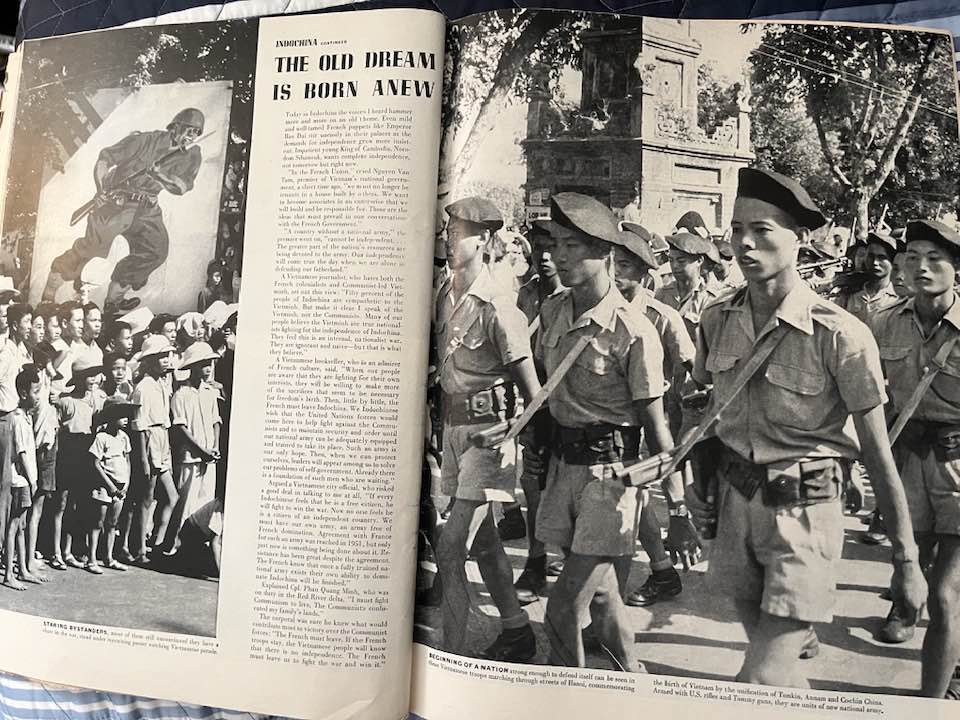
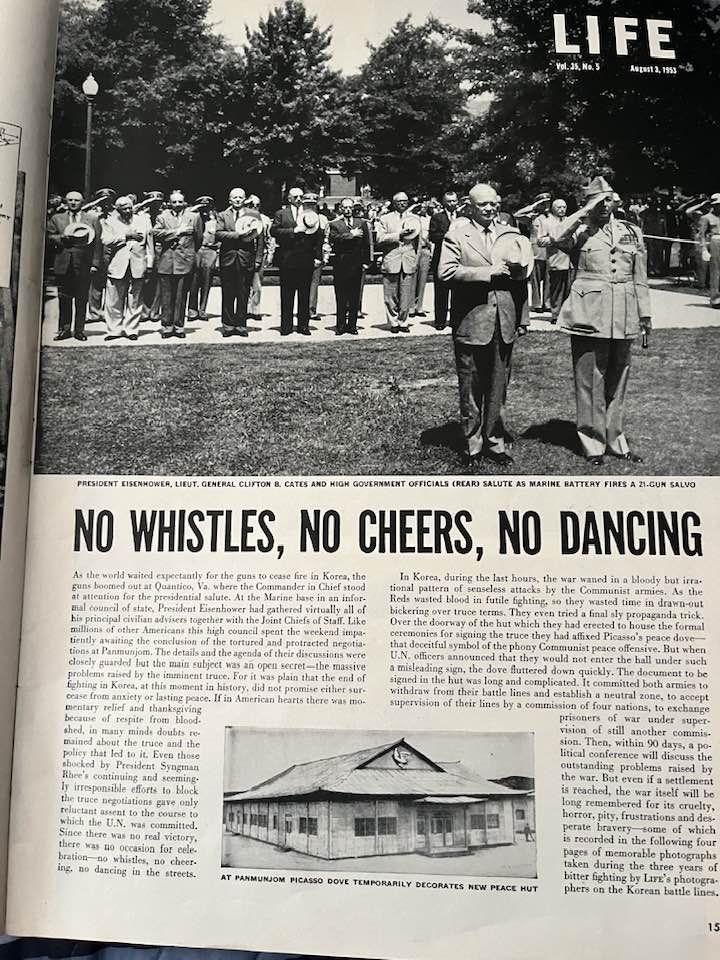
This issue is notable for several reasons. First, there is an article covering the ceasefire agreement ending formal fighting in the Korean War. Entitled “No Whistles, No Cheers, No Dancing” it is less than enthusiastic, not surprising considering Henry Luce’s antipathy toward the Chinese Communists. The French were also less than enthusiastic about the agreement, since it freed up the Chinese to focus on supporting Ho Chi Minh’s forces in the ongoing Indochina War.

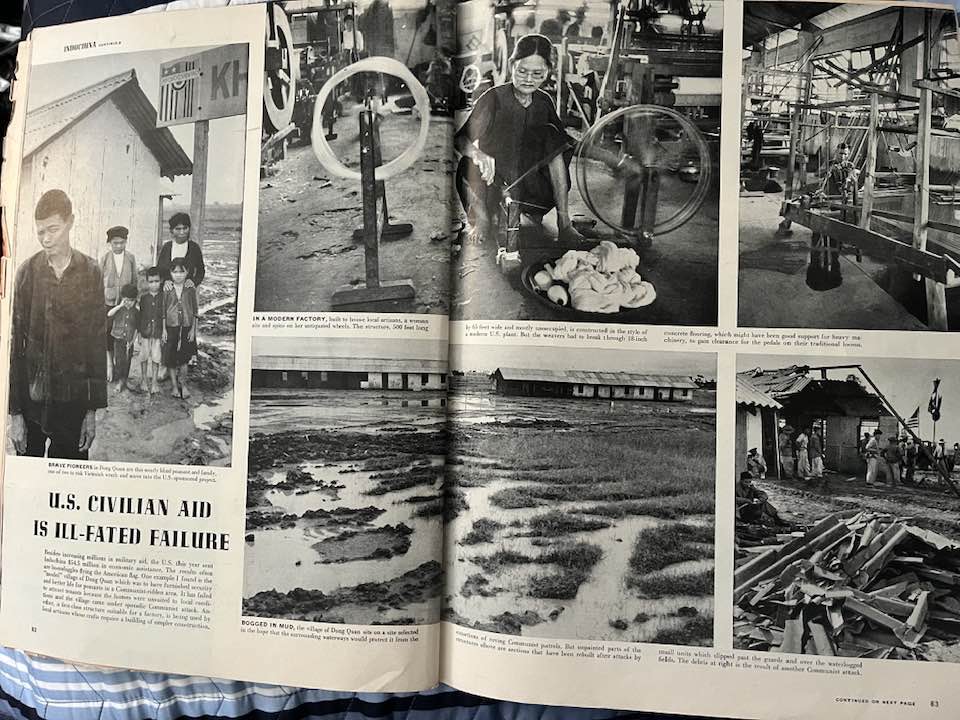
Second, we are introduced for the first time in the Vietnam context to the great combat photographer David Douglas Duncan, from whom we will see more during the American phase of the war. The photos captioned “Corruption and Vice Sap Nation’s Energy” convey the effects of the opium trade in Saigon. We get a rare glimpse of the Grand Monde Casino and the French underworld boss Mathieu Franchini, the Corsican, who controlled most of Saigon’s opium exports to Marseille. (see Bodard, Lucien, The Quicksand War: Prelude to Vietnam. Faber and Faber Limited, London, 1967. And, McCoy, Alfred. The Politics of Heroin in Southeast Asia. Harper and Row, New York, 1972.)

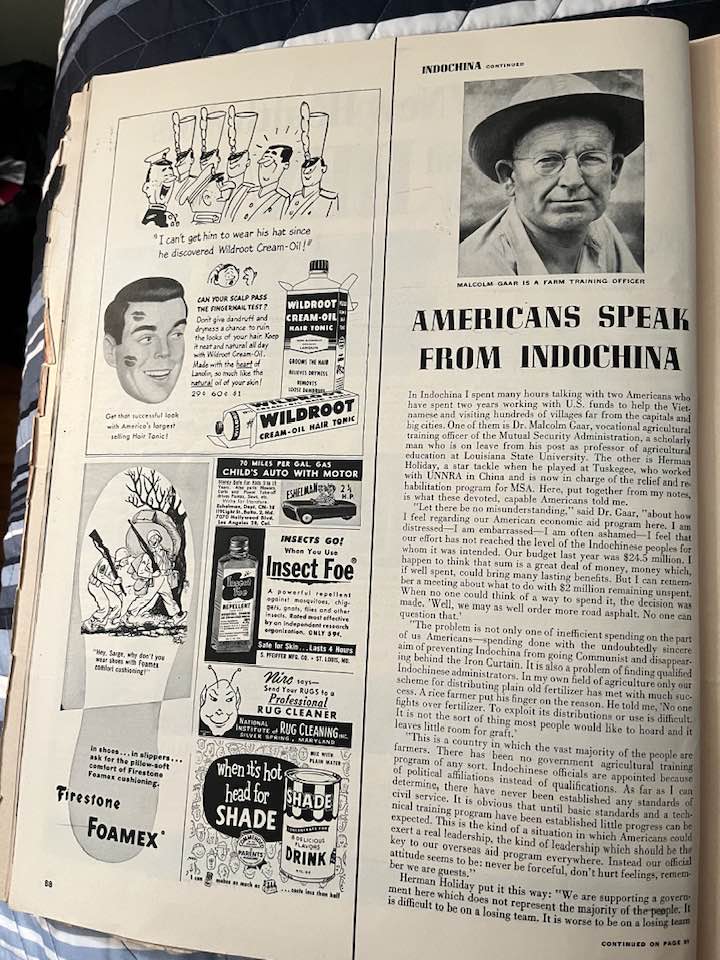
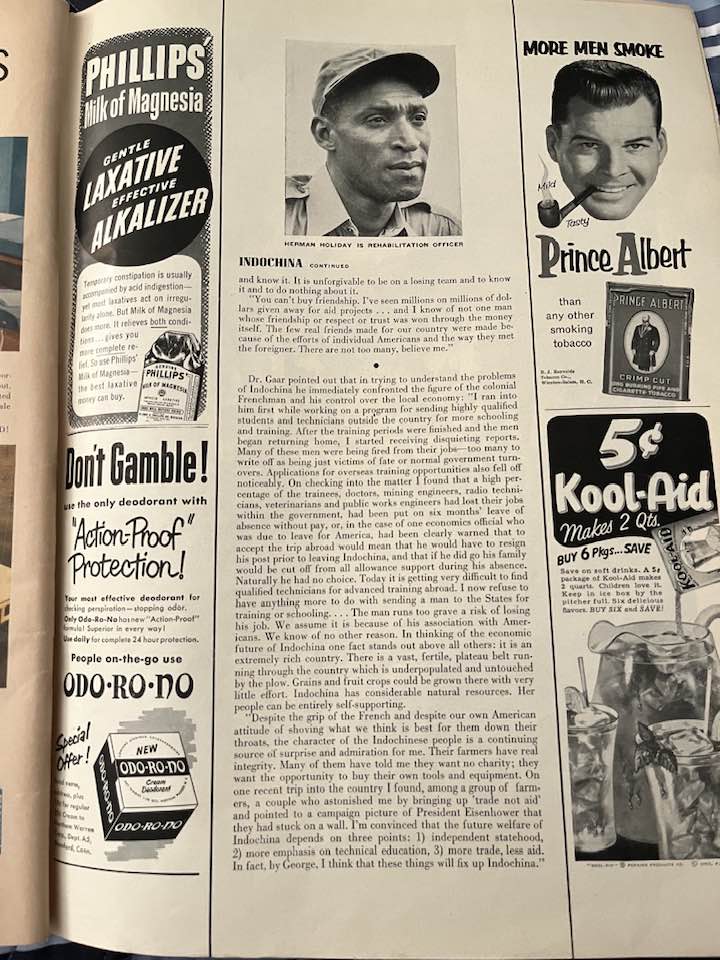
Last, with the title “Indochina All But Lost” featured on the cover, the first time that the war is mentioned on a cover, a turn toward pessimism about the ultimate outcome is apparent. The editorial on page 28 titled Indochina, France and the U.S. (shown below) posits that “Americans who know Indochina” are disheartened with France’s conduct of the war, calling Paris “the world headquarters of sophisticated defeatism,” and that it is time for new decisions on Indochina.*

This was an abrupt departure from the hopeful tone of previous Life reporting on the Indochina War. Just two years earlier the novelist Graham Greene had visited Vietnam, sent by Luce as a correspondent for Life. In the July 30, 1951 issue Greene reported on the war in Malaya, known as the Malayan Emergency. He crossed into the Tonkin region of Indochina on that trip. He ends his article with a comparison between the two insurgencies, both featuring colonial armies fighting local Communists. Greene applauds the performance of the Vietnamese Catholic infused forces that were helping the French while he denigrates the Malayan armed police fighting alongside the British, a hasty judgement that may have been clouded by his overt Catholicism. Yet, with more time spent in Vietnam, after gaining a better understanding of the situation, history and players, his confidence appears to have waned. A subsequent report, while not overly critical of the French forces, was not enthusiastic about their chances of prevailing either. Luce censored the article, and no other American publishers would run it. The piece ended up in the French magazine, Paris Match, for which Greene had become a correspondent. What he saw on that assignment, and future trips for Paris Match, provided the foundation for his masterpiece “The Quiet American,” considered to be one the greatest novels of the Cold War period. (see Greene, Graham, Indochina: France’s Crown of Thorns, Paris Match, July 12, 1952. And, Greene, Graham, Reflections, ed. Adamson, Judith, Reinhardt, New York, 1990.)
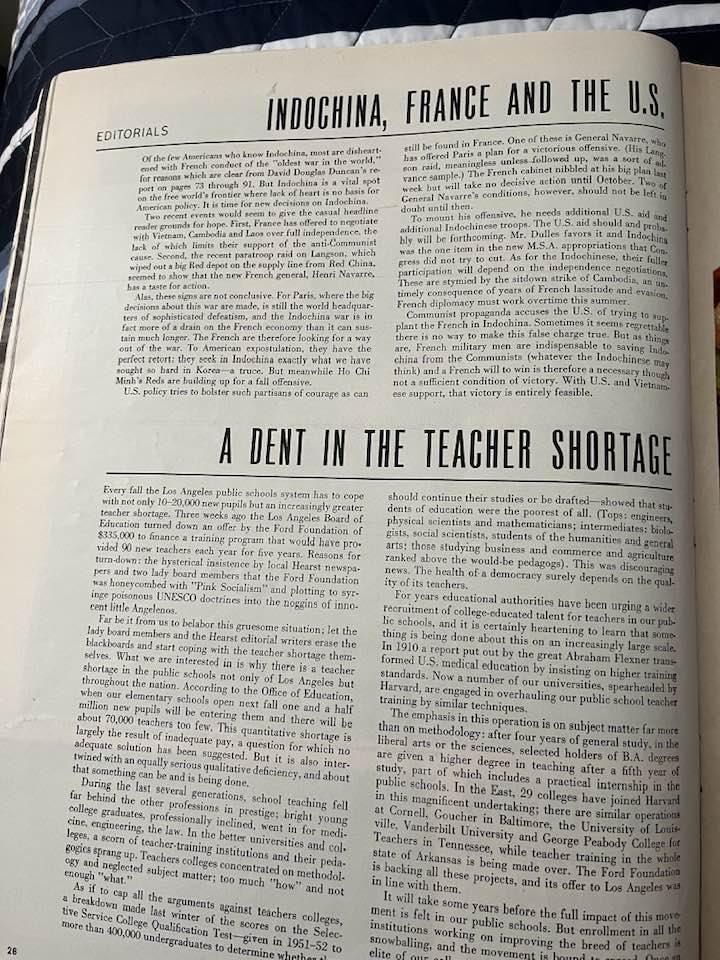
* The editors mention the arrival of General Henri Navarre and his proposed plan for a victorious offensive as a hopeful development. They urge Paris to accept the plan, stating that with “Vietnamese and American assistance victory is entirely feasible.” This so-called victorious offensive turned out to be Operation Castor, which ended with the Battle of Dien Bien Phu.

Related Articles:

All Propagated with the Best Intentions”: Greene, the U.S. and Indochina 1951-55

Graham Greene’s Prescient War-Reporting from Vietnam Predicted How Badly It Would Go

How Graham Greene’s Novel About American Policy in Vietnam Was Subverted by Hollywood

In Our Time No Man Is a Neutral

The Wily American

Our Man in Hollywood

Their Man in Saigon

The Mafia Comes to Asia

David Douglas Duncan Photos

Phil and Michael Ochs – Goodbye Columbus

When I’m in the Journalism Building at Ohio State University I am often reminded that I am roaming the same hallways that Phil Ochs did back in the year that I was born (although the building was renovated in 1973, so they aren’t exactly the same hallways). Phil Ochs will always be my Ohio State hero.

Ochs studied journalism in college and formed a keen interest in politics, signing on with the student newspaper, the Lantern, as a student reporter (1959-1962). While there he contributed some interesting editorials on the Cold War events of the day. But when the student paper refused to publish some of his more radical articles, and then passed him over for the editor-in-chief job, he dropped out in his last quarter and moved to New York City in 1962.

While at OSU he developed a liking for the folk music of Woody Guthrie, Pete Seeger, the Weavers and the mythical IWW union leader Joe Hill, among others. Inspired by this music, he learned the guitar and formed a duo called the Sundowners. His first gig was at the legendary campus bar named Larry’s, right next door to where I tended bar for a few years in my college days. I spent many nights that I don’t remember at Larry’s, as I am sure Phil probably did too.

In Greenwich Village he emerged as one of the most influential folk singers of the sixties. He had a good friendship, and also an artistic rivalry, with Bob Dylan. Suze Rotolo, Dylan’s girlfriend at the time (seen on the cover of The Freewheelin’ Bob Dylan), attended his wedding. He performed at the 1963 and 1964 Newport Folk Festivals to thunderous applause and great reviews. He appeared at Carnegie Hall and became a mainstay at many of the most famous civil rights rallies and anti-war demonstrations of the time. He was involved in the creation of the Youth International Party, known as the Yippies, along with Jerry Rubin and Abbie Hoffman.

But, like many of his contemporaries, the moment of change came with Dylan’s famous electric performance at Newport in 1965, one of the most important dates in 20th century American music. Ochs was unable, or unwilling, to make the leap to the new sound and his star began to slowly fade. These days he is hardly remembered. Sadly, even OSU remains ambivalent/silent about his legacy.

Here he is in 1965, young, vibrant and rebellious, on Let’s Sing Out, just a few months after the first ground troops landed in Vietnam. Note: if you watch to the end you’ll see a filler clip of him playing on the Oval at OSU in front of Orton Hall, the oldest building on campus and one that I help manage.

Phil Ochs Concerts Listing

Michael Ochs, Phil’s younger brother, is an American photographic archivist best known for his extensive collection of pictures related to rock music dating back to the 1950s and 1960s. The Michael Ochs Archives contained 3 million vintage prints, proof sheets and negatives. The Los Angeles Times called Ochs “America’s preeminent rock ‘n’ roll photo archivist” and described his archive as “the dominant force in the rock image marketplace”; The New York Times called it “the premier source of musician photography in the world”. (Wikipedia)

Michael Ochs earned a B.A. in radio and television writing from Ohio State University in 1966.  He then managed for his folk singer brother, worked as a photographer for Columbia Records, and later headed the public relations departments at Columbia Records, Shelter Records and ABC Records. He began collecting photographs as a hobby and spent years building the collection, ultimately establishing The Michael Ochs Archives in 1977. In the eighties he hosted his Archives Alive radio show on KCRW.

From his collection, he has produced six books: Rock Archives; Elvis In Hollywood; Marilyn: March, 1955; Shock, Rattle & Roll; Marilyn Monroe: From Beginning To End; and 1,000 Record Covers. He was one of three producers of the 2010 documentary film Phil Ochs: There but for Fortune.

In 2007, Getty Images purchased the Michael Ochs Archives.

Michael Ochs Archive Getty Images

Michael Ochs At Photos.com

https://entergallery.com/blogs/news/enter-gallery-presents-the-michael-ochs-archive

Dickey Chapelle – Trailblazing War Correspondent

Georgette Louise Meyer (March 14, 1918 – November 4, 1965), known as Dickey Chapelle (self-named after her favorite explorer, Admiral Richard Byrd), was an American photojournalist known for her work spanning from World War II to the Vietnam War.

While still in her twenties, posted with the Marines during World War II, she became one of the country’s first female war correspondents, covering the battles of Iwo Jima and Okinawa for National Geographic.

Chapelle covered the Hungarian revolt in 1956, The Lebanon Crisis in 1958, The Algerian War for Independence against France, The Cuban Revolution and the Vietnam War. In Algeria she travelled with the FLN rebels, in Cuba with Castro’s troops. She was in Vietnam and Laos as early as 1961, when US presence was still in the advisory phase. Chapelle became the first female reporter to win approval from the Pentagon to jump with American troops in Vietnam.

On the morning of November 4, 1965, she was killed by a land mine while on patrol with a Marine platoon, becoming the first war correspondent killed in the American war in Vietnam. Loved by the troops, her body was repatriated with a Marine honor guard and she was given a full Marine burial, also a first. She was the first American female reporter ever to be killed in action.

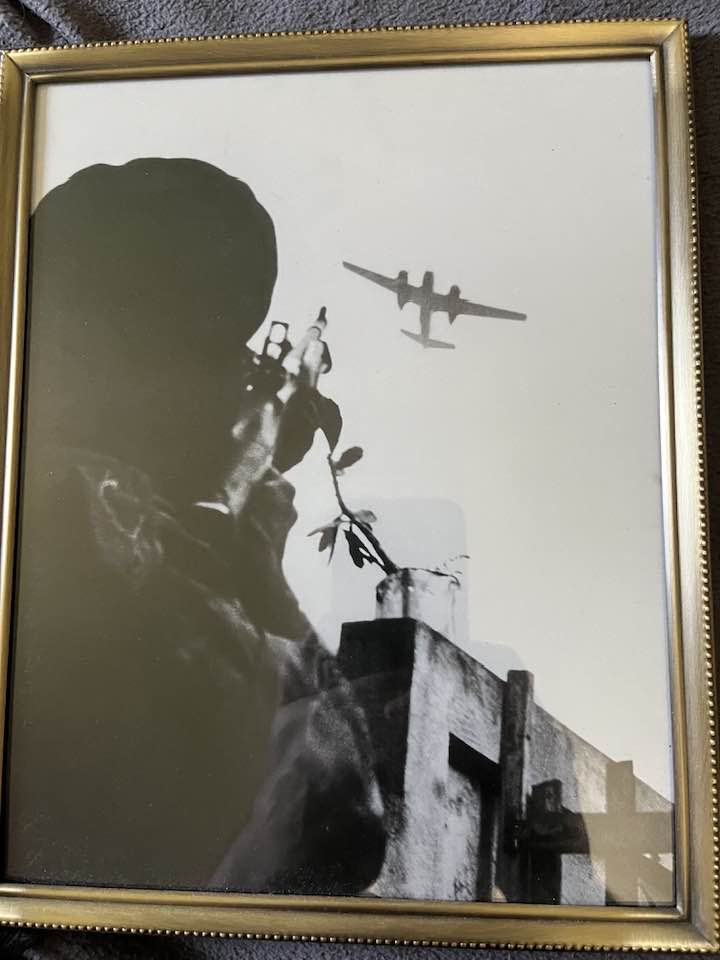
Here is a copy of one of her photos that I obtained from the Wisconsin Historical Society taken while covering the fighting in Cuba in 1958. The caption: Major Antonio Lusson, battalion commander for Castro during the fight for the town of LaMaya, fires on a strafing B-26 from Batista’s air force. Dickey Chapelle 1958.

Chapelle Gallery at Wisconsin Historical Society

Remembering ‘fearless’ war photographer Dickey Chapelle

Anniversary: Dien Bien Phu

On the evening of May 7, 1954 the last remaining French position, strong point Lily, manned by Moroccan soldiers commanded by a French officer, surrendered to the attacking Vietminh, ending the two-month long siege of Dien Bien Phu and with it the French-Indochina War. The French fought long, hard, and at times effectively, for French Indochina. The U.S. government gave more financial aid to the French cause in Indochina than it gave to France in the Marshall Plan. But in the end Eisenhower refused to send troops to rescue the garrison.

Dien Bien Phu was unquestionably an important event in world history. In a sense it was the last stand of western colonialism in the Far East. The Brits had already fled India and were in the midst of the Malayan Emergency. The Dutch war of reconquest in Indonesia had been futile. Unfortunately for Ho Chi Minh and the Vietnamese people, their Chinese and Soviet allies sold them short at the bargaining table later that year in Geneva. That, mixed with American actions to negate the treaty in subsequent years, set the table for the second Indochina War, known to many Vietnamese as the “American Phase.”

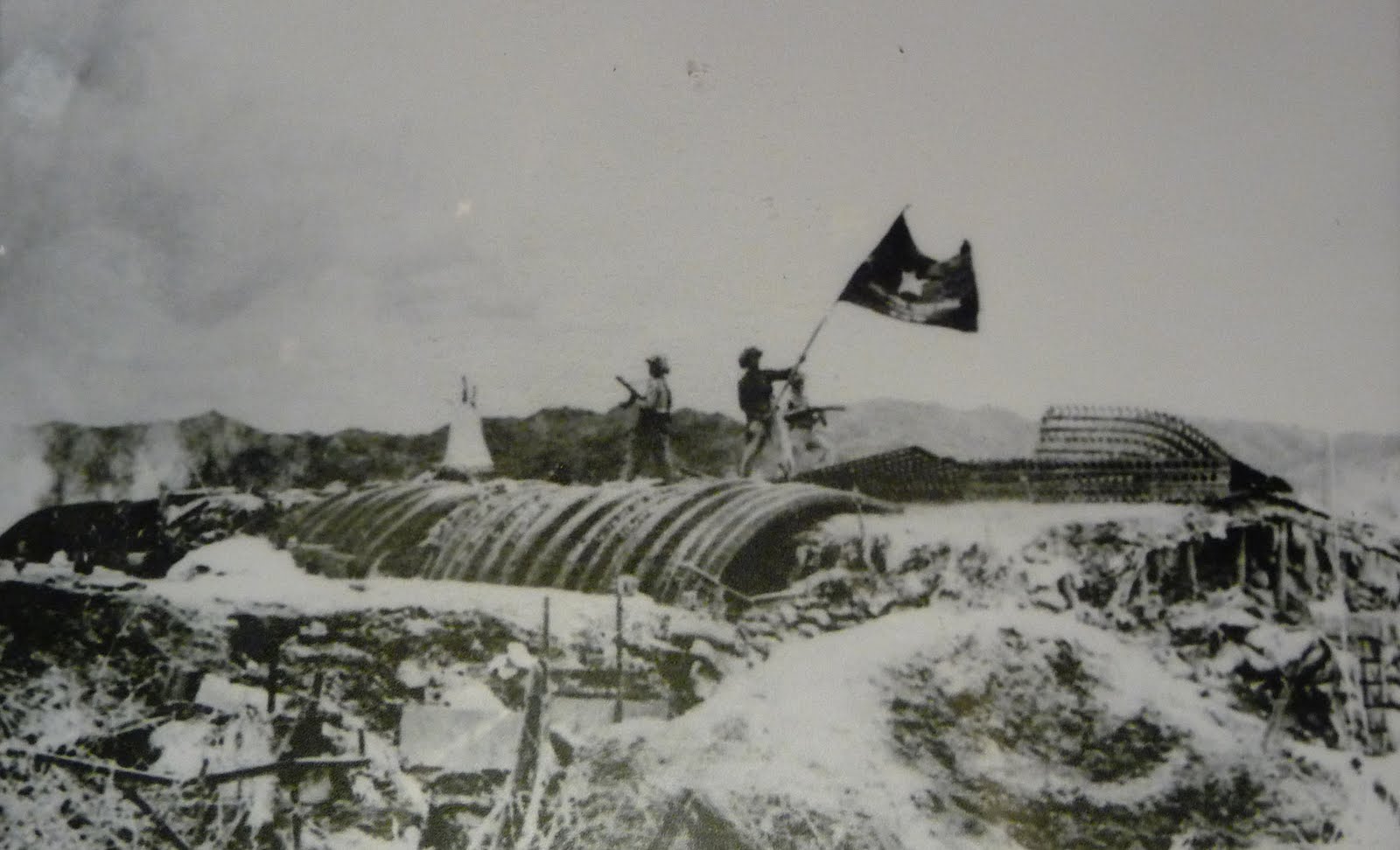
The picture below is probably the most famous of the battle, in reality it was taken after the battle as part of a re-enactment staged by a Russian filmographer…

Vietnam People’s Army, First publish in 1954. – Vietnam People’s Army museum (still from Soviet filmographer Roman Karmen).