Tag Archives: Life magazine

Life Magazine Covers The Vietnam War #4– May, 1954

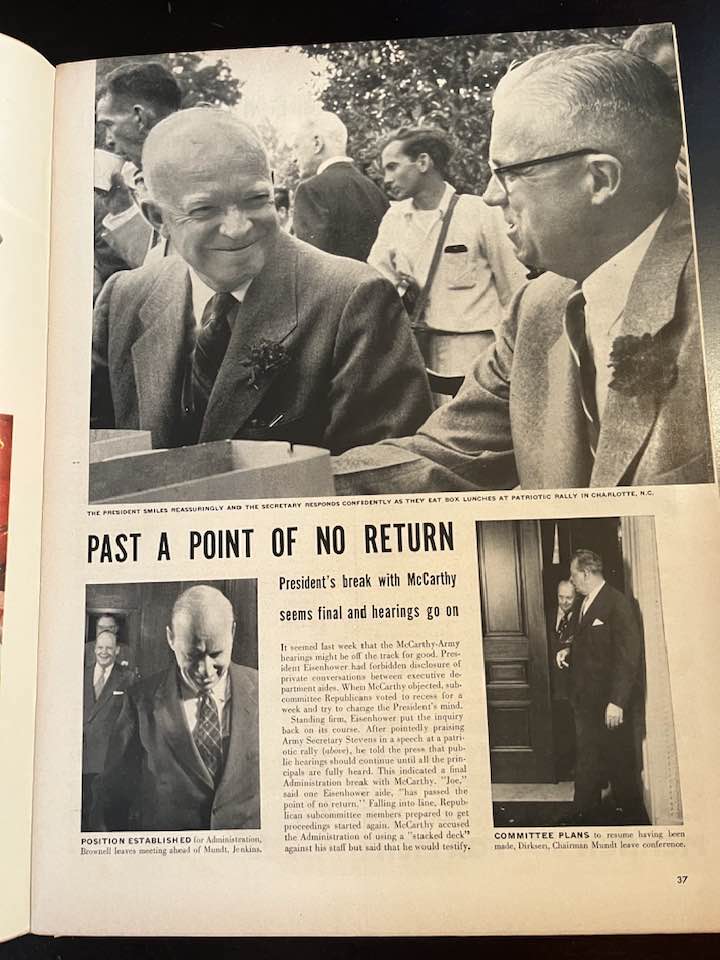
Life Magazine May 31, 1954. You’d be hard pressed to find a month in mid-century American history with more consequential events for the following decades than this one, and Life magazine was there. An article covers the French loss and retreat at the Battle of Dien Bien Phu and the subsequent Geneva Conference that led to the partition of Vietnam at the 17th Parallel. Another reports on the Brown vs Board of Education decision, which signaled the beginning of the Civil Rights era. We also learn that the Army hearings that finally brought down Joe McCarthy were under way.

Senator Joseph McCarthy (R-Wisconsin) had been riding high for several years on his claim that the Democrats were soft on, or in league with, communism and hence the government had become riddled with communists, especially the State Department. The ensuing anti-communist hysteria, known as the “Red Scare,” had brought the Republicans back to power for the first time since before the Great Depression. One tactic of red-baiting that the GOP exploited to great advantage was the claim that Truman and the Democrats had “lost” China by allowing Mao to come to power in the Chinese Revolution in 1949. The crusade known as McCarthyism caused enormous political damage and ruined many careers and lives. But now Tail Gunner Joe’s star was fading. His harsh right-wing grandstanding, much of it unsubstantiated, and his drunken antics had become a liability. Eisenhower had turned on him. Henry Luce on the other hand would remain a major espouser of the lost China accusation for years to come (Chiang Kai-Shek was his close friend). His publications would exert powerful domestic pressure on Eisenhower, who decided to involve the country in a series of Asian misadventures in Indonesia, Laos, and Vietnam.

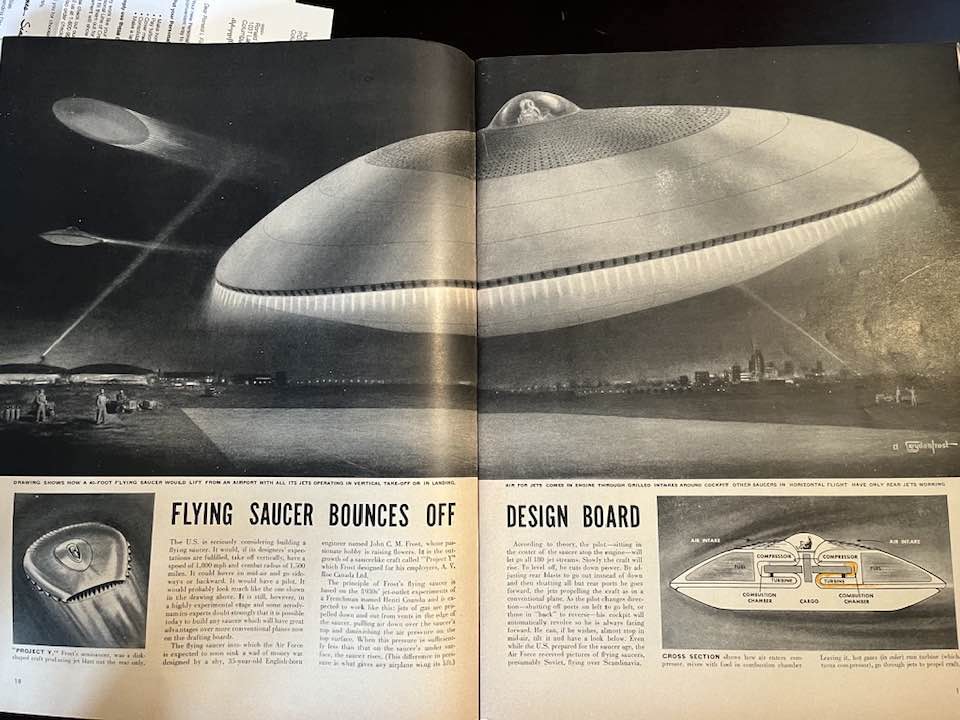
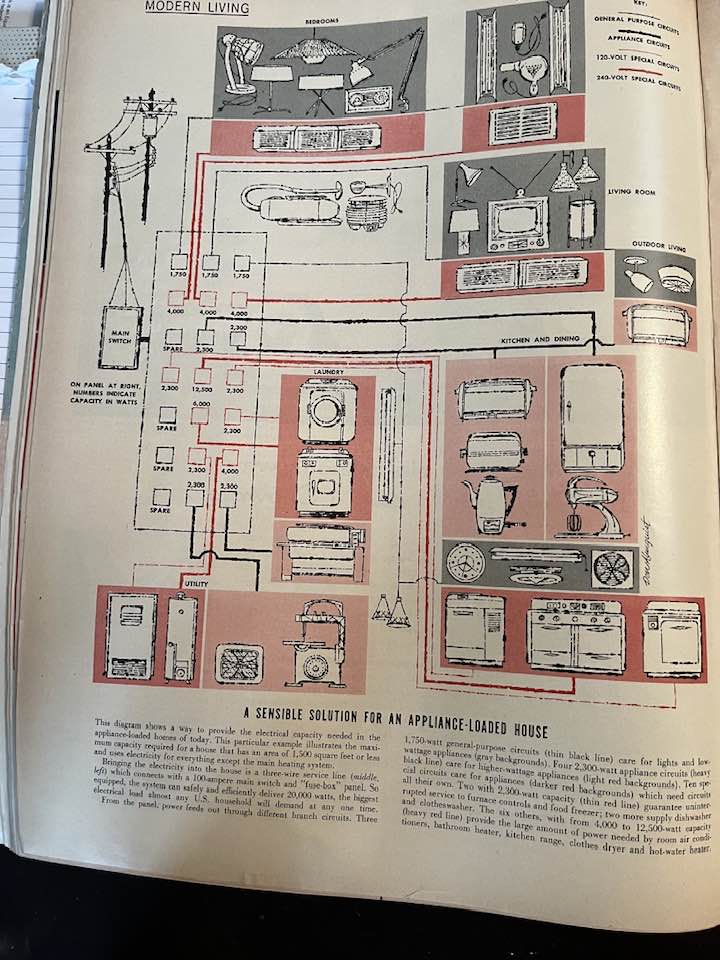
These threads would merge a decade later as the U.S. sent a massive military deployment to Vietnam, many of whom were black, brown and American Indian, in an ill-fated attempt to roll-back the communist threat officially labeled as the “domino theory,” a phrase coined in 1954 by Eisenhower in justifying initial military support for the American installed government in South Vietnam. This issue truly contains the seeds of the sixties. There is also an article on the science of flying saucers and an electrical schematic for “A Sensible Solution For An Appliance-Loaded House.”

Life Magazine Covers The Vietnam War #3 – August, 1953

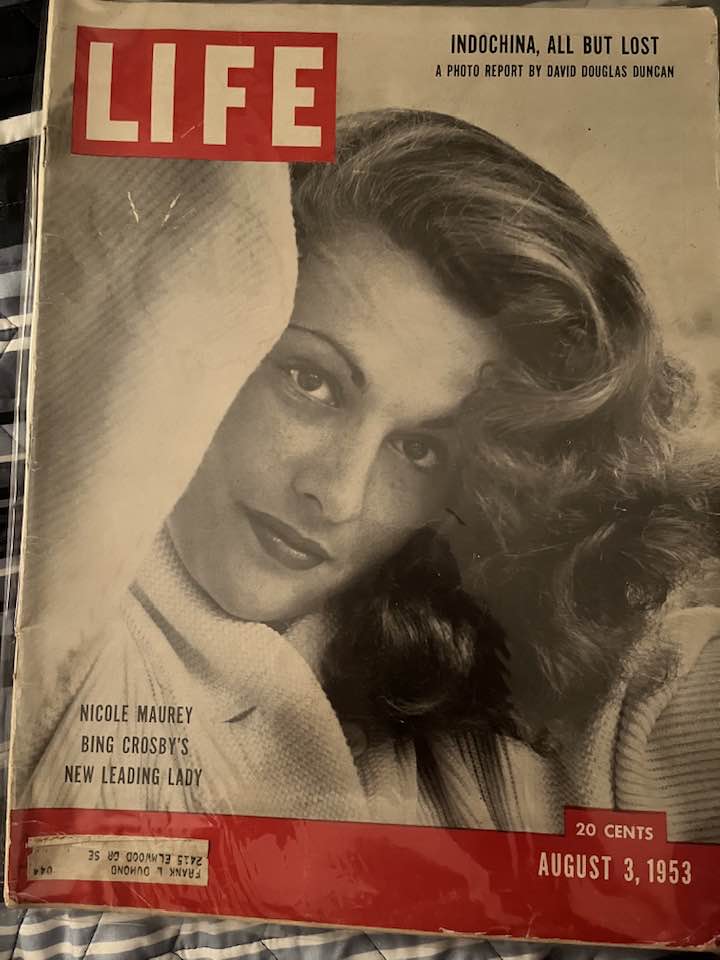
Life Magazine August 3, 1953 – Pessimism Sets In

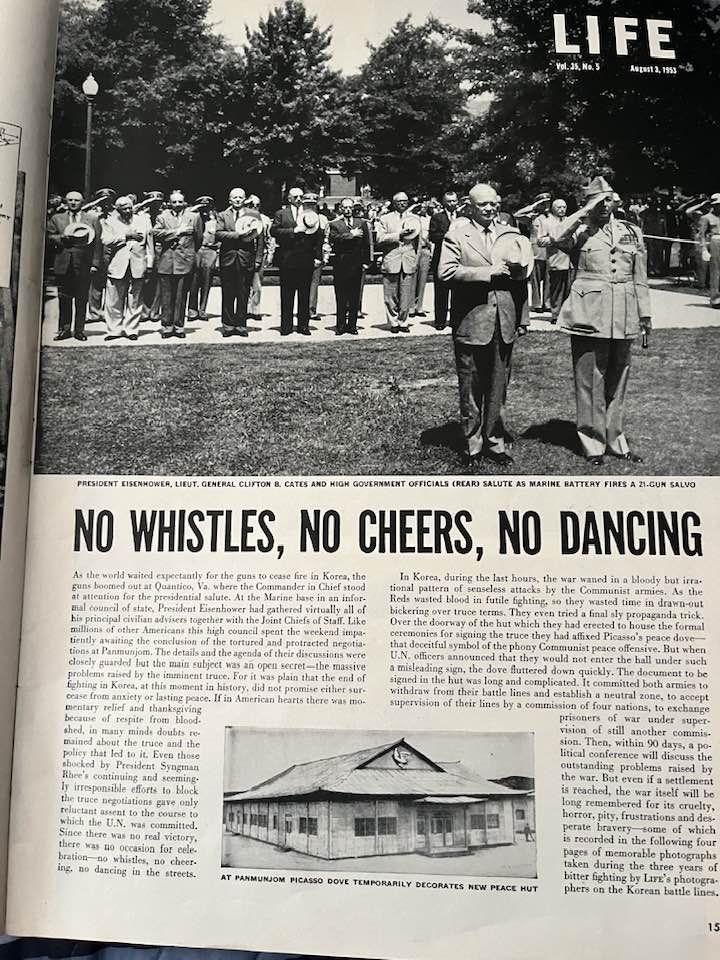
This issue is notable for several reasons. First, there is an article covering the ceasefire agreement ending formal fighting in the Korean War. Entitled “No Whistles, No Cheers, No Dancing” it is less than enthusiastic, not surprising considering Henry Luce’s antipathy toward the Chinese Communists. The French were also less than enthusiastic about the agreement, since it freed up the Chinese to focus on supporting Ho Chi Minh’s forces in the ongoing Indochina War.

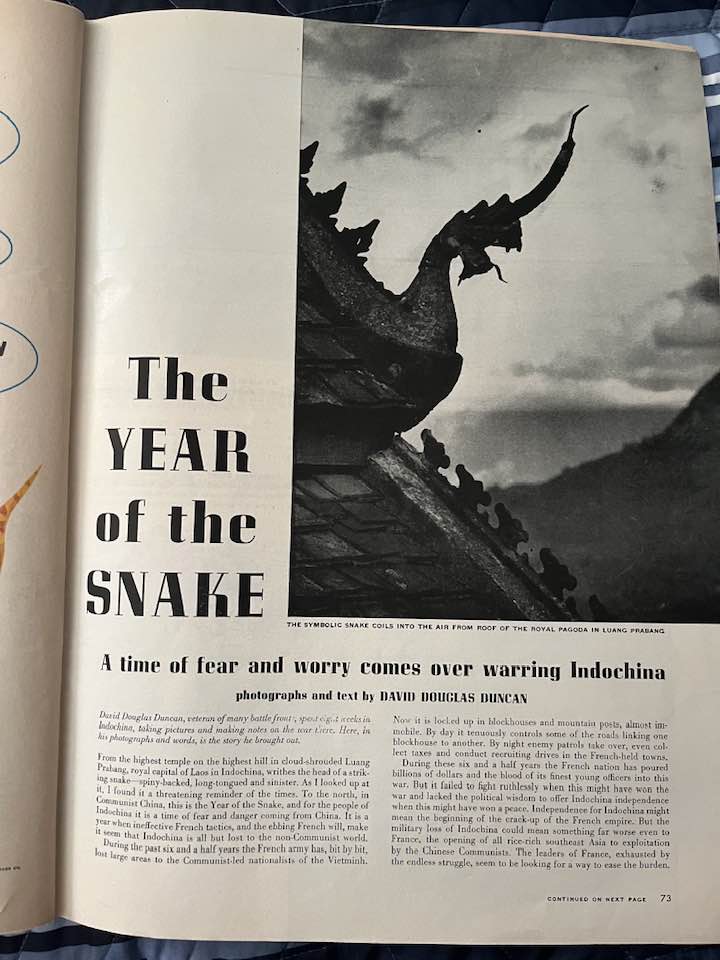
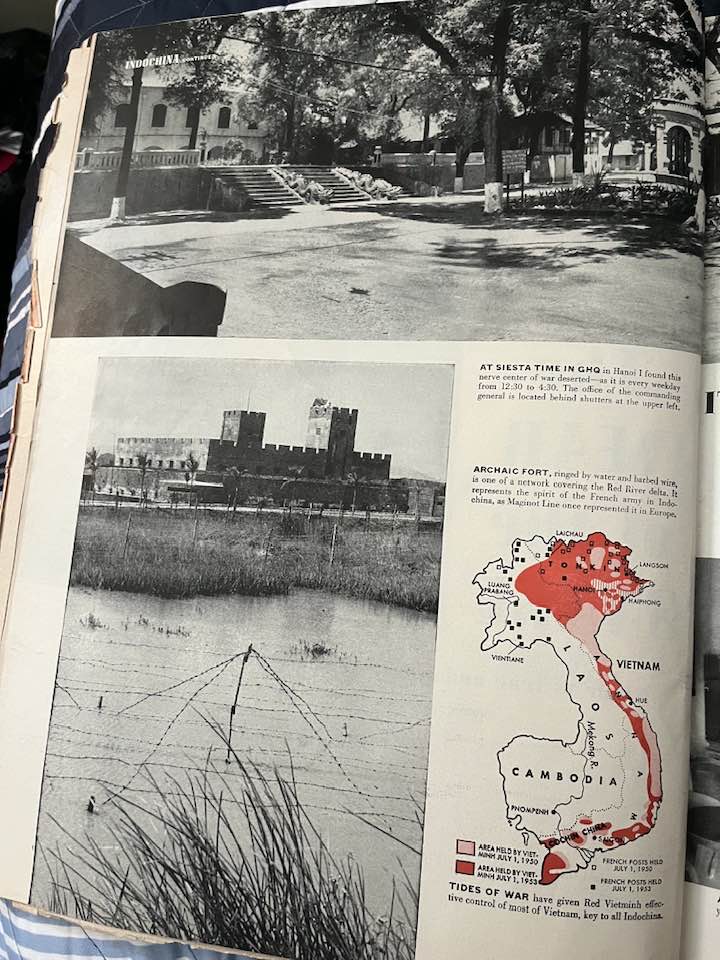
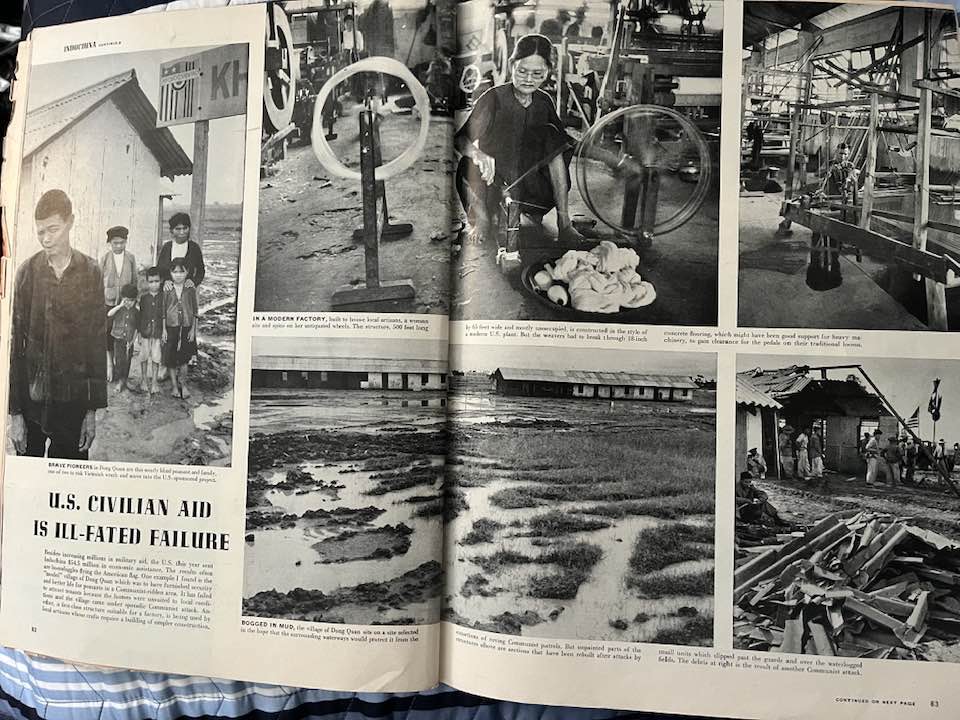
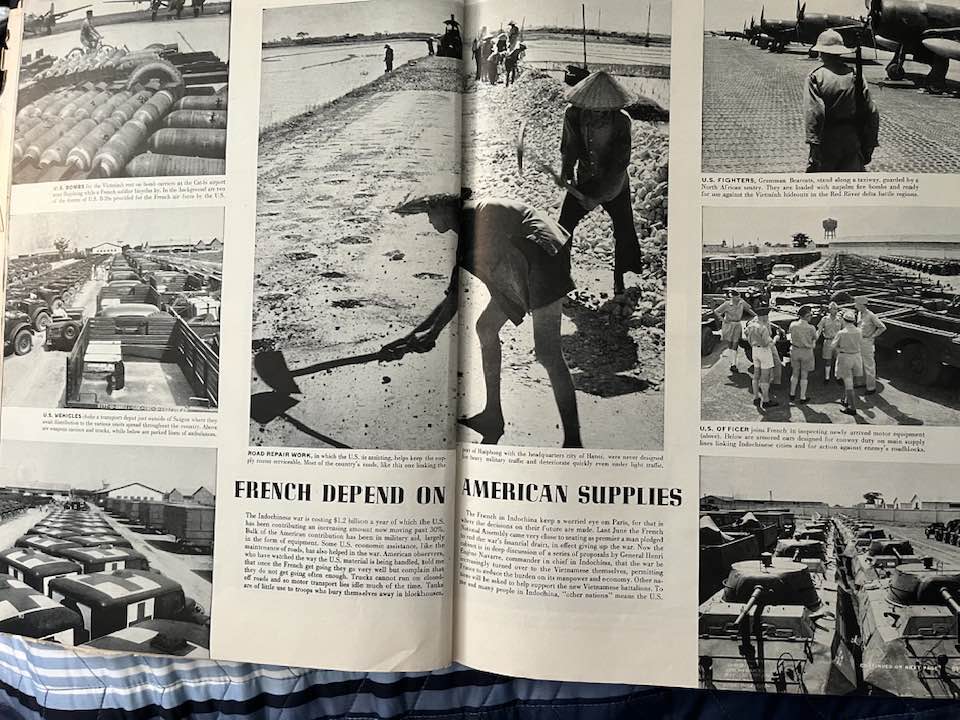
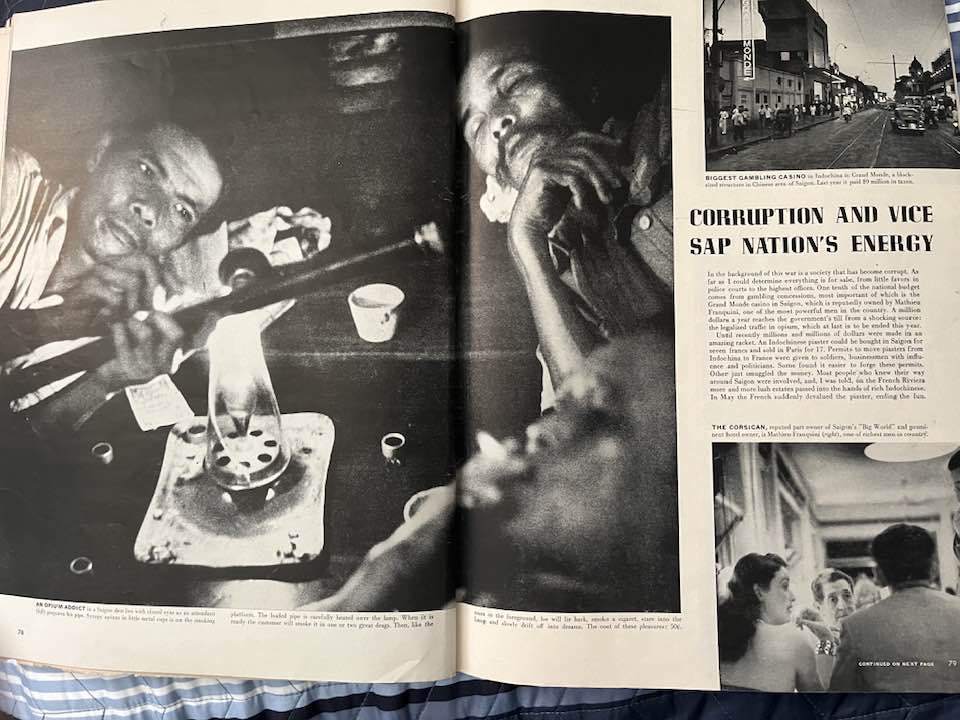
Second, we are introduced for the first time in the Vietnam context to the great combat photographer David Douglas Duncan, from whom we will see more during the American phase of the war. The photos captioned “Corruption and Vice Sap Nation’s Energy” convey the effects of the opium trade in Saigon. We get a rare glimpse of the Grand Monde Casino and the French underworld boss Mathieu Franchini, the Corsican, who controlled most of Saigon’s opium exports to Marseille. (see Bodard, Lucien, The Quicksand War: Prelude to Vietnam. Faber and Faber Limited, London, 1967. And, McCoy, Alfred. The Politics of Heroin in Southeast Asia. Harper and Row, New York, 1972.)

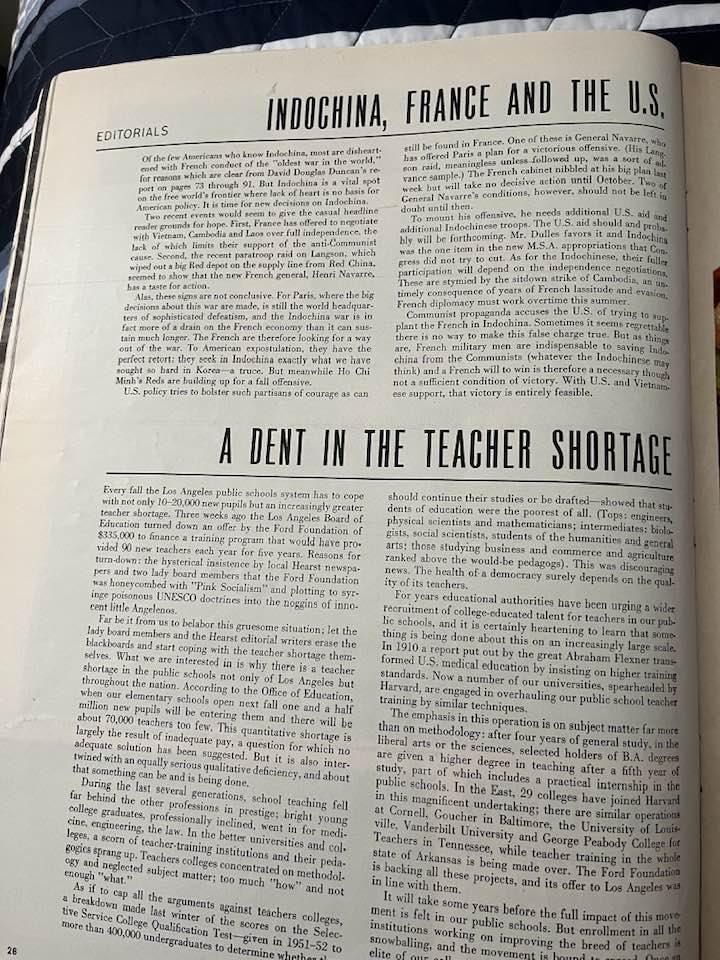
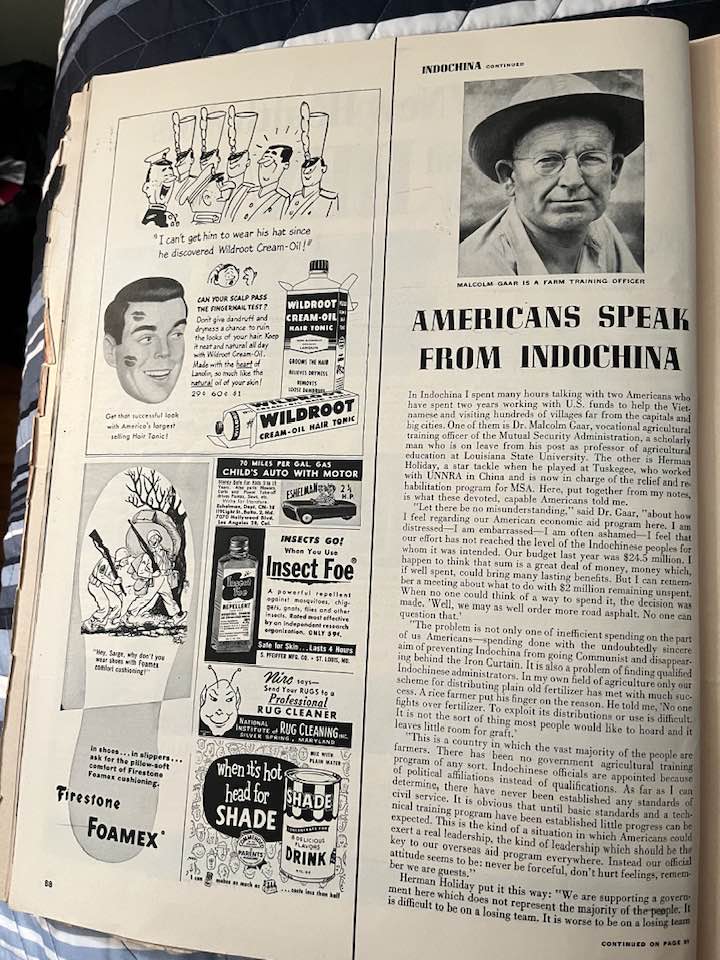
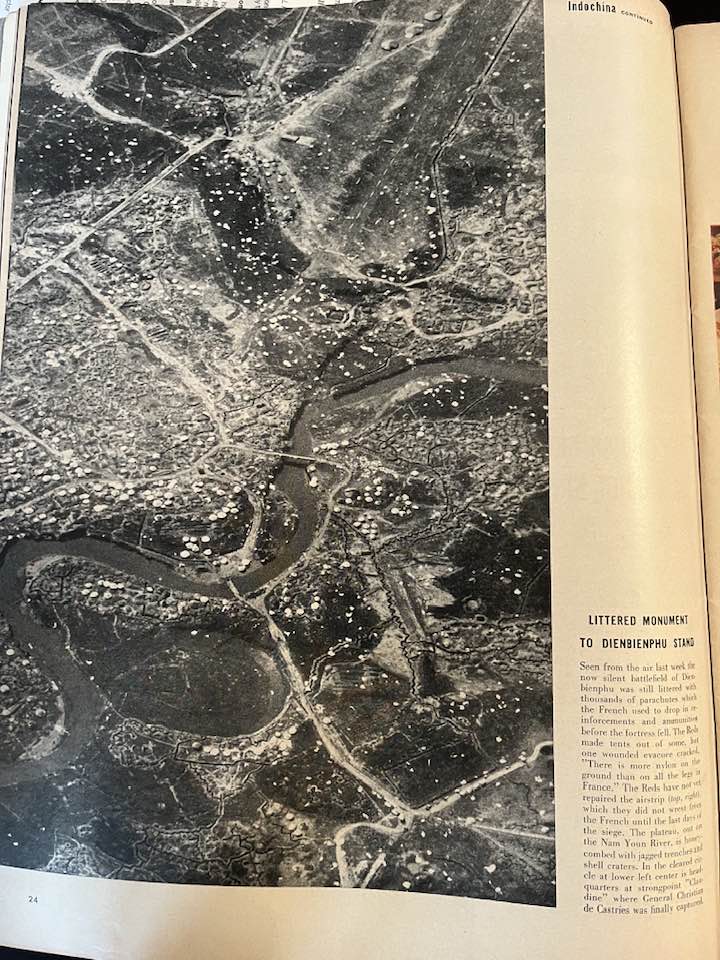
Last, with the title “Indochina All But Lost” featured on the cover, the first time that the war is mentioned on a cover, a turn toward pessimism about the ultimate outcome is apparent. The editorial on page 28 titled Indochina, France and the U.S. (shown below) posits that “Americans who know Indochina” are disheartened with France’s conduct of the war, calling Paris “the world headquarters of sophisticated defeatism,” and that it is time for new decisions on Indochina.*

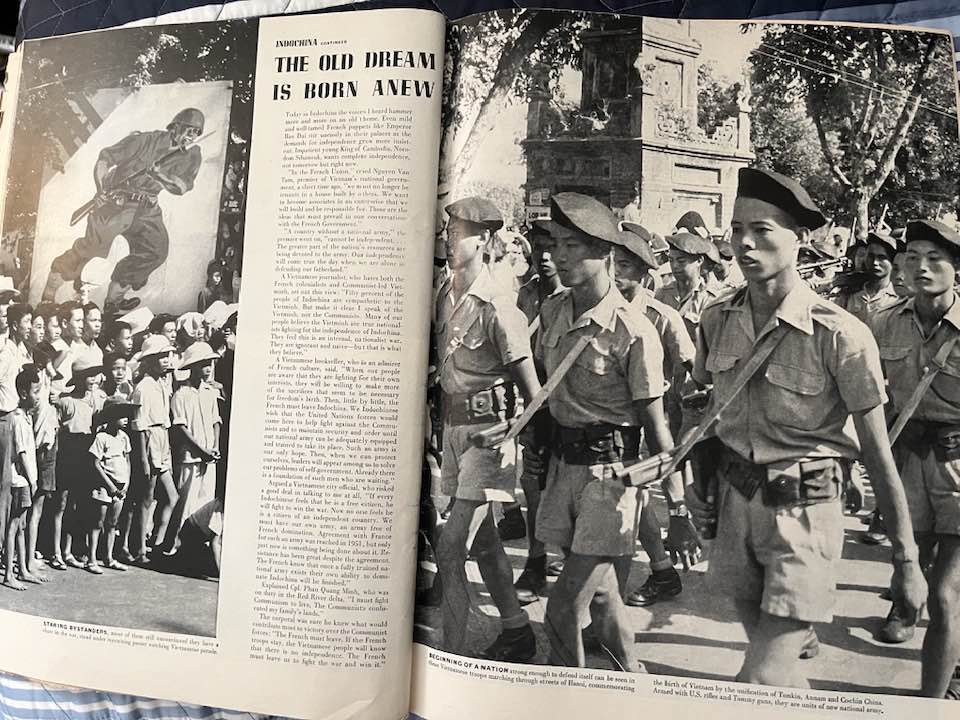
This was an abrupt departure from the hopeful tone of previous Life reporting on the Indochina War. Just two years earlier the novelist Graham Greene had visited Vietnam, sent by Luce as a correspondent for Life. In the July 30, 1951 issue Greene reported on the war in Malaya, known as the Malayan Emergency. He crossed into the Tonkin region of Indochina on that trip. He ends his article with a comparison between the two insurgencies, both featuring colonial armies fighting local Communists. Greene applauds the performance of the Vietnamese Catholic infused forces that were helping the French while he denigrates the Malayan armed police fighting alongside the British, a hasty judgement that may have been clouded by his overt Catholicism. Yet, with more time spent in Vietnam, after gaining a better understanding of the situation, history and players, his confidence appears to have waned. A subsequent report, while not overly critical of the French forces, was not enthusiastic about their chances of prevailing either. Luce censored the article, and no other American publishers would run it. The piece ended up in the French magazine, Paris Match, for which Greene had become a correspondent. What he saw on that assignment, and future trips for Paris Match, provided the foundation for his masterpiece “The Quiet American,” considered to be one the greatest novels of the Cold War period. (see Greene, Graham, Indochina: France’s Crown of Thorns, Paris Match, July 12, 1952. And, Greene, Graham, Reflections, ed. Adamson, Judith, Reinhardt, New York, 1990.)

* The editors mention the arrival of General Henri Navarre and his proposed plan for a victorious offensive as a hopeful development. They urge Paris to accept the plan, stating that with “Vietnamese and American assistance victory is entirely feasible.” This so-called victorious offensive turned out to be Operation Castor, which ended with the Battle of Dien Bien Phu.
Related Articles:

All Propagated with the Best Intentions”: Greene, the U.S. and Indochina 1951-55

Graham Greene’s Prescient War-Reporting from Vietnam Predicted How Badly It Would Go

How Graham Greene’s Novel About American Policy in Vietnam Was Subverted by Hollywood

In Our Time No Man Is a Neutral

The Wily American

Our Man in Hollywood

Their Man in Saigon

The Mafia Comes to Asia

David Douglas Duncan Photos

Life Magazine Covers The Vietnam War #1 – December 1947

Life December 29, 1947 – Introduction of Ho Chi Minh

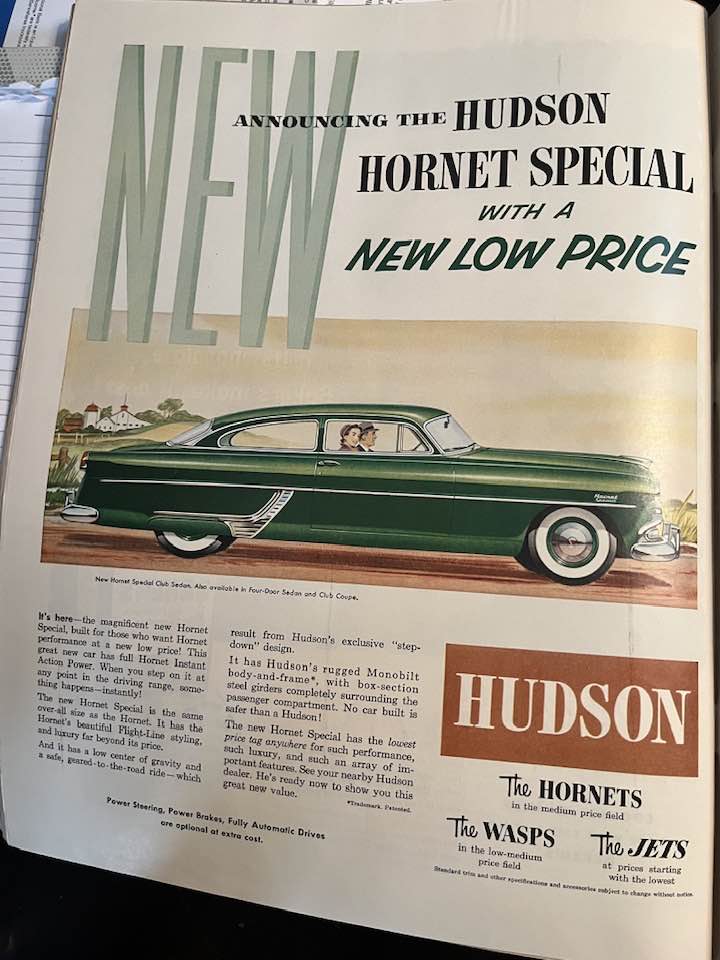
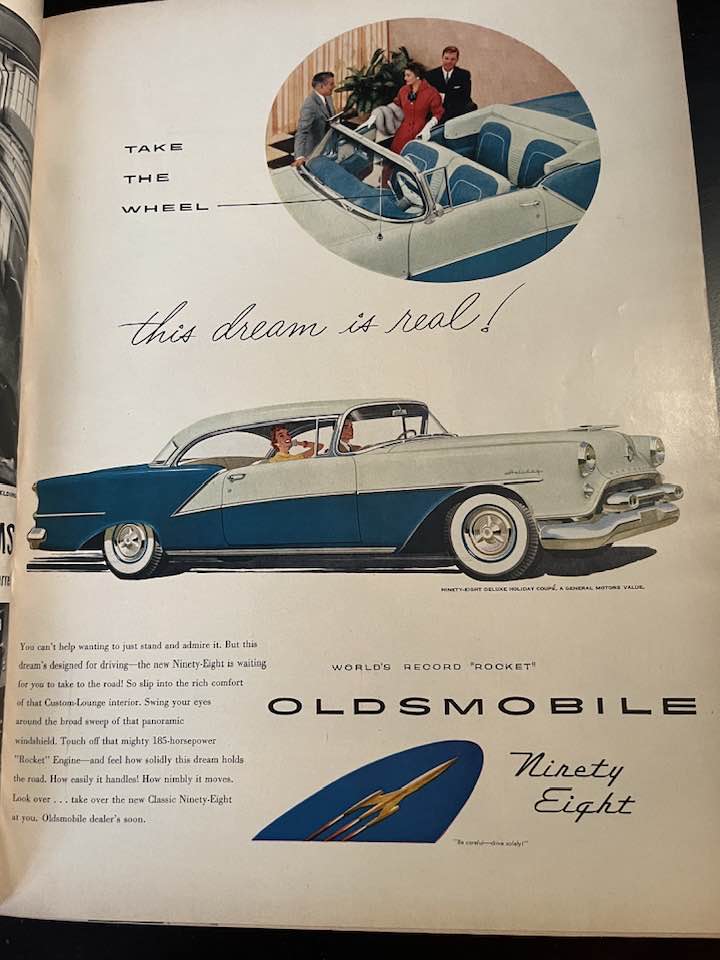
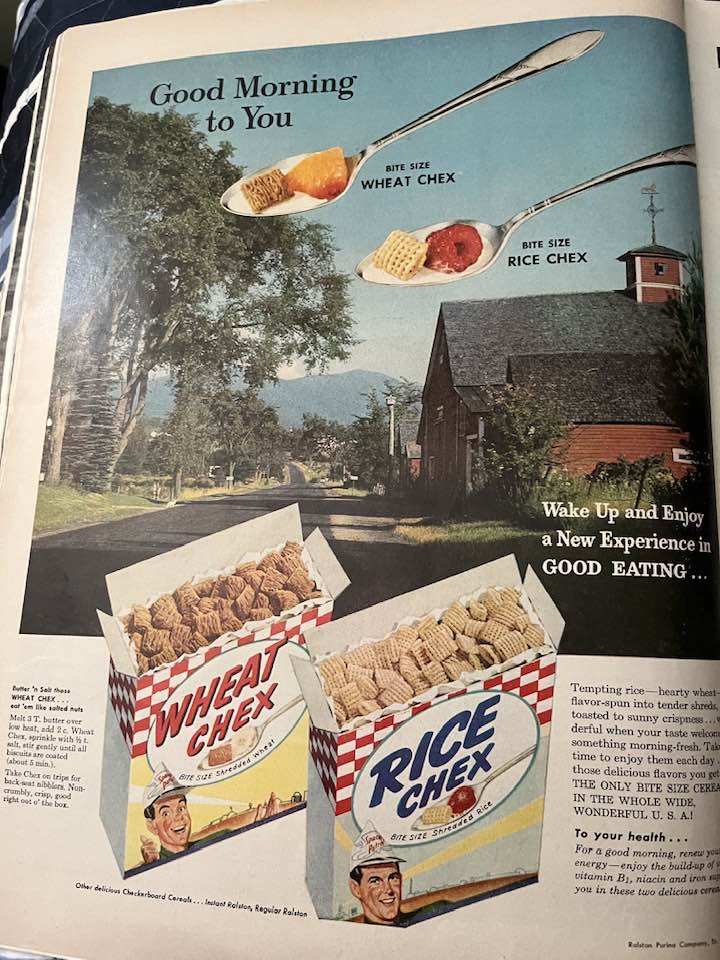
Photos from Life magazine, and others, that featured stories about the Vietnam War. Shared here in chronological order, along with some historical background for context. They are interesting artifacts of the time period. The ads are memory inducing too.

For people of my generation who grew up in the 1960s the war in Vietnam was, along with the Civil Rights Movement, the biggest ongoing news story of our youth. A substantial portion of popular culture, music, literature, movies etc, developed in reaction to these events. Much has been made of the role of TV media in influencing public opinion during the war, ultimately turning the majority of Americans against it. The war has been called the first living room war. 

Less has been made of the role of the print media in leading the country into the war. No entity was more prominent in that role than Henry Luce’s Time and Life magazines. By 1950 nearly half of all college educated men in America regularly read these magazines, a number which grew throughout the 50s and 60s before ultimately fading in the late 60s under competition from television. Luce was immensely influential in political circles. Life introduced American readers to Ho Chi Minh in the December 29, 1947 issue.

By late 1947 the French had concluded that they weren’t going to take back their former colony without a substantial amount of military aid. Unfortunately for them they also knew that most Americans were staunch anti-colonialists. Truman was facing a tough re-election in 1948 and did not want to be seen as supporting colonialism. The French then hit on a brilliant strategy. They rehabilitated the son of a former emperor and installed him as the nominal “sovereign.” They then re-branded the war, not as a colonial reacquisition, but as a fight for Vietnamese nationalism versus Ho Chi Minh’s communists, ergo a crucial front in the life and death struggle between the west and soviet-directed communism. Life Magazine was quick to take up the cause. The ploy worked, the U.S. waded waist deep into the big muddy…

Vietnam Snapshot: The OSS and Ho Chi Minh, 1945

Vietnam Essay: Indochina War, Early Years (1946-1950)

John G. Morris – 20th Century Little Big Man

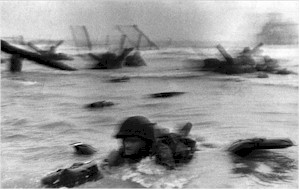
Capa,_D-Day1In 1964 Thomas Berger published Little Big Man. Filmed later as an anti-war parody by director Arthur Penn, the satirical novel recounts the exploits of 111-year-old Jack Crabb, as he wanders through the history of nineteenth-century western America. Along the way his life intersects with the likes of Wild Bill Hickok, Wyatt Earp, Buffalo Bill, and Custer. Through it all he has a front row seat to the so-called “winning of the West”— and he doesn’t like what he sees.

Crabb was a fictional character but each era seems to have its real life Jack Crabbs–  people whose long lives spanned critical historical events, and whose actions, usually associated with their work, influenced events behind the scenes. One such real life character is John G. Morris (1916 –  ). Quietly Morris became a key figure in the story of the 20th-century through his photo editing. He was on the scene in downtown Los Angeles early in 1942 to photograph the first wave of Japanese men, women and children being packed off to internment camps in the high desert. He then went to London as Life magazine’s lead photo editor in Europe during World War II and was in charge of coordinating the visual coverage of the Western Front. It was Morris who managed to save a handful of historic images shot by Robert Capa at D-Day when it was feared the entire set had been lost when damaged in development. Morris went to Normandy himself shortly after the invasion and snapped some memorable photos of his own. After the war, while at Ladies Home Journal, Morris published Women and Children of the Soviet Union with photos taken by Robert Capa. The photos provided Americans with a rare glimpse behind the Iron Curtain at the onset of the Cold War.

His career spans tenures with Life magazine, the Magnum photo agency, Ladies’ Home JournalThe Washington Post, The New York Times, and the National Geographic magazine. He knew and worked with the most celebrated war chroniclers of the times– Robert Capa, Henri Cartier-Bresson, W. Eugene Smith, Ernest Hemingway and David Duncan to name just a few. While he was the photo editor for The New York Times during the Vietnam War, Morris put Nick Ut’s “Napalm Girl” and Eddie Adams’ Saigon execution and John Filo’s student crying at Kent State on the front page — photos that greatly affected public perception of the Vietnam War. Morris is passionately anti-war, and much like Jack Crabb, it becomes abundantly clear upon listening to him speak that he doesn’t like what he sees. View an excellent documentary about John G. Morris called Get The Picture.

Career:

Daily Maroon (The Chicago Maroon), University of Chicago student newspaper, 1933-37

Pulse, University of Chicago student magazine, Editor, 1937-38

LIFE (magazine), Editorial Staff, 1939-46 : New York, Los Angeles, Washington, London, Chicago, Paris

Ladies’ Home Journal, Associate Editor (Pictures), 1946-52

Magnum News Service, Editor, 1952-63

The Washington Post, Assistant Managing Editor (Graphics), 1964-65

Time/Life Books, editor, 1966-67

The New York Times, Picture Editor, 1967-74; Editor, NYT Pictures, 1975-76

Quest/77-79, Contributing Editor, 1977-79

National Geographic, European Correspondent, 1983-89