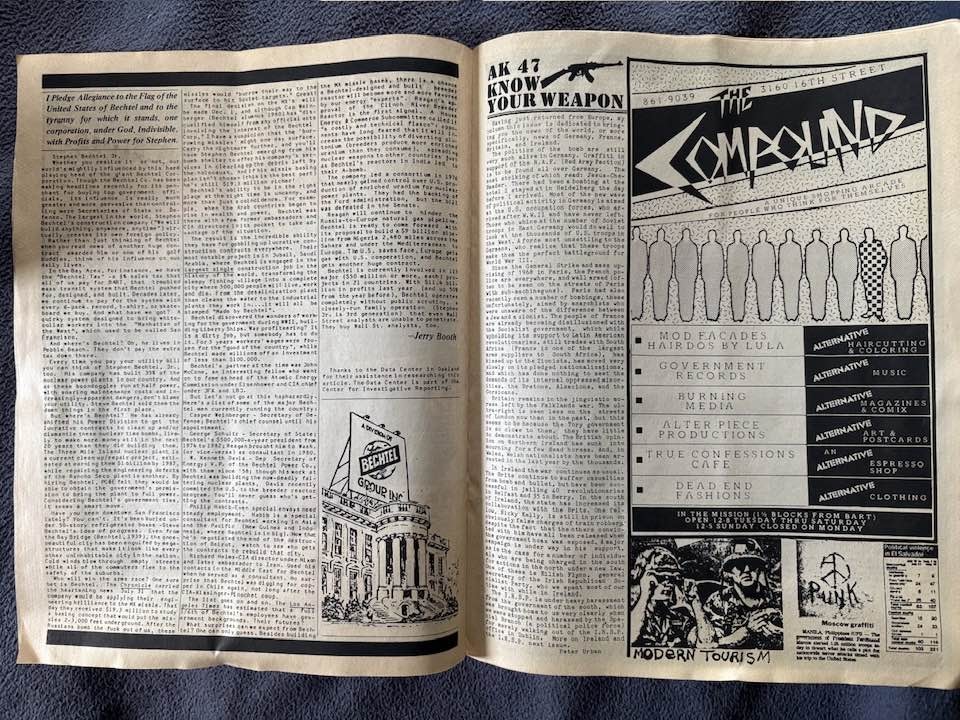
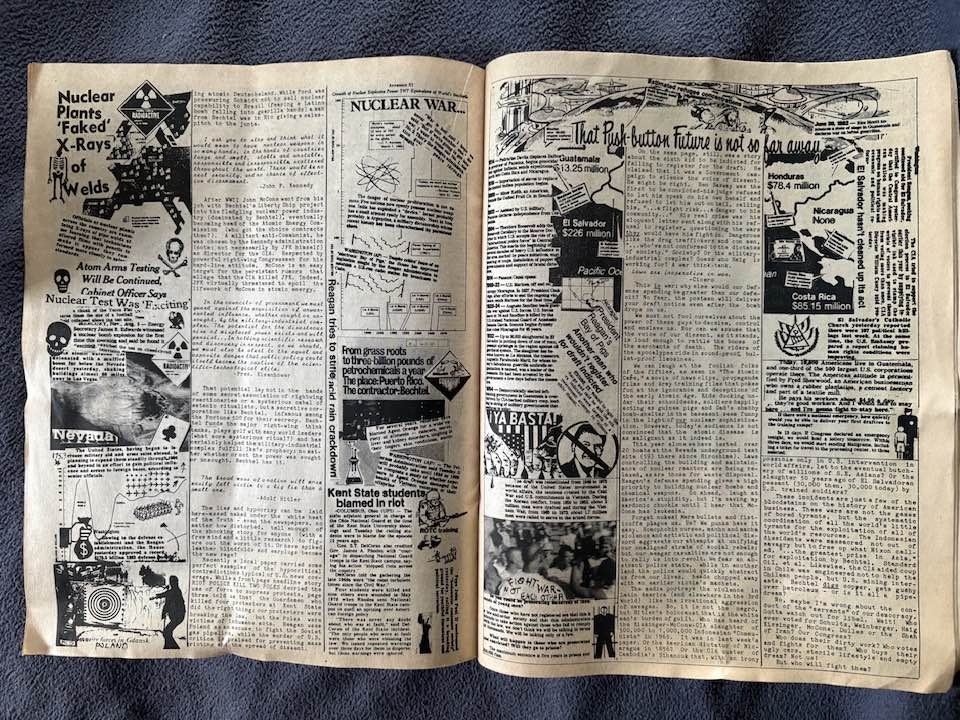
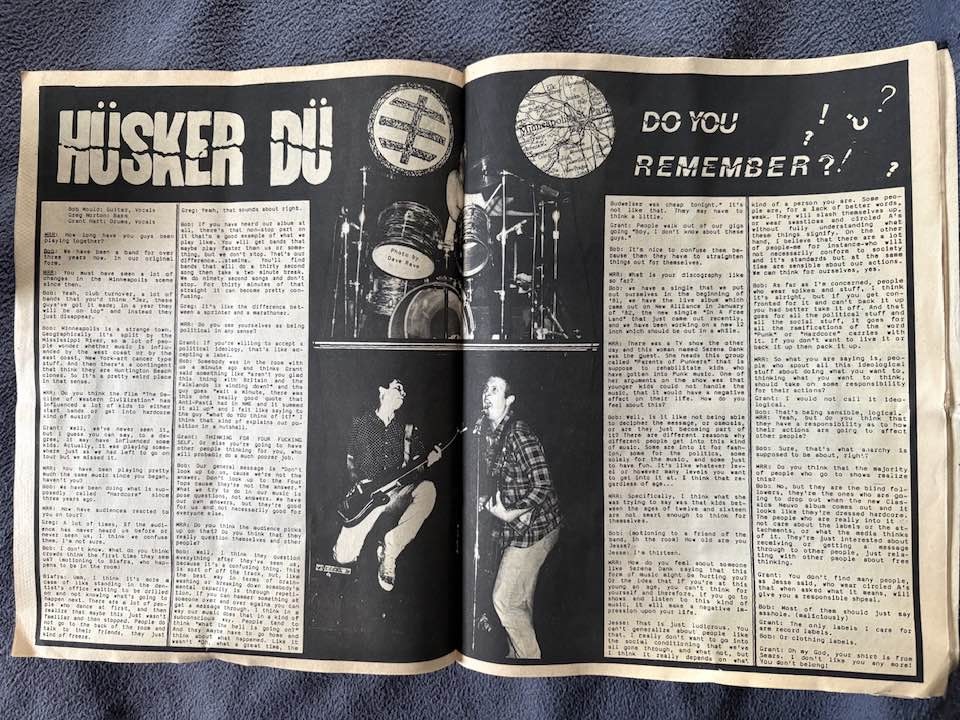
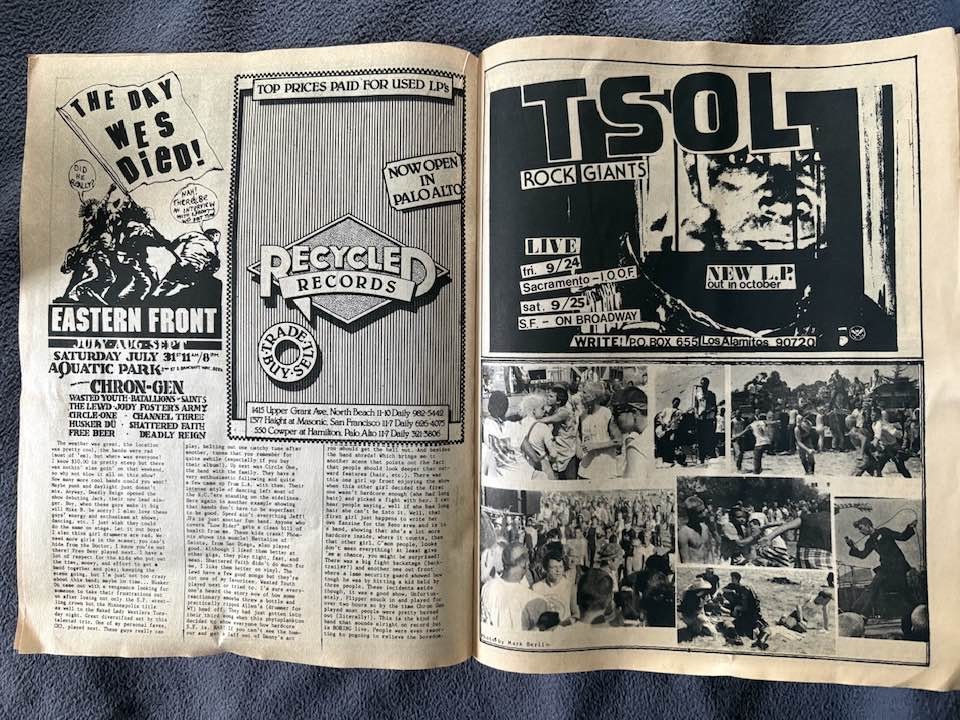
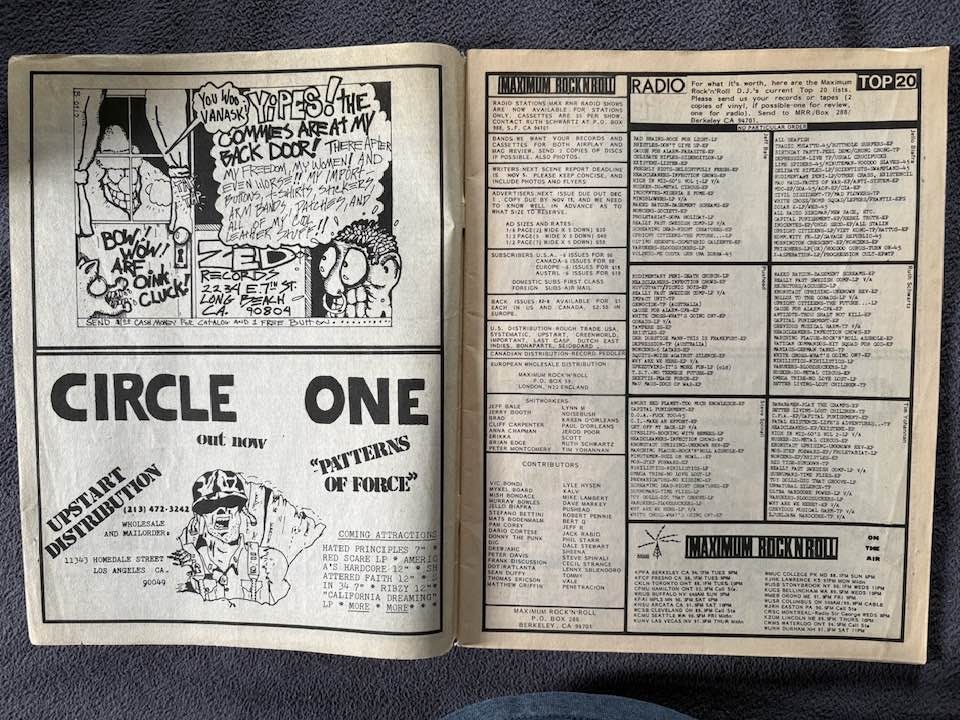
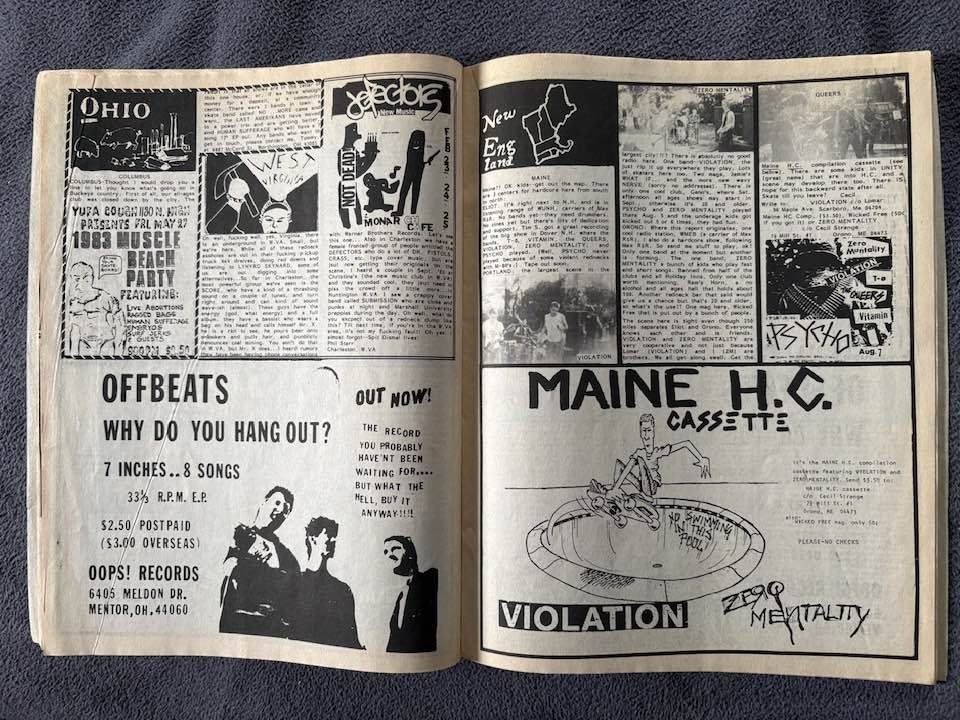
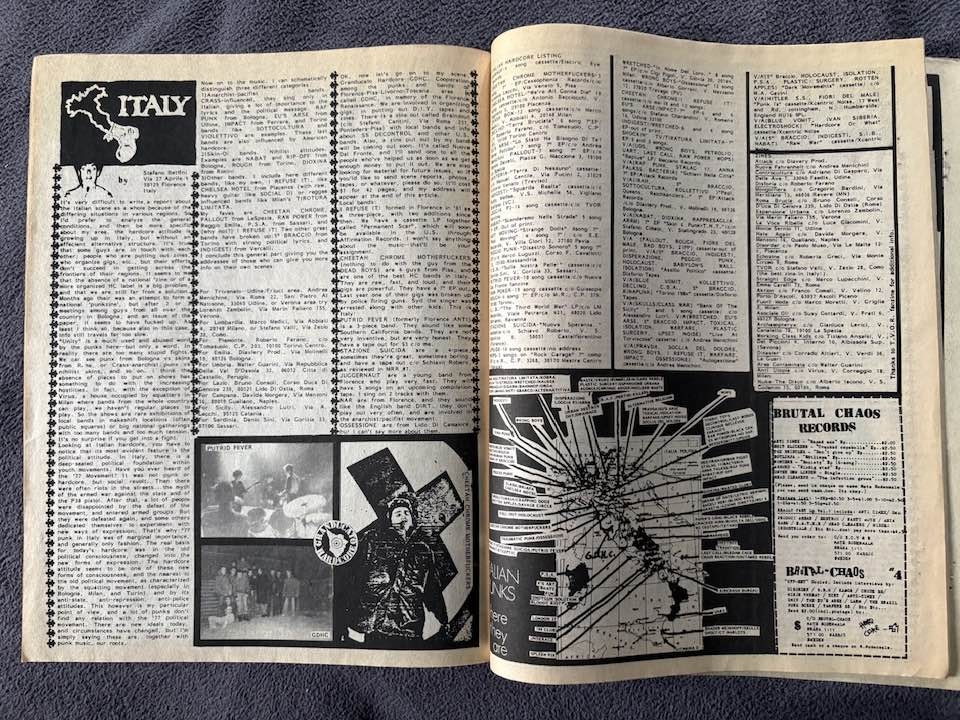
Here are a couple of artifacts from the Bay Area music scene in the 1980s. These are two of the earliest issues of the punk zine Maximum RockNRoll. The magazine was originally founded by Tim Yohannan, who also helped found the 924 Gilman Street club. Vol 1, issue 2 is from 1982. It features a scathing expose on the Bechtel corporation. Indicative of the amateurish feel of the underground press, at least some of its claims about what Bechtel was up to have been confirmed over time. Also included are early interviews with Husker Du and Dirk Dirksen. By issue 9, in 1983, MRR had begun it’s long time practice of focusing on the regional and international punk scenes. There is also a nice listing of what punk was being played on the radio in the Bay Area and elsewhere. Over 400 issues later, Maximum RockNRoll published its last in 2019.
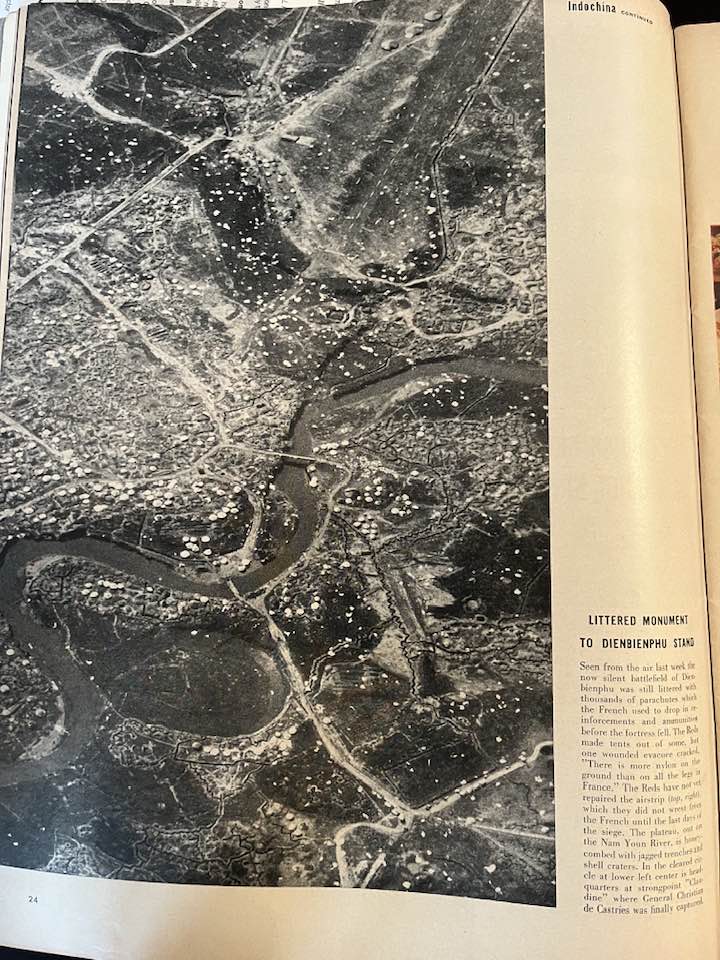
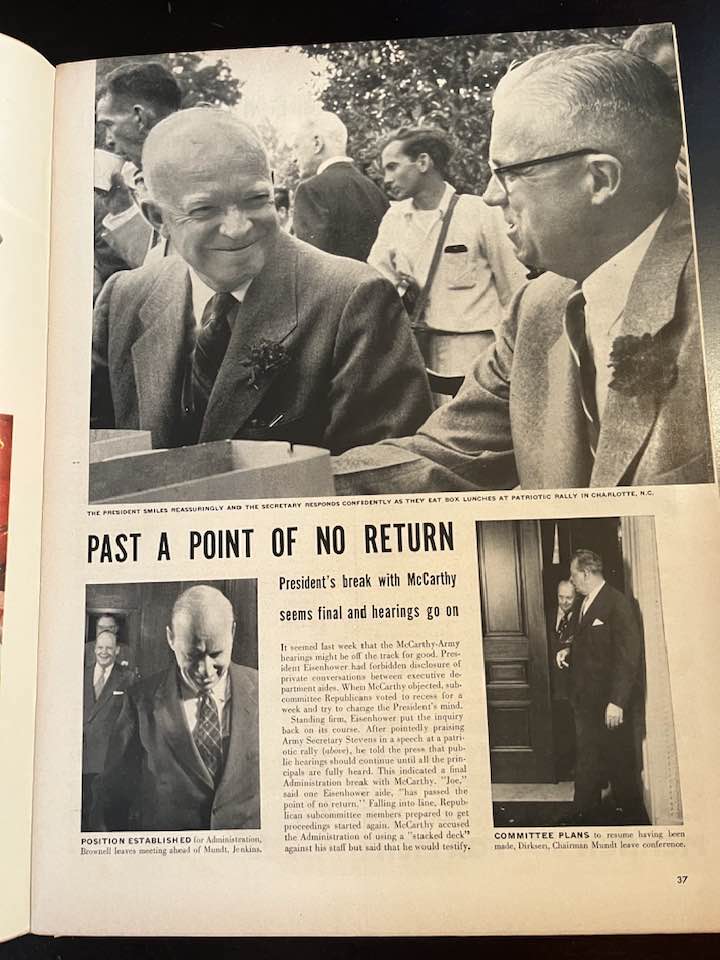
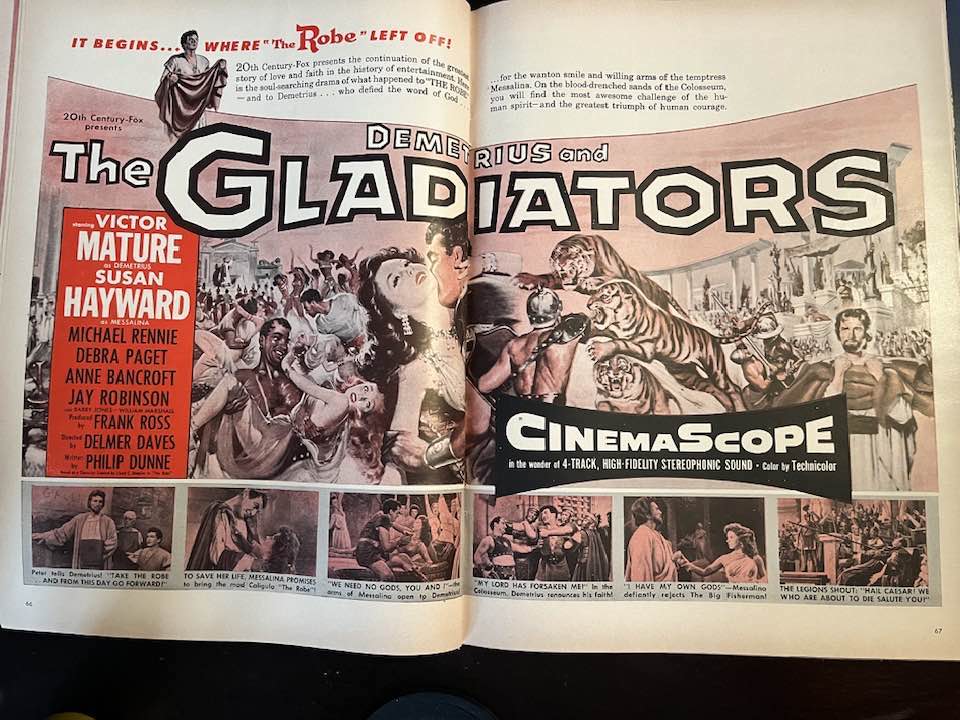
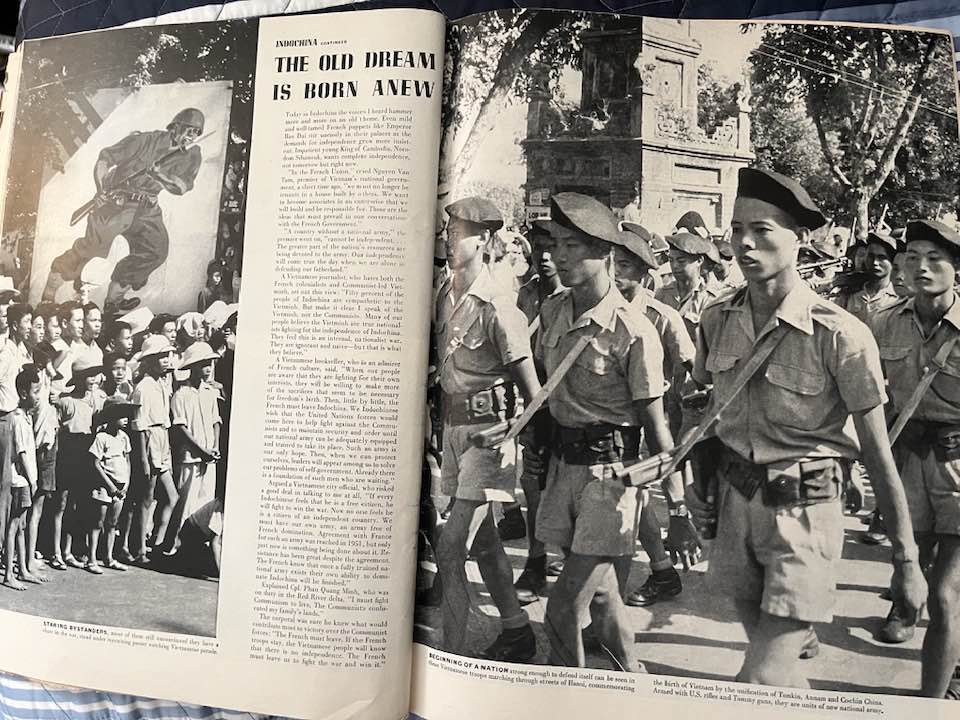
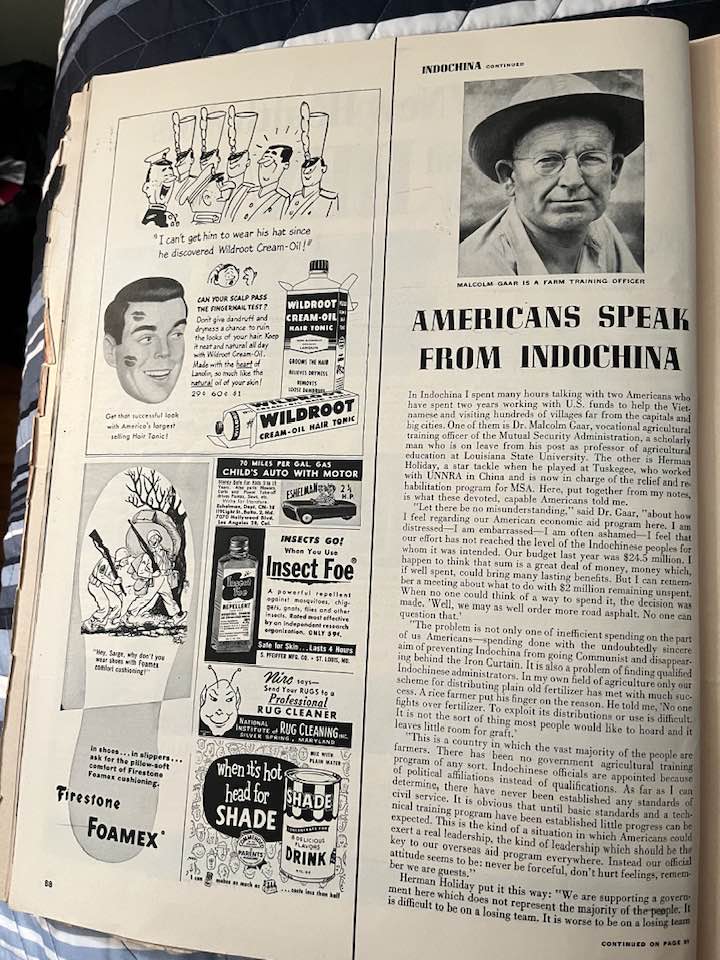
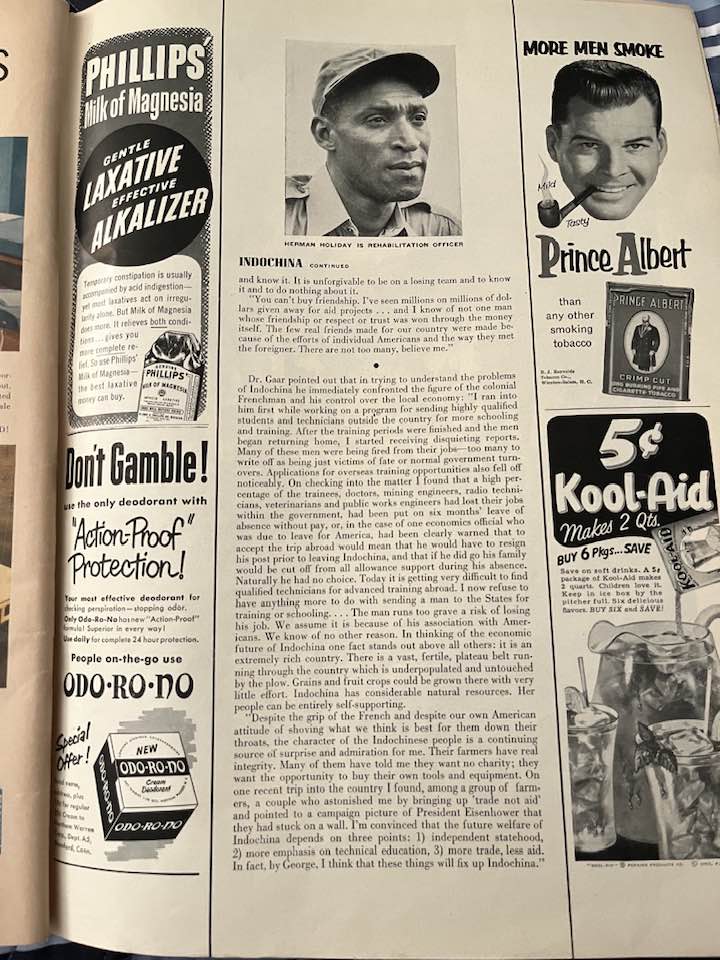
Life Magazine May 31, 1954. You’d be hard pressed to find a month in mid-century American history with more consequential events for the following decades than this one, and Life magazine was there. An article covers the French loss and retreat at the Battle of Dien Bien Phu and the subsequent Geneva Conference that led to the partition of Vietnam at the 17th Parallel. Another reports on the Brown vs Board of Education decision, which signaled the beginning of the Civil Rights era. We also learn that the Army hearings that finally brought down Joe McCarthy were under way.
Senator Joseph McCarthy (R-Wisconsin) had been riding high for several years on his claim that the Democrats were soft on, or in league with, communism and hence the government had become riddled with communists, especially the State Department. The ensuing anti-communist hysteria, known as the “Red Scare,” had brought the Republicans back to power for the first time since before the Great Depression. One tactic of red-baiting that the GOP exploited to great advantage was the claim that Truman and the Democrats had “lost” China by allowing Mao to come to power in the Chinese Revolution in 1949. The crusade known as McCarthyism caused enormous political damage and ruined many careers and lives. But now Tail Gunner Joe’s star was fading. His harsh right-wing grandstanding, much of it unsubstantiated, and his drunken antics had become a liability. Eisenhower had turned on him. Henry Luce on the other hand would remain a major espouser of the lost China accusation for years to come (Chiang Kai-Shek was his close friend). His publications would exert powerful domestic pressure on Eisenhower, who decided to involve the country in a series of Asian misadventures in Indonesia, Laos, and Vietnam.
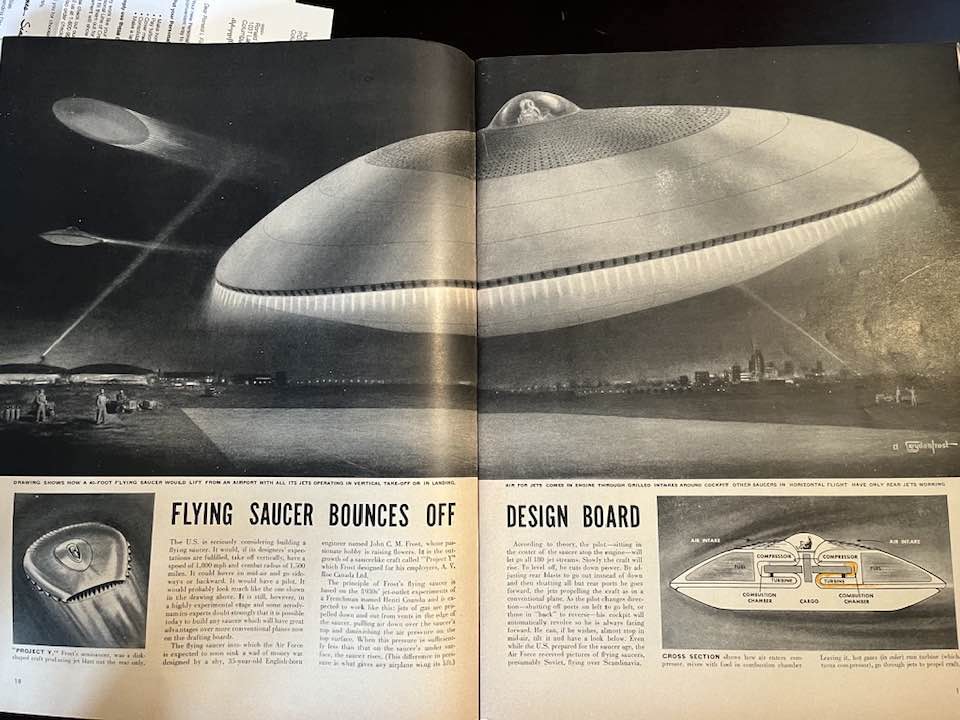
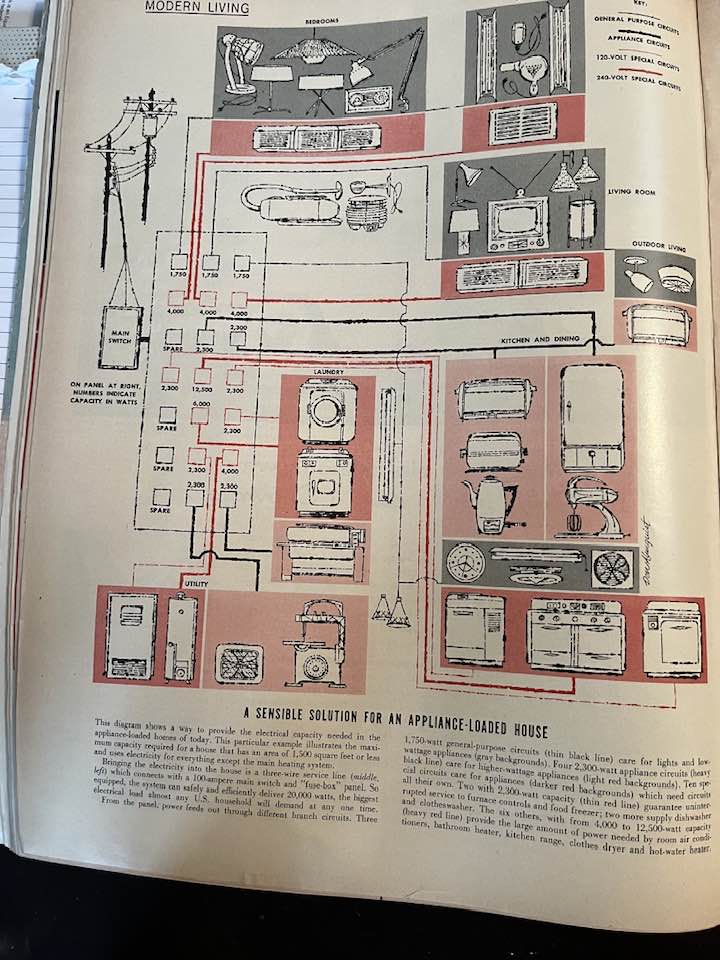
These threads would merge a decade later as the U.S. sent a massive military deployment to Vietnam, many of whom were black, brown and American Indian, in an ill-fated attempt to roll-back the communist threat officially labeled as the “domino theory,” a phrase coined in 1954 by Eisenhower in justifying initial military support for the American installed government in South Vietnam. This issue truly contains the seeds of the sixties. There is also an article on the science of flying saucers and an electrical schematic for “A Sensible Solution For An Appliance-Loaded House.”
If you were a Left-leaning college student in the 1960s there is a good chance that you had a copy of Ramparts magazine on the coffee table. From 1964-1969, under the leadership of executive editor Warren Hinckle, Ramparts was arguably the most important anti-war, counter-culture, general circulation magazine in the United States. Closely associated with the New Left political movement the magazine reached an ultimate circulation of 250,000 in 1968. That was a large number in those days, especially for an ostensibly underground publication frequently denigrated by its competitors in the mainstream media. Ramparts was so good at its craft that it became the ire of the CIA, which tried to censor the magazine and then shut it down, failing on both counts, not to mention breaking the law and its own charter prohibiting it from domestic spying.
Why was the CIA so rattled?
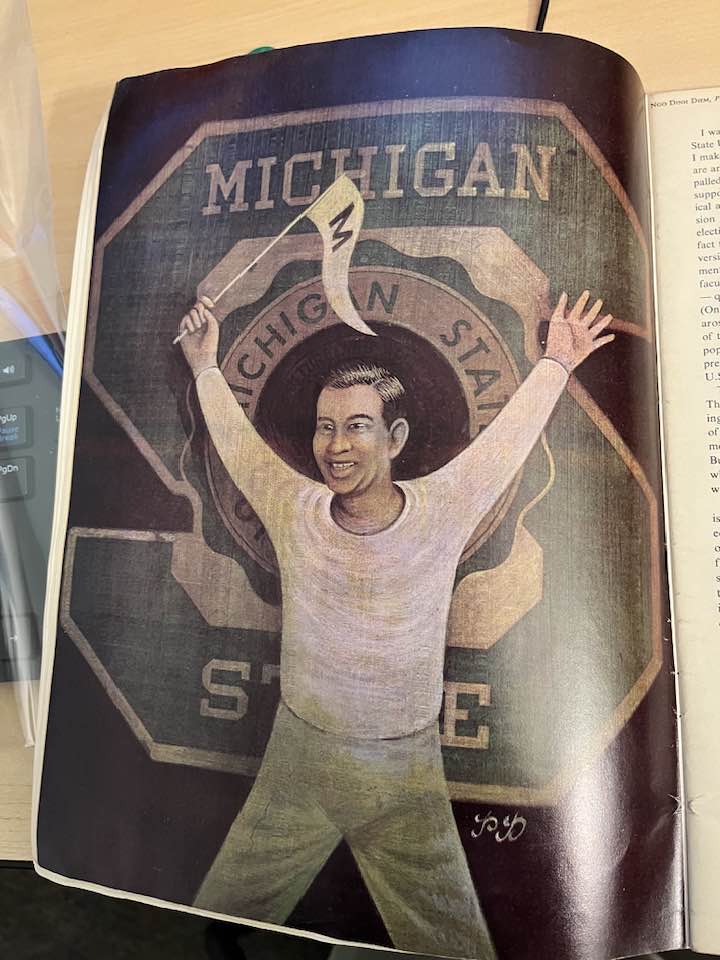
In the April 1966 edition Ramparts exposed a program the CIA was running clandestinely out of Michigan State University as part of the Michigan State University Vietnam Advisory Group (MSUG). Though there were some positive outcomes from MSUG the article revealed that the Agency had infiltrated it early on and was using it as a front for covert operations, including training and arming police interrogators in South Vietnam to spy on and harass dissidents in Saigon. Though not explicit in the record there were almost certainly some classes on torture methods in the curriculum. What we do know is that Diem’s forces had gained considerable expertise in using such brutal practices during the time period in question. Ramparts asked: “what the hell is a university doing buying guns, anyway?” It was one of the early sparks in what would erupt into open confrontations between students and their universities over support for the Vietnam War, most famously at Berkeley, Michigan, Columbia, Wisconsin, Ohio State and Kent State, among many others. Ramparts won the 1966 George Polk Award for Magazine Reporting for the article. The cover is a 60s classic (see below).
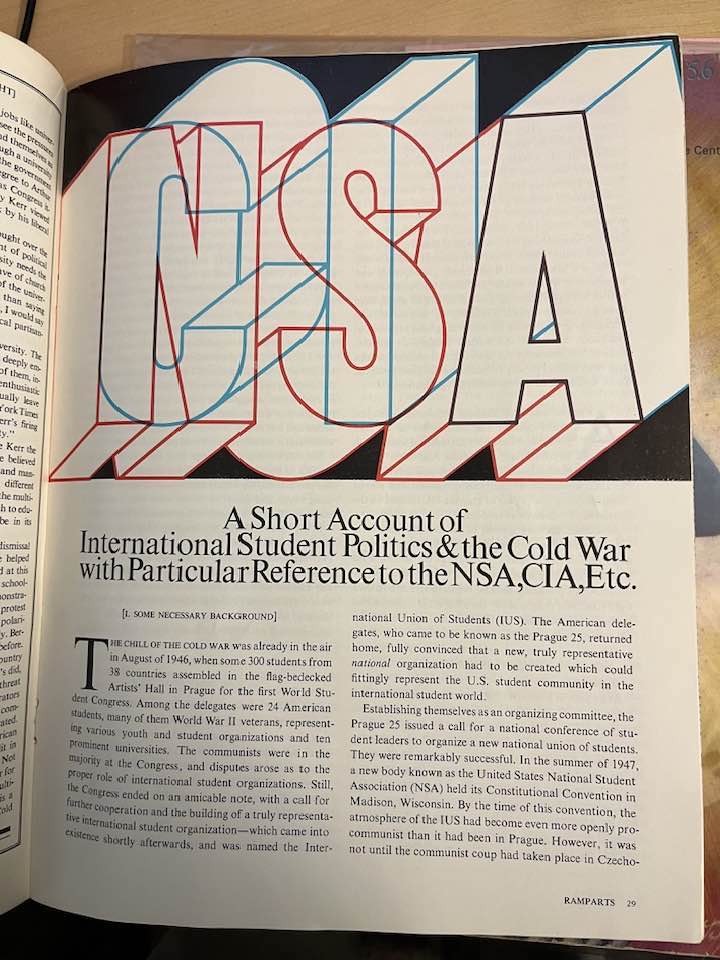
Then in March 1967 Ramparts created a national sensation by publishing an embarrassing expose of CIA secret funding of the National Student Association (NSA) which was the largest college student organization in America. A year earlier the New York Times ran a series of articles which began to uncover secret CIA funding of various fronts going back to the late 1940s, including arts organizations, political and cultural journals, radio stations, cultural foundations etc. That operation, known as the Congress For Cultural Freedom, aka the Mighty Wurlitzer within the CIA, was a primary weapon against Soviet influence in what is today known as the Cultural Cold War. But the Ramparts story went one step further by including the first acknowledgement of the program’s existence by a former CIA officer involved in the covert operations, Michael Wood, who had records, not just about the NSA, but other related fronts that the CIA had established. The upstart magazine had once again scooped the big players in the main stream media on one of the biggest stories of the time, pouring more gasoline on the fire on campuses nationwide.
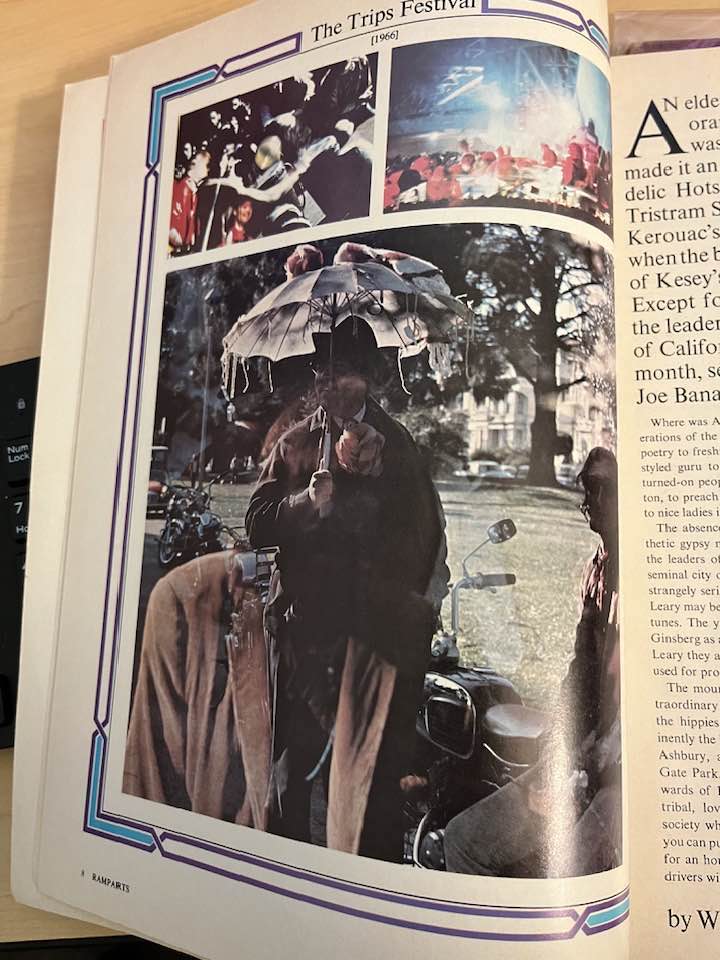
A side note about the March 1967 issue: Hinckle wrote the cover story, “A Social History of the Hippies.” Editorial differences over that story led contributing editor Ralph J. Gleason to resign in protest. Gleason and former Ramparts staffer Jann Wenner, then founded a new magazine, Rolling Stone, later that year.
Below are photos of these two landmark issues of Ramparts, they are two of the more influential magazine editions of any kind from the time period, helping to lay the foundation for the student radicalism that was to follow.
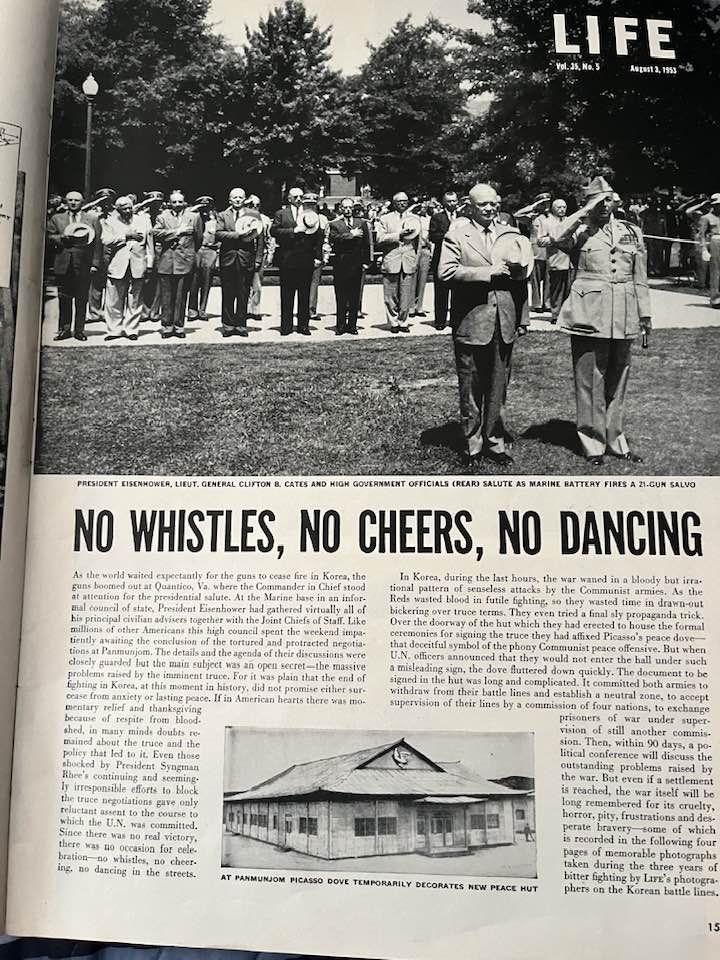
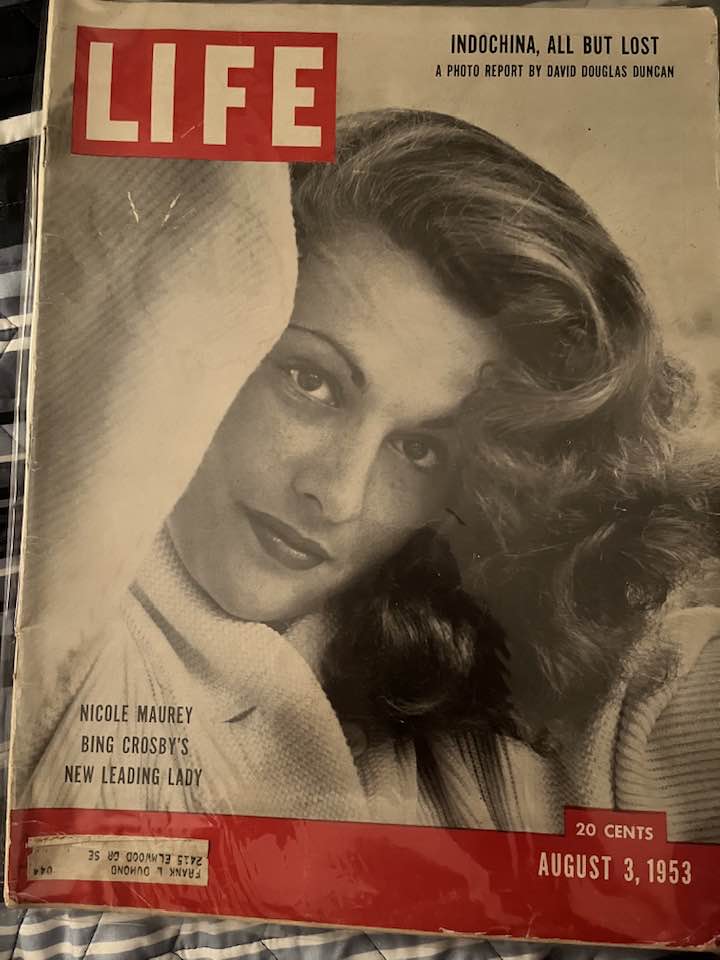
This issue is notable for several reasons. First, there is an article covering the ceasefire agreement ending formal fighting in the Korean War. Entitled “No Whistles, No Cheers, No Dancing” it is less than enthusiastic, not surprising considering Henry Luce’s antipathy toward the Chinese Communists. The French were also less than enthusiastic about the agreement, since it freed up the Chinese to focus on supporting Ho Chi Minh’s forces in the ongoing Indochina War.
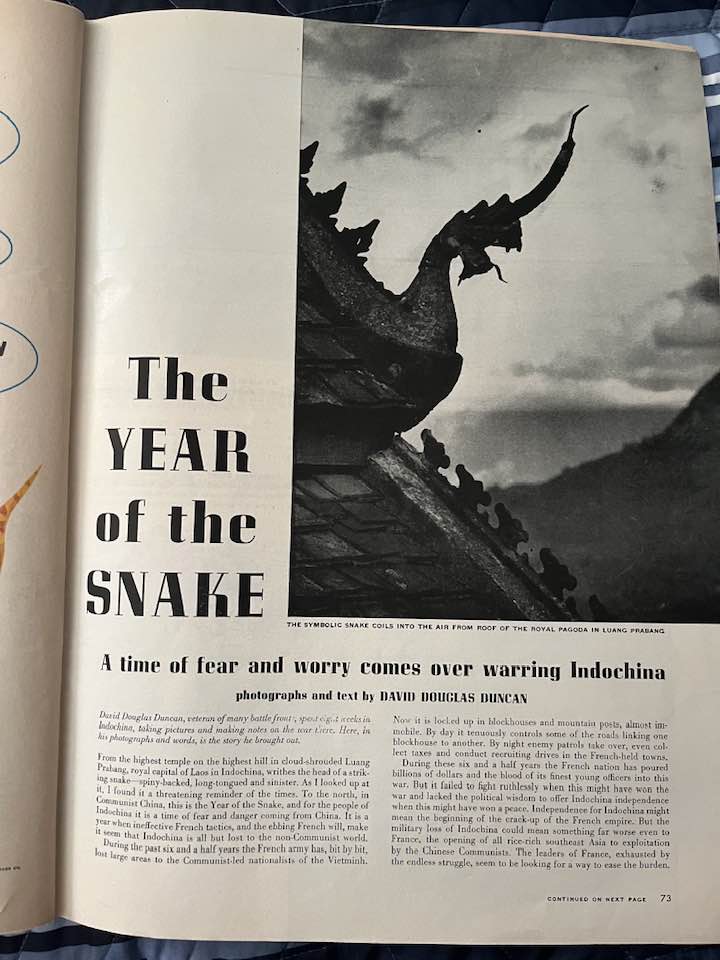
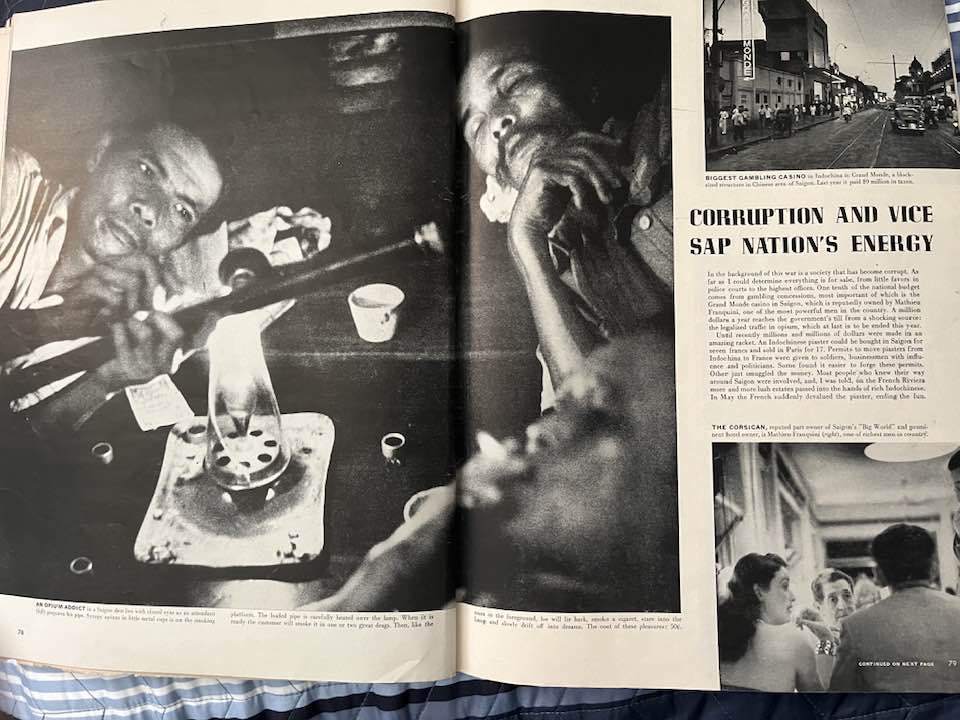
Second, we are introduced for the first time in the Vietnam context to the great combat photographer David Douglas Duncan, from whom we will see more during the American phase of the war. The photos captioned “Corruption and Vice Sap Nation’s Energy” convey the effects of the opium trade in Saigon. We get a rare glimpse of the Grand Monde Casino and the French underworld boss Mathieu Franchini, the Corsican, who controlled most of Saigon’s opium exports to Marseille. (see Bodard, Lucien, The Quicksand War: Prelude to Vietnam. Faber and Faber Limited, London, 1967. And, McCoy, Alfred. The Politics of Heroin in Southeast Asia. Harper and Row, New York, 1972.)
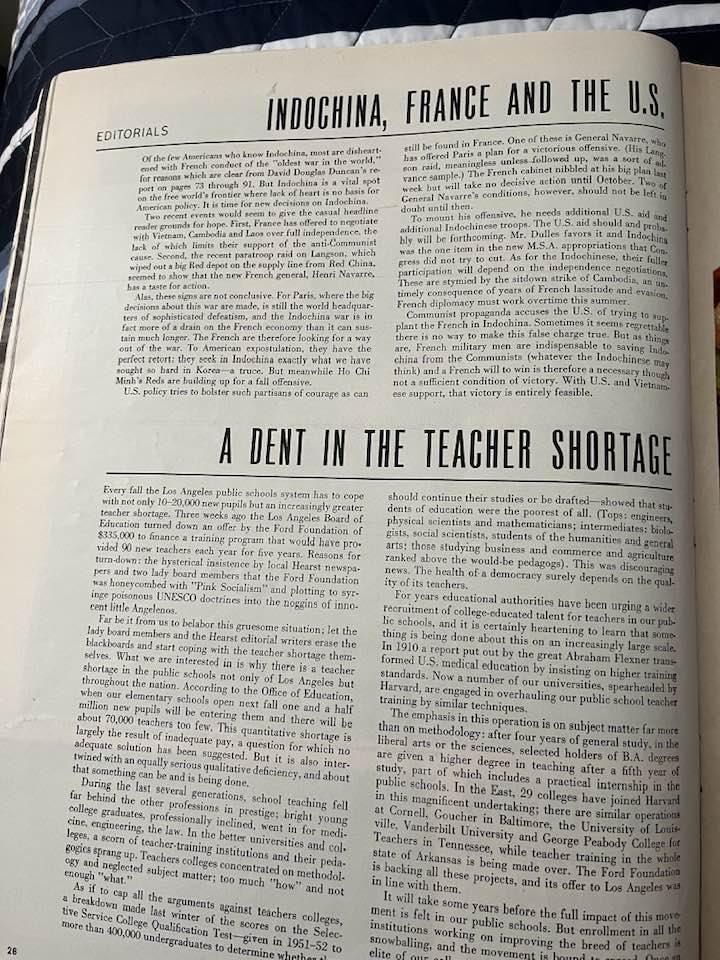
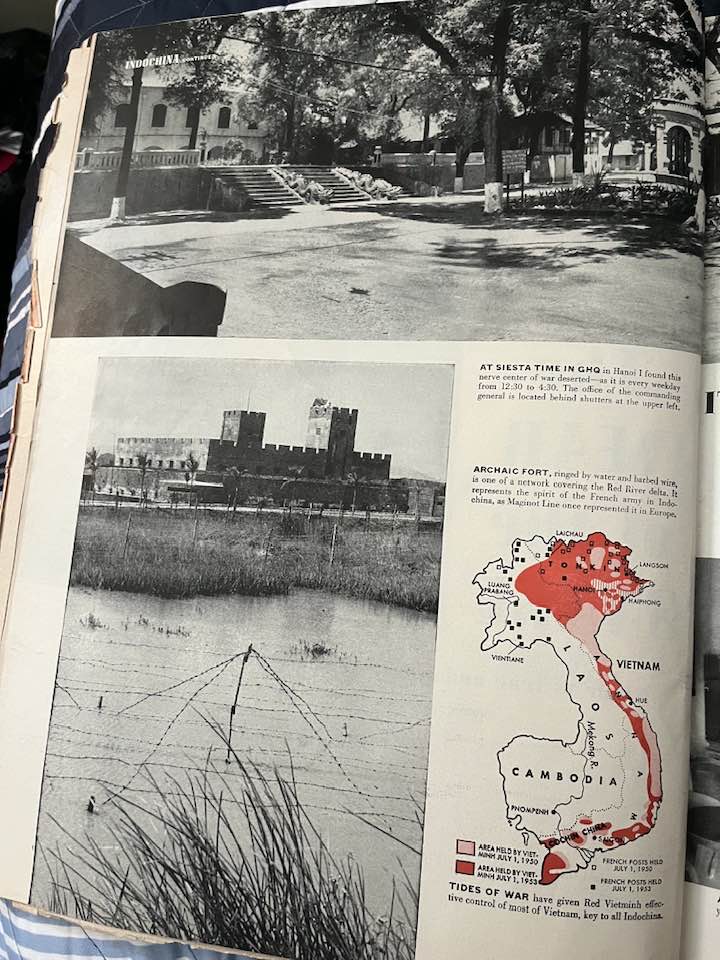
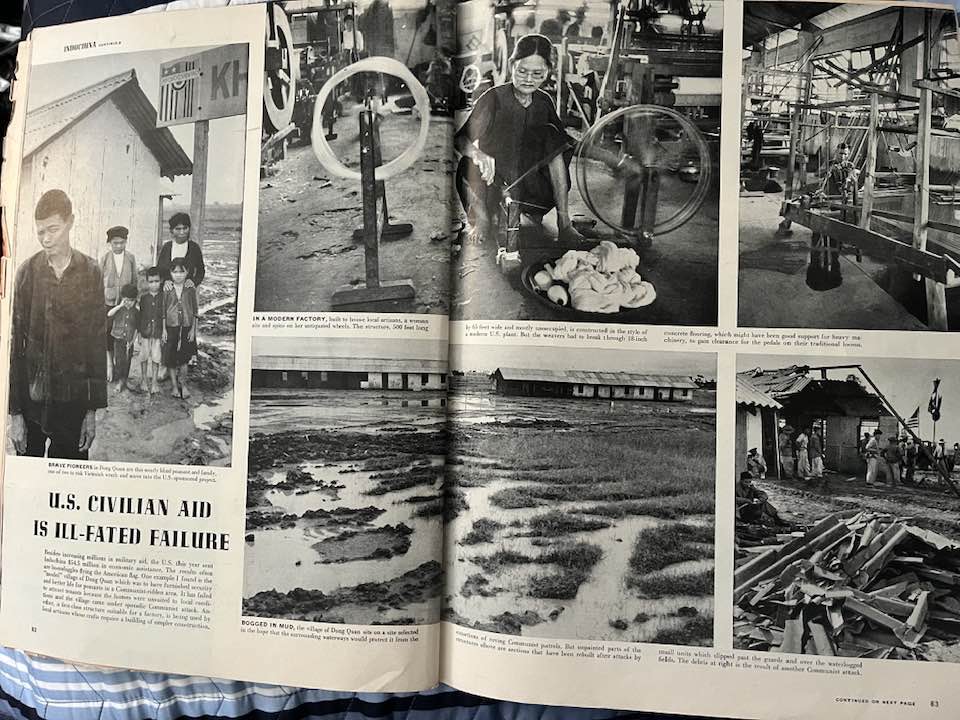
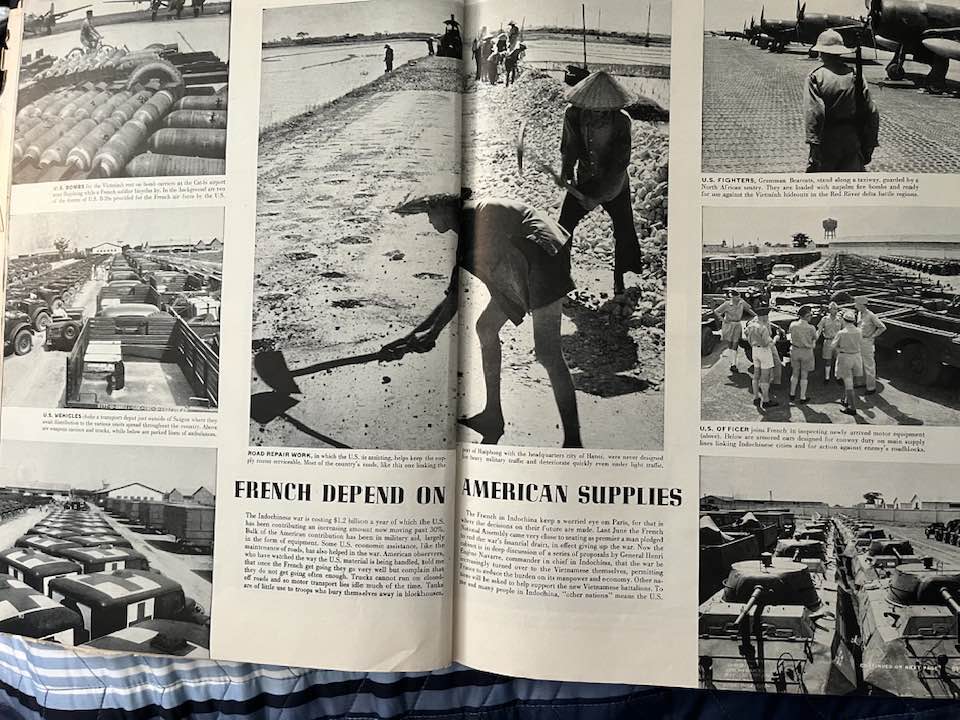
Last, with the title “Indochina All But Lost” featured on the cover, the first time that the war is mentioned on a cover, a turn toward pessimism about the ultimate outcome is apparent. The editorial on page 28 titled Indochina, France and the U.S. (shown below) posits that “Americans who know Indochina” are disheartened with France’s conduct of the war, calling Paris “the world headquarters of sophisticated defeatism,” and that it is time for new decisions on Indochina.*
This was an abrupt departure from the hopeful tone of previous Life reporting on the Indochina War. Just two years earlier the novelist Graham Greene had visited Vietnam, sent by Luce as a correspondent for Life. In the July 30, 1951 issue Greene reported on the war in Malaya, known as the Malayan Emergency. He crossed into the Tonkin region of Indochina on that trip. He ends his article with a comparison between the two insurgencies, both featuring colonial armies fighting local Communists. Greene applauds the performance of the Vietnamese Catholic infused forces that were helping the French while he denigrates the Malayan armed police fighting alongside the British, a hasty judgement that may have been clouded by his overt Catholicism. Yet, with more time spent in Vietnam, after gaining a better understanding of the situation, history and players, his confidence appears to have waned. A subsequent report, while not overly critical of the French forces, was not enthusiastic about their chances of prevailing either. Luce censored the article, and no other American publishers would run it. The piece ended up in the French magazine, Paris Match, for which Greene had become a correspondent. What he saw on that assignment, and future trips for Paris Match, provided the foundation for his masterpiece “The Quiet American,” considered to be one the greatest novels of the Cold War period. (see Greene, Graham, Indochina: France’s Crown of Thorns, Paris Match, July 12, 1952. And, Greene, Graham, Reflections, ed. Adamson, Judith, Reinhardt, New York, 1990.)
* The editors mention the arrival of General Henri Navarre and his proposed plan for a victorious offensive as a hopeful development. They urge Paris to accept the plan, stating that with “Vietnamese and American assistance victory is entirely feasible.” This so-called victorious offensive turned out to be Operation Castor, which ended with the Battle of Dien Bien Phu.






















 Parallel Narratives